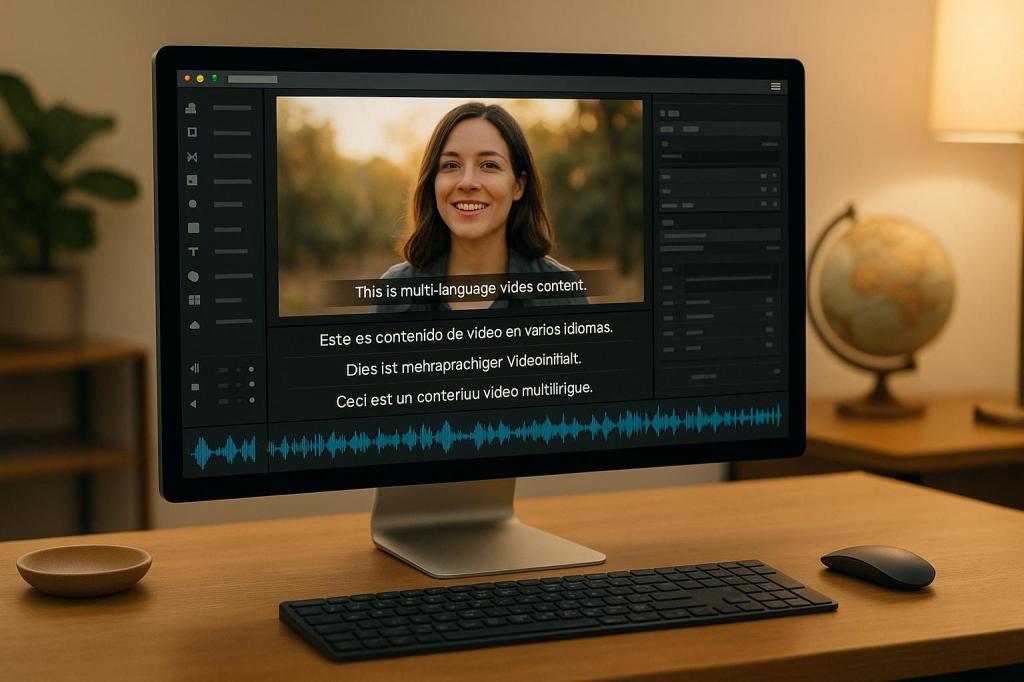
Want to reach a global audience with your videos? Multi-language video content is the key. Here’s why it matters and how you can get started:
- 76% of online shoppers prefer content in their native language. Localized videos build trust, increase engagement, and drive sales.
- Traditional methods like dubbing and subtitling are slow and expensive, costing up to $2,000 for a 15-minute video.
- AI tools now cut costs by over 90%, offering faster, more accurate translations with features like lip-sync technology and voice cloning.
Key Takeaways:
- AI-powered localization saves time and money while improving quality.
- Tools like VisualDub ensure precise lip-syncing and natural dubbing in over 35 languages.
- Localized subtitles and culturally relevant content enhance viewer engagement and accessibility.
Ready to connect with global audiences? Start by leveraging AI for fast, affordable, and accurate video localization.
How to Translate Videos in Minutes with AI Lip Sync
Key Components of Multi-Language Video Localization
Creating effective multi-language videos hinges on a few crucial elements. Mastering these aspects is essential to fully utilize AI tools in delivering high-quality localized content that resonates with diverse audiences.
Audio and Visual Timing
Getting the timing right between dubbed audio and on-screen visuals is critical. If the audio doesn’t align perfectly with the visuals, it can disrupt the viewer’s experience and reduce engagement.
Lip-sync accuracy plays a big role here. It’s not just about translating words; it’s about matching the rhythm, pace, and natural pauses of the original speech to the actors’ mouth movements. This attention to detail is what makes the dialogue feel authentic.
"You want the spoken audio to sound natural and sync smoothly with the lips of the actors on screen." – Smartcat.com
To achieve this, scripts often need careful adaptation. Translated dialogue must fit within the original audio’s timing while staying true to the meaning. This process may involve rephrasing sentences or choosing different words to align with visual cues.
Take Tiffany & Co., for example. When localizing their employee training video "Welcome to the World of Tiffany" for international audiences, they ensured voice talent matched the brand’s tone in each language. They also adjusted translations to fit time constraints without losing the essence of their message, maintaining the brand’s identity across global markets.
Practical tools, like adding timestamps to audio scripts, help voiceover artists pace their delivery. Advanced software can refine synchronization frame by frame, ensuring the dubbed audio aligns seamlessly with the visuals.
Adapting Content for Different Markets
While timing ensures technical accuracy, adapting content to cultural contexts ensures emotional connection. Localization isn’t just about translating words – it’s about understanding and respecting local customs, humor, and societal norms. Research shows localized content is six times more likely to hold audience attention compared to non-localized versions.
Visual elements are especially important. Colors, symbols, gestures, and even clothing can carry different meanings across cultures. Something appealing in one region might seem out of place or even offensive in another.
Electronic Arts (EA) provides a great example of this. In 2019, 33% of their total net revenue came from international markets, thanks to their investment in localization. By tailoring games for Japanese, Korean, and Simplified Chinese audiences, they adapted not just the language but also cultural references, character designs, and gameplay elements. This approach significantly boosted sales in those regions.
Marketing strategies also need to be rethought for different audiences. Local slang, humor, and even taboos can determine how content is received. Collaborating with native speakers and cultural experts helps capture subtle nuances that automated tools might miss.
Managing Subtitles and On-Screen Text
Subtitles play a vital role in video localization, especially since 92% of viewers watch videos with the sound off. Effective subtitle management requires balancing accuracy, readability, and cultural relevance – all while maintaining a consistent visual style.
For readability, use clear sans-serif fonts and limit each line to 32–40 characters. High-contrast text, like light-colored subtitles on dark backgrounds, improves visibility. Timing is equally important; subtitles should appear and disappear in sync with the dialogue to avoid confusion.
Well-executed captions can significantly boost engagement. For instance, videos with properly formatted captions see a 15% increase in viewer interaction.
Real-world examples highlight the impact of good subtitle management. An e-learning platform increased course completion rates by 30% after introducing clear, consistent captions. This not only improved comprehension in noisy settings but also made the content accessible to viewers with hearing impairments. Similarly, a media company achieved 98% caption accuracy by combining AI tools with human editors, leading to higher audience satisfaction.
Just like spoken dialogue, subtitles need cultural adaptation. References, idioms, and humor must be adjusted to fit the target audience. Additionally, all on-screen text – such as graphics, titles, and overlays – should maintain a consistent style and align with the cultural and aesthetic preferences of each market. This ensures a smooth and cohesive viewing experience across languages.
How AI Powers Video Localization
Artificial intelligence has revolutionized video localization, turning processes that once took weeks into tasks completed in minutes. By leveraging advanced algorithms, AI can analyze speech patterns, facial movements, and cultural subtleties to create authentic multilingual content. Let’s break down the key AI advancements driving this transformation.
AI Lip-Sync Technology
AI lip-sync technology uses neural networks to synchronize audio with lip movements, creating realistic results without the need for reshooting. These systems identify speakers, study how they form specific sounds, and generate corresponding lip movements for new audio tracks.
Machine learning models, trained on extensive datasets of audio and video, map phonemes (the smallest units of sound) to precise lip shapes. This ensures that the timing and visual alignment look natural.
"In the end, multilingual shoots aren’t just about speaking many languages – they’re about speaking each audience’s language with respect and precision." – Elokami Production
Here’s how it works: computer vision tracks facial features, while speech recognition converts audio into text to align speech with visual cues. Generative models, like Generative Adversarial Networks (GANs), then produce lifelike facial animations based on this data.
For the best results, use high-quality audio and well-lit, high-definition videos to improve facial feature detection. Many e-commerce brands have embraced AI lip-sync technology to translate product demo videos, adding relatability and professionalism to their content.
Voice Cloning for Natural Dubbing
After syncing lips, AI takes localization further with voice cloning, which replicates a speaker’s tone, rhythm, and pronunciation in another language. This ensures a consistent voice for the brand across multiple languages, while also preserving emotional nuance.
The market for AI dubbing tools is projected to grow significantly, from $0.98 billion in 2024 to $2.23 billion by 2029. Additionally, content creators report that over 15% of their audience watch time comes from dubbed audio tracks in non-primary languages.
Voice cloning simplifies the dubbing process by automating much of the work, reducing costs while maintaining quality. It captures the original speaker’s unique delivery style, creating a more natural and engaging result.
"AI-powered synthetic voices is an emerging market with a lot of potential for video localization, but they’re not a replacement for human expertise. Linguists and localization specialists play a crucial role in ensuring that the translated content is accurate, culturally relevant, and emotionally impactful." – Andrea Ballista, Voiseed CEO
To make the most of this technology, fine-tune the cloned voice by adjusting pacing, tone, and emotion to fit the content. AI can even adapt voices to different accents and dialects, helping create content that feels authentic to specific regions. However, always prioritize ethical use by obtaining proper permissions and implementing security to prevent misuse.
While AI provides the tools, ensuring the message resonates across different cultures remains just as important.
Smart Language Adaptation
Smart language adaptation goes beyond translation, using AI to retain emotional tone and context when adapting dialogue for various languages. This ensures that content connects with audiences on a deeper level, reflecting local values and communication styles.
Research shows that 80% of consumers are less likely to buy from brands that don’t support their local language. AI-powered localization enables fast, precise adaptation, ensuring consistent messaging across markets.
"AI-driven localization is not just about translating words; it’s about connecting with audiences on a deeper, cultural level." – Paul Petrick, Forbes Councils Member
Examples of this include multilingual TED Talks and AI-dubbed event highlights, which have widened global reach. Companies have also used AI-generated training videos to upskill employees worldwide, saving up to $10,000 per video in production costs.
For effective adaptation, scripts should be tailored to reflect local expressions, humor, and cultural sensitivities. Visuals should also align with regional norms to avoid misunderstandings or offense. For content that relies heavily on humor or storytelling, transcreation – adapting content creatively for cultural relevance – may be necessary.
Ultimately, integrating human oversight into AI workflows ensures translations are reviewed for cultural and creative accuracy. This combination of technology and human expertise maintains the quality and authenticity that global audiences expect.
sbb-itb-818e448
Steps to Create Multi-Language Video Content
Creating multi-language videos can be streamlined into three stages: pre-production, production, and post-production. The process requires thoughtful planning and attention to detail to ensure your content resonates with diverse audiences.
Pre-Production: Script and Market Analysis
The foundation of any successful multi-language video lies in the script. Craft concise, straightforward sentences that are easy to translate. This approach minimizes confusion during localization and keeps revision costs low.
When designing visuals, plan for text expansion and contraction. For example, German text often takes up 20–30% more space than English, while languages like Chinese require much less room. Flexible design is key to accommodating these variations.
Understanding cultural differences is equally important. Research symbolic meanings of colors and gestures in your target regions to avoid missteps. For instance, white signifies purity in Western cultures but mourning in some Asian countries. Even simple hand gestures can carry drastically different meanings depending on the audience.
Develop a terminology glossary early on. This document should include brand-specific terms, technical jargon, and preferred translations, ensuring consistency across all languages.
Additionally, create a cultural adaptation guide that details acceptable visuals, symbols, and messaging for each market. This guide will serve as a critical reference throughout the production process, helping your team maintain cultural sensitivity.
"In the end, multilingual shoots aren’t just about speaking many languages – they’re about speaking each audience’s language with respect and precision." – Elokami Production
Once this groundwork is complete, you’re ready to move into the production phase.
Production: AI Voice and Visual Processing
The production stage builds on pre-production efforts, using AI tools to streamline voice and visual processing.
Start by finalizing high-quality source videos with accurate transcripts. Using high-definition footage ensures better results when processed through AI tools. Double-check that your video format is compatible with the platform you’re using.
Choose AI tools that support both your source and target languages. For instance, studies show that 90% of EU internet users prefer content in their native language, making comprehensive language support essential, especially in European markets.
Next, upload and configure your content according to the AI platform’s requirements. Many tools allow you to tweak voice characteristics, pacing, and tone. Adjust these settings to align with your brand’s personality and the intended mood of the video.
Leverage the platform’s features to generate initial translations. AI can handle tasks like subtitle creation, voice synthesis, and basic lip-sync adjustments, providing a solid starting point for your localized content.
These AI-driven processes not only save time but also improve precision, setting the stage for the final phase.
Post-Production: Quality Control and Testing
Post-production focuses on refining your content to ensure it meets the highest standards of quality and cultural relevance.
Combine AI-powered checks with native-speaker reviews to catch synchronization errors, awkward phrasing, or cultural mismatches. While AI tools are efficient, human oversight is crucial for preserving emotional nuance and ensuring translations resonate with your audience.
Carefully review visual elements to confirm they align with local cultural norms. This step ensures that your video doesn’t unintentionally offend or confuse viewers in different regions.
Tailor your content for specific platforms. For example, optimize for YouTube with subtitles, while focus on professional voiceovers for LinkedIn audiences. Each platform has unique technical requirements and viewer preferences.
The impact of these efforts is clear. For example, TED’s collaboration with Panjaya to create AI-dubbed versions of its talks in multiple languages led to a 115% increase in views, a doubling of video completions, and a 30% rise in social sharing.
Lastly, improve your video’s discoverability by adding multilingual metadata. Translate video descriptions, include relevant keywords in each target language, and use appropriate tags to help audiences find your content through local search terms. Offering multiple subtitle tracks also enhances accessibility for viewers worldwide.
Using VisualDub for Multi-Language Content
As mentioned earlier, achieving precise lip-sync and localization is key to global content success – and VisualDub is leading the charge in this space. Developed by NeuralGarage, VisualDub takes video localization to the next level by ensuring that dubbed audio perfectly matches actors’ lip movements. With over 1.5 million seconds of footage processed and training on more than 1 billion data points, this AI-powered platform delivers studio-quality lip-sync results. Its cutting-edge technology has paved the way for a smoother, more efficient workflow for content creators.
Main Features of VisualDub
At its heart, VisualDub uses generative AI to align actors’ lip and jaw movements seamlessly with dubbed audio. Supporting over 35 languages, this tool is a game-changer for global content distribution. It enhances existing footage with 2K resolution, all without relying on 3D models or avatars, preserving the original cinematic quality and artistic vision.
One standout feature is its ability to replace or add dialogue after filming, allowing for flexible edits while maintaining the actor’s original vocal identity.
VisualDub also shines when it comes to personalized video messaging. Brands can create tailored messages for specific audiences or scenarios, all from the same footage, making it a powerful tool for contextual and customized content creation.
"VisualDub is solving a longstanding problem in dubbed content – what we call ‘visual discord.’"
– Mandar, Co-Founder of VisualDub
Benefits for Media and Business Users
Beyond its impressive features, VisualDub delivers clear cost and time savings. It reduces dubbing costs by 30–50% and slashes delivery times by 50–70%. For advertising projects, NeuralGarage charges between $2,400 and $3,000 per minute, offering a budget-friendly alternative to traditional reshoots.
Major brands have already tapped into VisualDub’s capabilities. For instance, Coca-Cola collaborated with cricket commentator Harsha Bhogle to create post-match video messages tailored to different audiences using the same footage. Similarly, UltraTech Cement recreated a Hindi advertisement in English with the approval of Shah Rukh Khan.
Industry professionals are also singing its praises. Niraj Ruparel, Emerging Tech Lead at WPP, said:
"VisualDub has been an incredible tool for our campaigns enabling seamless multilingual lip-syncing."
Kedar Ravangave, former Head of Brand & Category Marketing at Amazon India, highlighted its precision:
"This brought our campaigns closer to each audience with unmatched precision."
Streaming platforms and film studios benefit from VisualDub’s ability to integrate seamlessly into post-production workflows, bridging the gap between dubbing and distribution.
"By aligning speech and visual expressions, we let creators go global with a click."
– Subhabrata Debnath, Co-Founder of VisualDub
Getting Started with VisualDub
VisualDub is designed to fit effortlessly into existing post-production workflows. Users simply upload their video and audio files, and the platform generates a synced output that looks natural in the target language.
The platform’s ease of use hasn’t gone unnoticed. Daniel Cherian, a public user, shared his experience:
"The interface is very user-friendly. It delivers impressive results with excellent video output."
NeuralGarage primarily targets ad agencies, film studios, OTT platforms, and businesses looking for personalized messaging solutions. To expand its reach, the company plans to launch a downloadable desktop version within the next year, licensed similarly to tools like Adobe Premiere or DaVinci Resolve.
Flexible pricing options ensure accessibility for both small agencies and large studios. VisualDub’s language-agnostic approach supports 29 languages for video-to-video translation, achieving up to 95% accuracy in AI-driven translation and lip-sync processes. This makes it a comprehensive solution for simplifying international video production in diverse markets.
Conclusion: The Future of Multi-Language Video
From achieving precise lip-syncing to adapting content smartly for different languages, advancements in AI are reshaping global storytelling. The world of video content creation is evolving rapidly, with AI tools paving the way. As we’ve highlighted throughout this guide, traditional localization methods are struggling to meet the demands of today’s global audience. The future belongs to platforms that can deliver culturally resonant content at scale, fostering deeper global engagement.
Recent studies underline the strong connection between native language content and increased engagement. This presents a tremendous opportunity for businesses to bridge the gap between video-first strategies and multilingual audiences. AI isn’t just speeding up localization – it’s transforming it. For instance, AI tools now achieve near-perfect subtitle accuracy, and language-specific content can lead to a 50-200 point boost in viewer retention and satisfaction. These aren’t small gains; they’re game-changing advantages for early adopters.
As Darren Suffolk, Creative Director of Video Services at Superside, puts it:
"AI isn’t a trend anymore, it isn’t going back in the box. We need to start thinking about AI like any other tool. What new possibilities does it offer to us? How can it make the creative journey easier/better? Is this what will allow production to hit new levels of responsiveness or individualisation?"
AI technology is also becoming more accessible. Superside, for example, has saved its clients $3.5 million in creative costs by integrating AI into workflows. Synthego reported a 39% reduction in design hours, saving over $5,000. Today, high-quality AI lip-sync solutions are available for as little as $15 per month, making advanced tools affordable for businesses of all sizes.
The trends are clear: Large Language Models are delivering more nuanced translations, and as video continues to dominate digital platforms, multimedia localization is becoming essential. Real-time AI lip sync for live streaming is on the rise, and seamless multilingual dubbing is gaining traction. Audiences now expect content that feels personal and culturally relevant, pushing businesses to prioritize both personalization and sensitivity.
For companies looking to stay ahead, now is the time to experiment with AI-driven localization. Start small – pilot projects, pay-as-you-go models, and solutions with human oversight can help ease the transition. Organizations that take action within the next 12-24 months will be well-positioned as AI localization becomes the industry norm.
Reflecting on these shifts, Darren Suffolk adds:
"AI-powered search engines will increasingly be able to determine the value or worth of a video through its content. That makes the quality of the writing and creativity behind a video more valuable than ever."
The future of multi-language video isn’t just about translating words – it’s about forging meaningful connections across cultures and languages. With the generative AI market projected to grow at a CAGR of over 24.4% from 2023 to 2030, the possibilities will only expand. Businesses that embrace AI-driven localization now will secure a lasting edge, ensuring their content resonates authentically with diverse audiences worldwide.
FAQs
How does AI-powered lip-sync technology make multi-language video content more authentic?
AI-powered lip-sync technology takes multi-language video content to the next level by syncing the speaker’s lip movements with translated audio. Through advanced machine learning, it studies speech patterns and facial expressions to align dubbed audio seamlessly, keeping the original tone and emotional nuances intact.
The result? A smoother, more natural viewing experience. When visuals and audio align perfectly, distractions fade, and viewers stay immersed in the content. This not only boosts viewer retention but also enhances satisfaction. Plus, well-adapted videos often thrive on a global scale, making this technology a game-changer for connecting with diverse audiences.
What should I consider when adapting video content for different cultures?
When crafting video content for audiences from various backgrounds, it’s essential to take into account local customs, values, and preferences. Even seemingly small details – like gestures, humor, or cultural references – can hold very different meanings depending on the region. Doing your homework and researching thoroughly can help you avoid missteps that might lead to misunderstandings or unintended offense.
Pay close attention to inclusive language and visuals that align with cultural norms. This involves tailoring not just the dialogue but also the tone, imagery, and overall style to suit local expectations. Whether you’re using dubbing or subtitles, these elements should be adjusted thoughtfully to preserve the message’s authenticity and keep viewers engaged. By making cultural relevance a priority, your content can form a stronger, more genuine connection with a global audience.
How can businesses use AI for video localization while ensuring cultural and emotional accuracy?
To create successful localized videos, businesses should leverage a mix of AI tools and human expertise. While AI can handle translations and localization tasks efficiently – saving time and scaling operations – human involvement is key to ensuring the content resonates with the target audience’s cultural norms, emotional subtleties, and expectations.
This combination addresses areas where AI might fall short, such as interpreting regional humor, understanding idiomatic phrases, or capturing the right emotional tone. By having human professionals regularly review and refine AI-generated content, businesses can deliver videos that are not only accurate but also engaging and culturally relevant for diverse audiences – without sacrificing quality.
Related Blog Posts
- How to Sync Audio and Video for Professional Dubbing
- Common Video Dubbing Questions Answered
- Top premium Lipsync software 2025
https://app.seobotai.com/banner/banner.js?id=6839076f0194258b64a87ad2
 VisualDub blog
Leave a comment