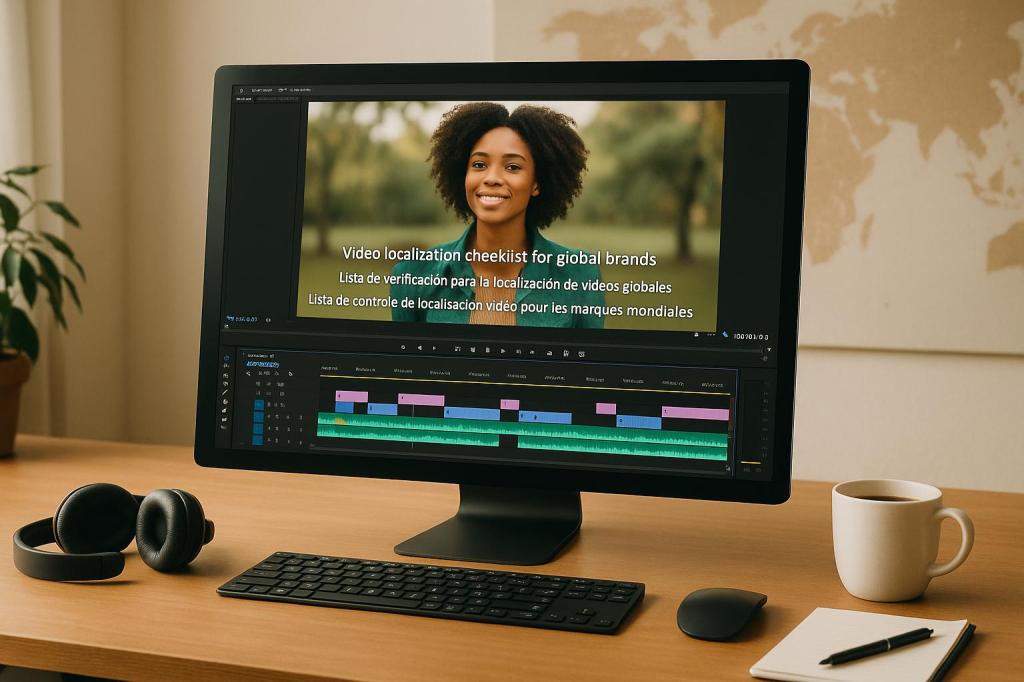
Want your videos to succeed globally? Here’s the secret: localization.
Video localization isn’t just about translation – it’s about adapting your content to fit different languages, cultures, and preferences. With 83% of the world not speaking English and 65% of consumers preferring content in their native language, tailoring your videos can boost engagement, trust, and sales.
Key Takeaways:
- Why it matters: Localized content can increase website visits by 70% and boost conversion rates by 20%.
- Planning essentials: Research your audience, review your content for cultural fit, and create multilingual style guides.
- AI tools like VisualDub: Automate translation, voiceovers, and lip-syncing to save time and cut costs by up to 40%.
- Final steps: Test for language accuracy, cultural relevance, and platform compatibility to ensure your videos resonate worldwide.
Localization makes your brand relatable, helping you connect with audiences and drive results. Ready to make your videos global? Let’s dive in.
Creating a style guide that AI translation tools understand #translation #localization
Planning and Strategy Before Localization
Jumping into video localization without a plan can lead to expensive mistakes. Here’s a compelling fact: companies that use localization services see more than double the average marketing ROI (53% vs. 21%). To make localization work, it all starts with understanding your target markets and building a solid strategy through research, content review, and style guide development.
Research Your Audience and Market
Reaching a global audience requires more than just translation – it demands a deep dive into the cultural landscape of your target markets. Start by analyzing internal data and social media metrics to identify where your content engages the most. This helps ensure your messaging aligns with local norms and expectations.
Cultural nuances are the backbone of effective localization. Humor, gestures, and even colors can mean one thing in one culture and something entirely different – or even offensive – in another. For example, phrases or symbols that seem harmless in one region might carry unintended meanings elsewhere. That’s why working with local experts is crucial. Linguists with knowledge of regional dialects and cultural consultants can provide invaluable insights into local customs and preferences.
Collaborate with colleagues in your target regions to uncover unique challenges and opportunities that external research might miss. Want to go even deeper? Partner with local focus groups or run surveys with your potential audience. Their feedback can shed light on preferences for tone, pacing, visuals, and cultural references that truly resonate.
Review Source Content for Localization Requirements
Before diving into translation, take a close look at your source videos. Checking for cultural appropriateness early can save you from costly revisions down the line.
Review your content from both a linguistic and cultural perspective. Look for elements that might not translate well – idioms, humor tied to local knowledge, or visuals with region-specific meanings. Pay attention to details like colors, symbols, gestures, and even clothing, as these can carry unintended connotations in different markets. For example, a logo design that works well in one region could spark offense in another, emphasizing the importance of this step.
Document everything during this review. Create a checklist of elements needing adaptation, replacement, or removal. This list will be a key tool for your localization team, ensuring nothing gets overlooked.
"If you spot any red flags, consider sidelining the content in question. Alternatively, you’ll need to heavily retool it to ensure it’s not breaching any cultural sensitivities with your new audience. When in doubt, turn to native speakers to help you determine what’s acceptable and what isn’t." – getblend.com
Don’t stop at the obvious. Think about region-specific references like local celebrities, historical events, or landmarks that might not resonate internationally. Also, review on-screen text, graphics, or overlays that will need translation or adaptation.
Create Multilingual Style Guides
Once you’ve identified potential challenges, it’s time to create a multilingual style guide. This guide is your blueprint for ensuring consistent localization across all markets. Companies that localize on-brand content see 46% higher customer retention rates, and style guides play a big role in achieving that consistency.
Your style guide should outline detailed instructions for each target market. This includes language preferences, tone of voice, and cultural nuances tailored to regional expectations. For instance, specify whether you’re aiming for European Spanish or Latin American Spanish, as these audiences have distinct preferences and terminology.
"A multilingual style guide provides a roadmap to create and localize content needed as you conduct business across markets worldwide." – Interpro Translation Solutions
Building a style guide is a team effort. Marketing teams bring expertise in brand voice, global market specialists understand regional preferences, and translation professionals offer linguistic accuracy. Together, they can create a guide that covers all the bases.
Here are the key components to include:
- Language and Grammar: Set rules for grammar, punctuation, and formality for each language.
- Cultural Considerations: Highlight cultural nuances, taboos, and topics to avoid in each market.
- Terminology: Develop a glossary of approved translations and industry-specific terms.
- Formatting Standards: Standardize formats for dates (MM/DD/YYYY), numbers (1,000), currencies ($USD), and measurements (feet/inches for U.S. audiences).
- Visual Identity: Provide guidelines for adapting visuals, colors, and layouts to suit local preferences.
Keep in mind that 15% of all translation project costs come from rework, often due to inconsistent terminology. A well-thought-out style guide can help you avoid these issues, ensuring your localized videos stay polished and professional across all markets.
Using AI-Powered Lip-Sync Technology
Once your strategy is mapped out, it’s time to put AI-powered lip-sync technology to work for localizing your videos. This cutting-edge approach builds on your earlier planning and audience insights, ensuring that your content resonates across languages. AI lip-sync uses machine learning models trained on vast audio-visual datasets to replicate mouth movements with precision. By analyzing facial landmarks, phonemes, and expressions, these systems produce results that reflect tone and emotion naturally – eliminating the need for costly reshoots. The next step is to configure and deploy your chosen AI solution for the best possible output.
Set Up AI-Driven Lip-Sync Solutions
Start by choosing a tool that offers precision, multi-language capabilities, and easy integration. Look for features such as high accuracy, a user-friendly interface, customization options, and compatibility with your existing workflows. One option, VisualDub, supports high-resolution videos and a variety of advanced file formats.
Upload a well-lit, high-quality video and select your target language from VisualDub’s library of over 35 options. Adjust the voice settings to either match the original tone or use voice cloning for consistency. Before finalizing, take advantage of the preview feature to evaluate translation accuracy and lip-sync quality. Fine-tune the parameters as needed to ensure the best alignment. Once you’re satisfied, export the video in your preferred format, making sure the lip movements and audio remain perfectly in sync.
Configure AI for Complex Language Needs
For more intricate language requirements, tweak the AI settings to handle specific linguistic nuances. Modern AI systems are designed to manage the challenges posed by complex languages and dialects. These solutions use deep learning, natural language processing, and generative adversarial networks to create seamless and natural-looking results across multiple languages.
For tonal languages like Mandarin or Vietnamese, the AI must account for pitch variations that can change a word’s meaning. Advanced systems analyze not just phonemes but also tonal patterns to maintain the authenticity that native speakers expect. Dialects and regional variations often require additional model adjustments. To address these challenges, select from a library of over 300 AI voices in 175+ languages for lifelike speech delivery. Ensure the audio input is clear and free of noise by uploading a clean recording or using text-to-speech features. Poor audio quality or background noise can significantly impact the AI’s ability to map lip movements accurately to speech.
A real-world example of this comes from a U.S.-based SaaS company that localized its product tutorial videos for European audiences. Using AI-driven dubbing, they adapted their content into German, French, Italian, and Spanish while retaining the original tone and emotion. This effort resulted in higher user engagement and increased sales.
Check Output with AI Gap Analysis
To ensure the final product meets quality standards, conduct thorough checks for any inconsistencies in lip-syncing. Even the most advanced AI systems can occasionally produce errors that need manual adjustments. Frame-by-frame analysis and overall motion reviews are essential to ensure perfect alignment.
Pay close attention to mouth contours and synchronization. Errors in mouth shape, color, or the visibility of teeth and tongue can signal processing issues. Audio-visual mismatches, where lip movements fail to align with spoken words, are critical to catch and correct. These discrepancies can disrupt the viewer’s experience and lead to misunderstandings.
Accuracy is critical – errors in lip-syncing can distort the intended message. Recent benchmarks highlight the impressive synchronization accuracy of modern models. This is especially vital given that 55% of global consumers prefer to engage with content in their native language. For global brands, getting this right is not just a technical detail – it’s a key factor in building trust and driving sales.
"Organizations that embrace these advancements will not only meet the needs of today’s multilingual world but also lead the charge in shaping a more interconnected future." – KUDO
Language and Culture Adjustments
When you deploy AI-powered lip-sync, it’s crucial to adjust your content for regional communication styles and visual nuances. This isn’t just about translating words – it’s about truly understanding how different cultures express emotions, interpret visuals, and communicate. Think of it as building connections rather than avoiding missteps.
Adjust Content for Regional Differences
Language varies widely across regions, influencing vocabulary, humor, and even cultural references. For example, British English and American English have distinct differences, much like European Spanish and Latin American Spanish.
Cultural references also need to be tailored. Take sports, for instance: an American baseball metaphor might be swapped for cricket when targeting an Indian audience to preserve its meaning.
A great example of effective cultural adaptation comes from TED’s 2023 collaboration with Panjaya. They localized TED Talks into Spanish, French, German, Portuguese, and Italian while keeping the speakers’ vocal qualities and emotional tones intact. This thoughtful approach led to a 115% increase in views, doubled video completions, and a 30% rise in social shares.
Partnering with native speakers and cultural advisors is key. Tiffany & Co. achieved seamless localization for their employee training video, "Welcome to the World of Tiffany", by dubbing instead of replacing the on-screen presenter. This ensured global consistency while respecting local norms.
Once cultural nuances are addressed, it’s time to fine-tune technical formats.
Match Regional Measurements and Formats
Technical details like formats and measurements also need to align with local standards. For example, American audiences expect dates in MM/DD/YYYY format, while Europeans use DD/MM/YYYY. Currency symbols, number separators, and measurement units should be tailored to the target market.
Consider Disney and Pixar’s "Inside Out" as an example. For Japanese audiences, they replaced broccoli (a food Riley dislikes in the original) with green bell pepper, reflecting local food preferences and making the scene more relatable.
Currency localization is more than swapping dollar signs for euros. It’s also about adjusting prices to match local purchasing power and expectations.
Localize Visual and Text Elements
Once language and measurements are adapted, focus on refining visual and text elements to fit the local audience. Subtitles, for instance, should be carefully positioned to avoid overlapping with on-screen text, and font choices must support local character sets while staying clear and legible. Subtitles typically work best when limited to 35-40 characters in contrasting fonts.
Canva’s Dutch localization is a standout example. They not only translated narration and on-screen text but also adjusted messaging to align with local preferences, ensuring the content felt natural and relatable rather than foreign.
Text expansion can be tricky – German translations, for example, often require 30% more space than their English counterparts. To address this, a large 3D printing company collaborated with Braahmam to creatively shorten German subtitles and used Helvetica with soft drop shadows. This approach ensured readability in marketing videos for audiences in Germany, Japan, Korea, and China.
Graphics and symbols also need careful consideration. Hand gestures, color meanings, and religious symbols can vary significantly across cultures. A gesture perfectly acceptable in one country might be offensive in another.
Even on-screen graphics should be reimagined for local relevance. Replace culturally specific imagery, update currency symbols in infographics, and adapt visuals like traffic signs or food imagery to match the target audience’s context. These small but meaningful changes can make all the difference in creating content that feels truly localized.
sbb-itb-818e448
Technical Requirements for Smooth Localization
After addressing cultural and visual elements, ensuring a strong technical setup is just as important. A solid foundation helps avoid costly fixes and ensures everything runs smoothly. Here are the key steps to get it right.
Optimize Video Encoding for Target Languages
Video encoding plays a central role in localization. Use codecs and file formats like MP4 or MOV for video, and MP3 or WAV for audio, depending on the preferences of your target regions.
For text elements, proper character encoding is essential to support multilingual displays. Standardizing with UTF-8 prevents errors and ensures all characters appear correctly across different languages.
Sync Subtitles and Closed Captions
Subtitles need to align perfectly with the audio. Matching the video and subtitle frame rates is critical to avoid timing issues.
For efficient synchronization, advanced tools with speech recognition can automatically align subtitle text with audio timestamps. If you’re syncing manually, subtitle editing software lets you adjust timestamps section by section or apply time offsets to entire tracks. Always preview the final subtitles with the video to confirm accuracy before publishing.
For live streaming or real-time events, ensure subtitles are readable, styled consistently, and positioned correctly. Address challenges like dialogue overlap to maintain clarity and flow.
Set Up Backup Protocols for Compatibility
Protect your work with reliable backup systems. Follow the 3-2-1 rule: maintain three copies of your data, store them on two different media types, and keep one copy off-site. Use strict access controls and run monthly integrity checks to ensure your backups are functional. Cloud-based solutions are particularly useful for large-scale projects, offering flexibility and access from anywhere.
Quality Control and Final Checks
After crafting your strategy, configuring your AI, and making cultural adjustments, the final step is quality control. This step ensures your content is polished and ready for launch, catching any issues that could undermine your brand. These checks tie into the earlier planning stages, completing your localization process.
Check Language and Cultural Accuracy
Native speakers and professional linguists are key players in spotting language issues and cultural missteps. They ensure that your messaging resonates with the target audience without unintended errors.
One effective method is back-translation – translating localized content back into the original language. While this can be time-intensive, it helps uncover subtle changes in meaning that might stray from your brand’s voice or intent.
Visual elements like gestures, symbols, and colors also need careful review to avoid cultural missteps. As Sandra Felice, a Community Contributor, emphasizes:
"Localization testing is essential when entering international markets, as taking into account cultural nuances can lead to costly and embarrassing mistakes."
For added precision, consider hiring cultural consultants who specialize in your target markets. They can identify potential pitfalls – like religious sensitivities, political undertones, or social norms – that even native speakers might miss.
Test Across Platforms and Devices
Ensuring your localized videos perform well across platforms and devices is crucial, especially with mobile device usage projected to hit 18.22 billion by 2025. Cross-device testing is not just important – it’s a necessity.
Focus on devices that dominate your target regions. Globally, Android holds 70.1% of the mobile operating system market, while Apple iOS accounts for 29.2%. However, specific preferences can vary by region, so researching local trends is vital.
| Brand | Market Share |
|---|---|
| Apple | 29.88% |
| Samsung | 25.41% |
| Xiaomi | 11.27% |
| Oppo | 5.92% |
| Vivo | 4.98% |
Test your videos under different network conditions – 5G, 4G, 3G, and Wi-Fi – to ensure smooth playback. Additionally, verify how your content adjusts to various screen sizes, orientations, and resolutions. Pay special attention to subtitle readability and how interactive elements function across platforms.
Cloud-based testing platforms can simplify this process, offering access to real devices without the expense of maintaining physical hardware. Real devices are particularly important for testing features like cameras, sensors, GPS, and facial recognition – capabilities that emulators often can’t fully replicate.
Document any compatibility issues, rendering errors, or touch interaction glitches. This feedback helps your development team resolve problems before launch and refine future localization efforts.
Complete Final Compliance Reviews
Once your content is technically and culturally aligned, it’s time to ensure it complies with regional regulations. Overlooking these requirements can result in fines, content bans, or legal challenges. For example, financial institutions expanding to Germany must ensure all video content – such as product explainers or training materials – meets local financial regulations.
Check age rating systems for each target market, as they vary widely. Content deemed appropriate in one region may require additional restrictions elsewhere. Similarly, healthcare and educational videos often face specific regulatory demands that necessitate localized versions.
Data protection laws are another critical area, especially for videos that collect user information or include interactive features. For instance, Europe’s GDPR rules may dictate how user data is handled in localized content.
To navigate these complexities, consult legal experts familiar with the regulations of your target regions. Training your team on compliance tools and the latest regulatory updates can also help. While automated systems can monitor metadata accuracy and assist with ongoing compliance, human oversight is essential for addressing nuanced cultural and legal challenges that technology might miss.
Conclusion: Improve Global Reach with AI-Powered Localization
Localizing video content becomes much simpler when you follow a step-by-step process like the one outlined earlier. From understanding your audience to performing quality checks, every stage contributes to crafting content that connects with viewers worldwide. Localization isn’t just about translating words – it’s about making your brand feel at home in every market.
VisualDub takes this to the next level with its generative AI, seamlessly aligning audio and video to make dubbed content virtually indistinguishable from original productions. Supporting over 35 languages, trained on more than 1 billion data points, and having processed over 1.5 million seconds of video, this technology is a game-changer.
Take UltraTech Cement, for instance. Using VisualDub, they transformed an ad featuring Shah Rukh Khan – originally in Hindi – into English. As Neural Garage aptly put it, "It becomes a Japanese film".
Beyond creative flexibility, AI dubbing also delivers practical benefits. It can cut production costs by 30%–40% for high-end projects and speed up timelines by five times. A structured, methodical approach is the foundation for such successes.
Consider VR World’s experience. By leveraging AI localization tools to enter the Japanese market, they saw a 22% boost in website visits and a 40% increase in returning users. This success stemmed from a detailed strategy that addressed technical needs, cultural specifics, and quality assurance.
VisualDub is ready for production and integrates smoothly with current post-production workflows. It doesn’t interfere with creativity but enhances it by adding a layer of authentic visual localization after dubbing.
Combining VisualDub’s advanced technology with a well-organized process can lower costs, speed up production, and create content that feels natural to diverse audiences. Start with a pilot project and see how these tools can revolutionize your approach to global video strategies.
FAQs
What is the difference between cultural adaptation and translation in video localization, and why does it matter for global brands?
Cultural adaptation in video localization takes things a step further than just translating words. It’s about shaping content to fit the cultural norms, values, and preferences of the target audience. While translation focuses on swapping one language for another, cultural adaptation makes sure the content feels authentic – by weaving in local customs, humor, and expressions that resonate.
Why does this matter? For global brands, it’s a game-changer. Cultural adaptation helps forge a stronger emotional bond with audiences and steers clear of cultural blunders. A joke or phrase that lands well in one country might fall flat – or even offend – in another. By putting cultural adaptation front and center, brands can create content that’s not only engaging and respectful but also far more effective in connecting with international audiences. This thoughtful approach can lead to stronger global relationships and higher engagement.
What are the benefits of using AI-powered lip-sync technology for video localization, and how does it streamline the process?
AI-powered lip-sync technology makes it easier to localize videos by generating lifelike lip movements that match translated audio perfectly. This creates a more immersive experience for viewers, making the content feel natural in any language.
By automating the synchronization process, this technology eliminates the need for tedious manual adjustments, saving both time and effort. It maintains linguistic and tonal accuracy, ensuring the original message stays intact. With AI-driven lip-sync, businesses can quickly adapt their videos for different languages, helping them engage with audiences worldwide and broaden their reach efficiently.
What technical challenges do brands face when localizing videos, and how can they ensure compatibility across platforms and regions?
When brands localize video content, they often run into challenges like translation quality issues, timing mismatches, and cultural misunderstandings. For instance, variations in language length can throw off subtitle synchronization, making it harder for viewers to follow along. Similarly, translations that aren’t well-adapted might confuse or even alienate the audience. And let’s not forget the importance of cultural sensitivity – missteps here can lead to unintended offense or miscommunication.
To make sure videos work smoothly across platforms and regions, brands need to follow each platform’s specific requirements, like resolution, format, and aspect ratio. Testing the content on different devices and platforms is a smart way to catch playback issues early. For a more efficient process, AI-powered tools can be a game changer. They can help with tasks like lip-syncing and creating multilingual versions, making it easier to deliver a polished, seamless experience for viewers worldwide.
Related Blog Posts
- Complete Guide to Multi-Language Video Content
- Common Video Dubbing Questions Answered
- AI Lip-Sync for Multilingual Video: Key Benefits
https://app.seobotai.com/banner/banner.js?id=683aaa5a0194258b64aa92fe
 VisualDub blog
Leave a comment