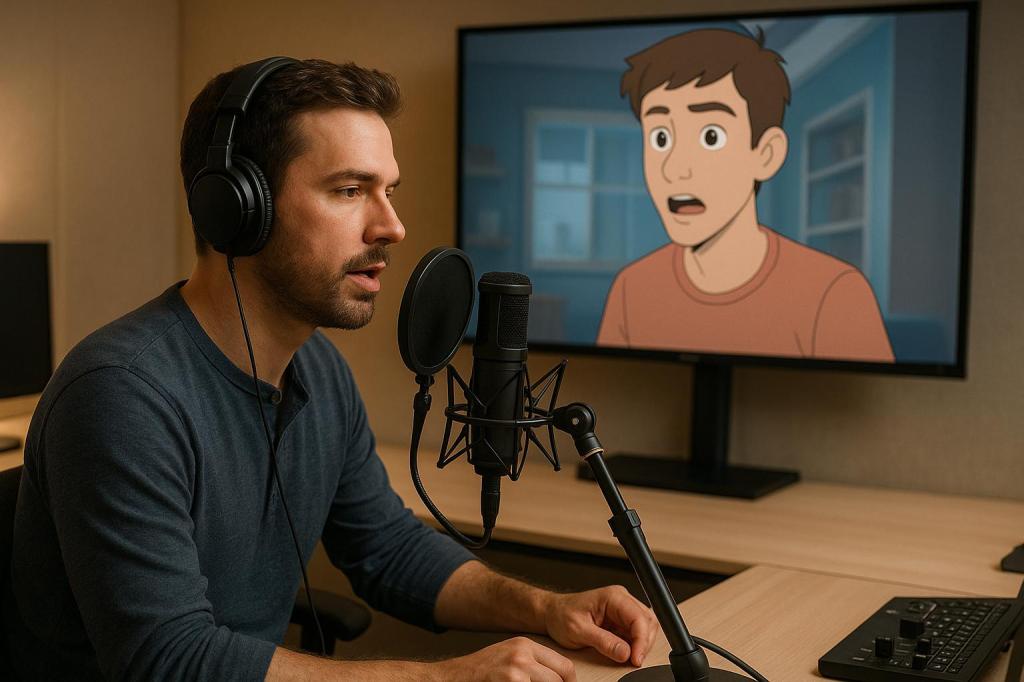
Video dubbing replaces original audio in videos with translated speech, making content accessible in other languages. It’s not just about translation – dubbing ensures lip-sync accuracy, adapts cultural references, and retains emotional depth. With 66% of non-English viewers preferring dubbed content and demand growing by 120% annually, dubbing is crucial for global media.
Key Points:
- Challenges: Lip-sync accuracy, preserving context, and managing multi-language projects.
- Solutions: Use AI tools like VisualDub for precise lip-sync and efficient multi-language dubbing.
- Best Practices: Plan ahead, combine AI with human expertise, and test for quality.
AI is transforming dubbing, offering faster production, better synchronization, and cost savings. Platforms like VisualDub deliver quality dubbing in over 50 languages, helping creators reach global audiences effectively.
How To Translate & Lip Sync Videos with AI | Dubbing Tutorial
Main Challenges in Video Dubbing
Video dubbing comes with its own set of hurdles that can impact both the technical quality and how well the audience connects with the content. Overcoming these challenges requires precision, creativity, and collaboration among various experts.
Getting Accurate Lip-Sync
Matching the dialogue to the actors’ lip movements is one of the toughest tasks in dubbing. When the audio doesn’t align with the visuals, viewers notice immediately, which can pull them out of the story.
The difficulty lies in the fact that languages differ in rhythm and phonetic structure. What fits naturally in one language may not sync well in another. Add to this the challenge of cultural variations – direct translations often fail to match the delivery style of the original dialogue. Technical factors like frame rates and syncing tools can further complicate matters.
"Lip sync accuracy enhances viewer immersion and engagement, allowing audiences to connect deeply with the storyline without distractions from mismatched movements." – Spain Voice Over Talent
To tackle this, phonetic matching techniques are often used. Voice actors focus on replicating visible lip movements by emphasizing certain sounds. Advanced software also plays a key role, analyzing audio and visuals to align the two seamlessly. Achieving this level of synchronization requires close collaboration between voice actors, directors, and sound engineers, all working together to create a polished final product.
Keeping Language and Context Accurate
Dubbing isn’t just about translating words – it’s about preserving the meaning, emotion, and cultural relevance of the original content. A word-for-word translation often falls flat, losing the humor, idioms, or emotional weight that made the original dialogue impactful.
For example, idiomatic expressions rarely translate directly. Without careful adaptation, the content can feel awkward or even inappropriate in a different cultural setting. This is where cultural awareness becomes crucial. Ignoring these nuances can lead to insensitivity or a disconnect with the audience, as the emotional and social context of the dialogue gets lost.
"Linguistic subtleties and colloquialisms carry emotional weight and help define cultural identity."
The best results come from working with native speakers who understand the cultural and emotional layers of the language. AI tools trained in contextual translation can also help, but human expertise is essential for making the content resonate. Localization techniques – like adapting humor or adding culturally relevant references – ensure the message feels natural and relatable without straying from its original intent.
Managing Multi-Language Dubbing Projects
When a project involves multiple languages, the complexity multiplies. From coordinating teams across time zones to ensuring consistent quality, multi-language dubbing requires meticulous planning.
One major challenge is maintaining uniform sound quality. Studios in different countries often use varying equipment and have unique acoustics, which can lead to inconsistencies. On top of that, adapting scripts for each language while preserving the tone and emotional depth of the original dialogue demands significant effort. Tight deadlines only add to the pressure, sometimes forcing teams to compromise on quality.
In March 2023, Ekitai Solutions highlighted the importance of involving native-speaking voice actors and localization experts. These professionals refine scripts to incorporate humor, idioms, and cultural nuances in a way that feels authentic to global audiences.
"AI is gaining traction in more dubbing projects, but it is not yet advanced enough to completely replace human involvement." – Agustina Vet, Head of Operations at Go Global
To manage these projects successfully, detailed style guides are essential. These guides outline character voices, tone, and pacing to maintain consistency across languages. Getting the dubbing team involved early in the production process can help identify potential translation issues before they become problems. Additionally, testing the dubbed content with local audiences can reveal awkward phrasing or cultural missteps, allowing for corrections before the final release.
New Technologies Improving Video Dubbing
The video dubbing industry is experiencing a remarkable shift thanks to the rise of artificial intelligence (AI) and machine learning. These cutting-edge tools are addressing longstanding challenges, from ensuring lip-sync precision to delivering consistent quality across multiple languages.
Generative AI for Better Lip-Sync
Generative AI has completely changed the game for lip-sync accuracy in dubbed content. By analyzing the timing of audio tracks, these advanced systems automatically adjust them to align with the speaker’s lip movements, creating seamless synchronization between visuals and sound. Early models based on GAN (Generative Adversarial Networks) have evolved into even more sophisticated generative systems, significantly reducing the need for manual adjustments while producing smooth, natural animations.
"AI Lip Syncing uses audio activations to drive the speaker’s lip movements for seamless dialogue replacement."
– SyncMonster AI [5]
Today’s AI tools can manage complex scenarios that once required hours of manual work. They handle side profiles, multi-speaker interactions (like assigning specific voices to individual faces), and even non-frontal or moving faces. Users can choose between quick, AI-generated results or a precision mode for highly realistic effects. For the best outcomes, focusing on specific faces or parts of the video rather than the entire footage enhances accuracy and speeds up processing.
Building on these innovations, platforms like VisualDub are leveraging similar AI technology to deliver tailored solutions for brands and creators.
Advanced Lip-Sync Features in VisualDub
VisualDub takes generative AI to the next level by synchronizing lip and jaw movements with dubbed audio, offering immersive results across more than 35 languages. Having been trained on over 1 billion data points and processing over 1.5 million seconds of video, VisualDub excels in adapting to diverse audio performances. It can even handle tricky scenarios, such as matching a character’s lip movements when they shout in one language and whisper in another, all while preserving the actor’s original voice identity.
"Visual Dub is solving a longstanding problem in dubbed content – what we call ‘visual discord.’ We’ve all experienced the disjointedness when watching content like a Korean film dubbed in English – the audio doesn’t match the facial expressions or lip movements. Our solution fixes that. Using AI, we ensure that when you watch a dubbed film, it appears as if it was shot originally in that language, creating a seamless experience."
– Mandar, Co-Founder of Visual Dub
The platform’s versatility is evident in real-world projects. For example, Coca-Cola and Harsha Bhogle used VisualDub to create post-match video messages tailored to different audiences, using the same footage but delivering unique messages. Similarly, UltraTech Cement transformed an ad featuring Shah Rukh Khan, originally filmed in Hindi, into English using VisualDub’s advanced tools. Its ability to adapt to varied visual conditions, combined with the speed at which it generates personalized video content, makes it invaluable for both entertainment and marketing.
Automated Quality Control Tools
AI’s impact on dubbing extends beyond lip-syncing to include quality control. Automated tools are now streamlining the process with real-time validation and editing capabilities.
A standout example is OOONA‘s Multilingual QC tool, designed to help media localization professionals validate and edit subtitles across multiple languages simultaneously. This tool simplifies workflows by allowing users to manage and refine subtitle files within a single project, ensuring consistent quality across all languages.
"With the Multilingual QC tool, we are addressing a core need in the media localization industry – ensuring that subtitles are accurate and properly formatted across different languages in a timely and cost-effective manner. This tool is another step in our ongoing mission to provide best-in-class solutions for subtitling professionals."
– Alex Yoffe, OOONA tools product manager
The most effective AI dubbing solutions combine automation with human oversight, striking a balance between efficiency and creativity. Real-time quality control tools now allow for customizable validation of subtitles across multiple languages, enhancing precision and saving time. For instance, CAMB.AI‘s collaboration with Major League Soccer to livestream games in multiple languages demonstrates how AI can handle complex, real-time dubbing scenarios while maintaining broadcast-quality standards.
sbb-itb-818e448
Best Practices for Quality Dubbing
Creating top-notch dubbing involves careful planning and making the most of modern technology. Combining these two elements ensures an efficient production process and high-quality output.
Planning Before Production Starts
Every successful dubbing project begins with solid pre-production planning. Start by developing detailed character profiles and summaries to guide voice actors in matching the right tone and style. Include actor-specific notes to ensure consistency.
Prepare well-timed scripts with precise dialogue lists for accurate lip-syncing. Share the original video with clean audio tracks, and if possible, provide separate dialogue versions to make the process smoother.
"Being culturally aware is a must in dubbing. A good dub is based on accurate translation, creative and efficient adaptation, a solid team comprising of a good director, sound engineer, mixer and actors. When planning your production, always schedule and reserve enough time for professional quality and unrushed content localization."
Budgeting and timeline planning are equally important. Collaborating closely with your dubbing partner from the start allows you to build a complete source package step by step, minimizing the risk of costly revisions later. Thoughtful preparation upfront not only saves time but also aligns with the streamlined workflows discussed earlier.
Adding AI Tools to Your Workflow
After laying the groundwork, incorporating AI tools can take your dubbing process to the next level. Using AI-powered platforms like VisualDub can significantly boost efficiency, offering up to 70% faster turnaround times and reducing dubbing costs by up to 50%. These tools are particularly effective for handling multiple languages simultaneously, eliminating the challenges of coordinating human voice actors across time zones.
AI technologies such as natural language processing, speech synthesis, and computer vision can create realistic, perfectly synchronized voice tracks. When selecting an AI dubbing solution, prioritize features like a wide range of language and accent options, high-quality voice output, emotional expression, and compatibility with your existing editing tools. Many leading AI platforms deliver cinematic-quality results across various languages.
The best results come from blending AI automation with human expertise. While AI handles synchronization and initial translations, human professionals refine the creative direction, adapt content culturally, and conduct final quality checks. This hybrid approach ensures consistency and quality across all localized versions.
Maintaining Quality Across All Languages
Consistency across languages requires a systematic approach. Work with professional native translators who can accurately capture cultural nuances, ensuring the dialogue feels authentic and natural. Focus on creative adaptation rather than direct translation to preserve the original intent and emotional resonance.
Use terminological glossaries to maintain uniformity, particularly for multi-episode projects or series. Incorporate multiple rounds of revisions, drawing on feedback from linguistic experts, cultural consultants, and test audiences. A thorough quality assurance process will help address technical or timing issues before release.
Additionally, keep translators updated on language trends and gather feedback early to resolve potential issues. This proactive approach ensures that your localized content resonates with audiences worldwide.
Conclusion: Solving Dubbing Problems with AI
The world of video dubbing is evolving at a breakneck pace, and AI is at the heart of this transformation. Challenges like achieving precise lip-sync and managing multilingual dubbing are now being tackled efficiently with advanced platforms like VisualDub.
A staggering 85% of marketers acknowledge that AI has reshaped their approach to video content, from the initial scriptwriting stage to the final dubbing process. The global film dubbing market, valued at $3.27 billion in 2021, is on track to exceed $5 billion by 2027. This growth is largely fueled by AI innovations that can slash production timelines from months to just days or even hours.
These numbers highlight how AI not only speeds up the creative process but also enables greater flexibility and adaptability.
AI dubbing addresses both operational and creative challenges by automating translation, voice synthesis, and synchronization. This eliminates the inefficiencies of traditional post-production workflows and empowers creators to focus on storytelling. For businesses aiming to expand their global footprint, AI makes it easier to produce multilingual content, opening doors to broader audiences and untapped markets.
"AI dubbing revolutionizes entertainment by enabling seamless, multilingual voiceovers with cultural and emotional nuance."
- – Murf AI
One of AI’s standout features is its ability to provide a wide array of voices and accents, allowing creators to tailor content for specific audiences. With the global digital media market projected to hit $693.30 billion by 2027, growing at a rate of 8.9% annually, localized content is becoming a key driver of this expansion.
VisualDub exemplifies AI’s potential by offering studio-quality lip-sync in over 50 languages, enabling dialogue replacement and hyper-personalization while maintaining the integrity of original content.
For content creators, embracing AI-powered tools like VisualDub isn’t just an option – it’s a necessity. These tools help them connect with global audiences, cut costs, and deliver localized content that resonates across languages and cultures. AI is redefining what’s possible in dubbing, setting a new standard for quality and efficiency in the industry.
FAQs
How does VisualDub use AI to enhance lip-sync accuracy in video dubbing?
VisualDub uses cutting-edge AI algorithms to carefully analyze a video’s audio and visual components, ensuring the dialogue matches perfectly with the speaker’s lip movements. The result? A smooth, natural viewing experience that stays true to the original performance.
By automating intricate adjustments, the AI captures human emotions and voice subtleties with impressive precision – leaving traditional manual methods far behind. This approach not only speeds up the process but also preserves the emotional depth and authenticity of the content for audiences around the world.
How can cultural references and emotional depth be adapted effectively in multilingual dubbing?
Adapting references and emotional depth in multilingual dubbing requires a sharp focus on the unique idioms, expressions, and subtle nuances of the target language. This approach helps ensure the content feels natural and relatable to local audiences. Voice actors play a crucial role here – they need to capture the emotional essence of the original performance while navigating linguistic differences that might affect timing or delivery.
Equally important is how the script is adapted. Literal translations often fall flat, losing meaning or failing to strike the right chord with viewers. Instead, the goal should be to maintain the original intent, humor, and emotional impact of the content. When cultural sensitivity and thoughtful localization take center stage, the result is dubbed content that resonates deeply with audiences while staying true to its original spirit.
How can creators maintain consistent dubbing quality across multiple languages when using AI tools?
To keep dubbing quality consistent across multiple languages with AI tools, start by ensuring the source material is clear and easy to adapt for different audiences. Steer clear of idioms or phrases that don’t translate well, and work with professional translators to tailor scripts for each language. This ensures the content stays accurate and resonates with the intended audience.
Leverage AI tools that offer customizable voice settings to adjust tone and quality, helping maintain a uniform sound across languages. Adding a human-in-the-loop process, where human reviewers fine-tune the AI’s output, can make the final results sound more natural. It’s also crucial to regularly review and update the dubbing to align with any changes in the visual content, ensuring proper synchronization and accuracy.
Related Blog Posts
- Top Video Dubbing Software for Film Studios
- 7 Ways to Cut Video Production Costs with AI
- Top premium Lipsync software 2025
https://app.seobotai.com/banner/banner.js?id=683da0e80194258b64ad514c
 VisualDub blog
Leave a comment