Author: franticguy

  • How AI Lip-Sync Technology Is Transforming Multilingual Video Localization

    How AI Lip-Sync Technology Is Transforming Multilingual Video Localization

    Global audiences expect content in their native language – but traditional localization methods can’t keep up. Manual video dubbing takes weeks, costs thousands per video, and often produces awkward mismatches between audio and visuals. Subtitles are faster and cheaper, but viewers barely engage with them.

    AI lip-sync technology is changing the game. By automatically syncing translated dialogue with on-screen lip movements, it delivers the engagement of professional dubbing at a fraction of the cost and time.

    In Short (TL;DR):

    • AI lip-sync produces more natural, engaging multilingual video than traditional video localization methods.
    • It speeds up localization significantly, with industry reports noting up to 80% faster production.
    • AI lip-sync cuts costs by eliminating reshoots and repetitive editing while scaling efficiently across many languages to support global video expansion.
    • Platforms like VisualDub offer studio-quality lip-sync, 32-bit EXR support, 50+ languages, and smooth workflow integration, enabling cinematic multilingual content without reshoots.

    Here’s how AI lip-sync stacks up against traditional methods:

    Quick Comparison of Localization Methods

    Method Cost Speed Engagement Accuracy
    Subtitles Low Very High Low High
    Manual Dubbing High Slow Average Low
    AI Lip-Sync Low High Ultra High High

    The comparison makes it clear: AI lip-sync technology delivers the best balance of speed, cost-efficiency, audience engagement, and accuracy for video localization. 

    Before exploring how AI lip-sync solves these issues, it’s worth understanding why traditional video localization methods fall short. 

    Problems with Standard Video Localization Methods

    Traditional video localization methods come with hefty price tags and sluggish timelines. These challenges become even more pronounced when businesses aim to expand their content into multiple languages and regions. 

    Here’s where the main challenges lie in production, synchronization, and expansion:

    1. Expensive and Slow Production

    Manual dubbing is a labor-intensive process, requiring coordination between translators, voice actors, sound engineers, and quality assurance teams, each adding to the overall complexity and cost. For example, dubbing a 15-minute English video into Spanish can cost around $2,000, while subtitling the same video costs about $200.

    On top of the high costs and labor required, dubbing is notoriously lengthy, often taking weeks or months. Each step, from translation and casting to recording and editing, adds complexity. Juggling multiple languages, studios, and quality standards makes the process even slower and more prone to mismatched audio and visuals.

    2. Poor Audio-Visual Matching

    One of the most glaring issues with traditional dubbing is the lack of synchronization between the dubbed audio and the on-screen lip movements. Achieving accurate lip-sync is difficult because languages differ in rhythm, syllable counts, and sentence structures, which directly affect timing. 

    Additionally, literal translations often fail to capture emotional nuance or regional subtleties. This forces a trade-off between accuracy and natural-sounding dialogue, leaving content that can feel disconnected from the visuals. Synchronization challenges not only hurt viewer engagement but also make it harder to scale content for global audiences.

    3. Hard to Scale Across Languages

    Scaling video localization across multiple languages is another uphill battle. The costs, time demands, and difficulty of maintaining consistent quality all increase as more languages are added. 

    Each language requires its own team of translators, voice actors, and quality assurance experts. For less common languages, finding qualified professionals can be even harder, leading to either quality compromises or extended timelines. On top of everything, ensuring content resonates with local audiences and respects regional sensitivities becomes more complex as the number of target languages grows.

    How AI Lip-Sync Technology Fixes These Problems

    Let’s look at how AI-powered lip-sync directly solves the localization challenges outlined above:

    1. Accurate Lip Movement Matching

    One of the standout features of AI lip-sync technology is its ability to precisely replicate mouth movements using advanced machine learning algorithms. Traditional dubbing struggles with mismatched audio and visuals. AI fixes this by syncing mouth movements to translated dialogue, keeping emotions consistent. 

    Studies indicate that when audio and visuals are perfectly synchronized, audiences are far more likely to watch videos to completion. According to recent studies, modern AI tools achieve accuracy rates as high as 95%, making this seamless viewing experience possible at scale.

    2. Faster Production Times

    AI dramatically reduces the time required to sync translated audio with lip movements, processing one minute of content in just 10 seconds. By automating tasks like analyzing raw footage, generating cuts, suggesting transitions, and identifying the best shots, AI significantly speeds up production timelines, with industry reports citing gains of up to 80%.

    3. Lower Costs and Easier Scaling

    Shorter production times naturally lead to cost savings, especially when scaling content for multilingual audiences. Traditional dubbing often involves expensive reshoots and complex editing processes, but AI simplifies these steps, making video localization more cost-effective.

    The scalability of AI lip-sync technology is reflected in industry trends, where organizations adopting AI localization often report outcomes such as:

    • 20 to 40% increases in website visits and viewer return rates after adding new language versions
    • Up to 30× improvements in short-form video performance across multilingual channels
    • 10 to 20% increases in regional engagement after introducing localized content
    • Up to 10× reductions in localization costs over multi-year periods
    • Automation of 10 to 20% of recurring translation workflows within the first few months

    “Organizations that embrace these advancements will not only meet the needs of today’s multilingual world but also lead the charge in shaping a more interconnected future.” – KUDO

    (Source: KUDO Blog)

    Main Features of AI Lip-Sync Platforms

    If you’re evaluating AI lip-sync tools for your production workflow, features lists can blur together quickly. Here’s what actually separates platforms that deliver broadcast-ready results from those that don’t.

    1. Professional-Grade Video Quality 

    Modern AI lip-sync platforms ensure that the quality of the original video remains intact while delivering precise synchronization. By leveraging optimal lighting and high-definition inputs, these tools enhance facial detection and lip movement accuracy.

    For instance, VisualDub by NeuralGarage supports 32-bit EXR files, enabling cinema-quality visuals suitable for theatrical productions shot with high-end cameras. Advanced machine learning models analyze mouth movement patterns for various sounds, preserving the authenticity of the original performance while reducing costly rework.

    3. Multilingual Capabilities and Customization

    One of the standout features of AI lip-sync platforms is their ability to support multiple languages. Leading platforms like VisualDub offer compatibility with over 50 languages, making it easier for businesses to connect with global audiences while bypassing the traditional hurdles of cost and complexity. 

    These platforms go beyond simple translation, including tools like voice cloning, custom pronunciation adjustments, and voice modulation. Hyper-personalization features enable businesses to craft targeted messages that resonate with diverse cultural audiences, while dialogue replacement functionality eliminates the need for expensive reshoots.

    3. Seamless Integration with Existing Workflows

    AI lip-sync platforms are designed to integrate effortlessly into current production systems. Platforms like VisualDub offer API integration, allowing ad agencies, film studios, and OTT platforms to incorporate advanced lip-sync technology without disrupting their established workflows.

    This seamless integration can reduce overall production time significantly, with AI processing one minute of content in just 10 seconds. Cost savings are equally impressive, AI video dubbing services start at just $1.50 per minute, a fraction of traditional methods. 

    Business Benefits of AI Video Localization

    Switching to AI-powered video localization isn’t just a tech upgrade – it’s a game-changer for businesses. Companies embracing this technology are seeing real results: stronger viewer connections, quicker global growth, and smarter resource use.

    1. Better Viewer Engagement

    When content speaks your audience’s language – literally – it resonates more. Native-language videos with accurate lip-syncing build trust and keep viewers engaged. AI lip-sync technology ensures the audio and visuals align perfectly, creating a smooth, natural viewing experience that avoids the awkwardness of traditional dubbing.

    Educators and online creators often see major gains when they localize content with AI, from faster workflows to significantly reduced costs. This allows them to offer multilingual learning experiences without adding operational overhead.

    When viewers feel connected, businesses are primed for growth – and that growth can happen fast.

    2. Faster International Growth

    AI lip-sync technology eliminates the usual delays of traditional localization methods. This speed gives companies the agility to act on market opportunities as they emerge.

    Consider this: the global video translation service market is expected to hit $6.5 billion by 2030, growing at an annual rate of 14.3%. Companies using AI localization are better positioned to grab a larger slice of this booming market, thanks to their ability to move faster than competitors sticking to older methods.

    For instance, one online educator used AI localization to streamline course creation and reduce expenses. By converting lessons into multiple languages quickly, they expanded their global reach without sacrificing quality.

    Industry reports and case studies frequently cite time-savings of up to 80% when teams transition from manual workflows to AI-assisted production. This quick turnaround allows them to respond to trends and seasonal demands effectively. For instance, a retail startup using AI-created short videos for TikTok saw a 25% jump in conversion rates. Similarly, fashion brands using AI video content experienced 3.2x higher engagement rates and a 27% boost in average order values compared to static images.

    Faster localization doesn’t just drive growth – it saves money, too.

    3. Cost Reduction and Better Resource Use

    AI localization isn’t just about speed and engagement; it’s also a budget-friendly solution. Some vendors report reductions of more than 50% in localization resource needs. For example, one provider claims to have reduced human translator headcount by 76% using their AI-driven M3 Framework, a shift that significantly lowers long-term localization costs.

    The efficiency gains are striking. In Q1 2025, Ollang’s M3 Framework helped a media company reduce its translator team from 886 to 213 while producing the same volume of content in four languages. Another media partner used AI dubbing to localize over 600 hours of documentaries – a task that would have taken months and significant expense with traditional methods.

    Advanced tools like VisualDub bring even more precision, offering cinema-grade results that meet the high standards of major film studios and streaming platforms. For instance, a Rome-based film company combined AI subtitling with professional oversight to achieve high-quality localization at a fraction of the cost.

    “Balance opportunities against risks. Use AI strategically to reach new markets faster, but prioritize quality and accessibility.” – Vanessa Lecomte, Localization Operations Manager, BBC Studios

    And the consumer demand is clear: 76% of buyers prefer products with instructions in their native language, and 84% say videos have influenced their purchasing decisions. AI localization allows businesses to meet these preferences without ballooning their budgets.

    Conclusion: What’s Next for Multilingual Video Localization

    AI-powered lip-sync technology is transforming global video content. Companies are cutting localization costs, achieving 95% accuracy levels, and boosting engagement. With the AI dubbing market projected to hit $2.9 billion by 2033, this shift is here to stay.

    What sets this technology apart is its ability to scale across languages while preserving emotional and cultural nuances. When visual and auditory elements sync perfectly, viewers watch longer and convert better – crucial when 55% of global consumers prefer product information in their native language.

    The future is expanding rapidly. Real-time multilingual video generation is enabling instant translation for live streams, while tools are becoming increasingly context-aware, interpreting tone, intent, and cultural cues with greater precision.

    Platforms like VisualDub are leading the charge, delivering studio-quality lip-sync in over 50 languages while maintaining cinematic standards. With support for up to 32-bit EXRs, the technology is versatile enough for everything from social media clips to blockbuster films.

    For companies considering AI localization, starting small with pilot projects allows you to test the technology against your specific requirements. If you’re evaluating AI localization, a demo is the best way to understand what’s possible.

    Book a call with us to see how VisualDub delivers visually authentic lip-sync for your localization needs.

    FAQs

    Q 1. How does AI-powered lip-sync enhance viewer engagement compared to traditional dubbing or subtitles?

    AI lip-sync enhances engagement by making translated videos look more natural and visually aligned with the audio. Instead of mismatched dubbing or distracting subtitles, the lip movements match the spoken language closely, creating a smoother and more immersive experience.

    Because the process is automated, AI lip-sync also speeds up video localization while maintaining high visual consistency. This helps brands deliver multilingual content faster, improving viewer retention and connection across global audiences.

    Q 2. What are the cost and time-saving advantages of using AI lip-sync technology for multilingual video production?

    AI lip-sync reduces both cost and production time by automating traditionally manual localization tasks. Brands no longer need multiple voice actors or expensive reshoots, making the process far more budget-friendly.

    By automating transcription, syncing, and language adaptation, AI shortens the entire workflow. This allows teams to produce multilingual videos faster, scale into new markets quickly, and maintain consistent quality across all languages.

    Q 3. How does AI lip-sync technology ensure accurate synchronization of lip movements with translated audio in different languages?

    AI lip-sync tools use machine learning to analyze speech, facial movements, and articulation, generating lip movements that match the translated audio realistically. This eliminates manual adjustments or reshoots.

    By preserving emotional nuance and timing, the technology produces smooth, believable multilingual video content that feels natural to viewers, improving accessibility, engagement, and localization accuracy.

     

  • Top premium Lipsync software 2025

    Top premium Lipsync software 2025

    AI-powered lip-sync software has transformed video production, making it easier than ever to match lip movements to audio tracks with precision. These tools are essential for dubbing, localization, and creating engaging global content. Here’s a quick overview of the top premium lip-sync software in 2025:

    Key Takeaways:

    • VisualDub: Studio-grade quality with support for 50+ languages. Ideal for professional film, advertising agencies and OTT platforms.
    • Vozo AI: Advanced realism with modes for avatars videos. Supports major languages.
    • HeyGen: Excels in multilingual dubbing with lifelike avatars.
    • Sync.so: Developer-friendly API for seamless integration.
    • SyncMonster AI: Excels at natural quality LipSync. Supports major languages.

    Quick Comparison Table:

    Feature VisualDub Vozo AI HeyGen Sync.so SyncMonster AI
    Generative AI High-quality, 32-bit EXR Realistic avatars & videos Precise multilingual sync Zero-shot model, API-first Flawless lip-syncing
    Languages 50+ Major languages Major languages Major languages Major languages
    Best For Films, Advertising, OTT platforms Dynamic animations Multilingual creators API bases Professional controls

    Whether you’re a filmmaker, content creator, or developer, these tools offer tailored solutions for professional-quality lip-syncing and video localization. Dive into the full article to explore features, pricing, and use cases for each platform.

    AI Lip Sync Battle – 6 Tools Put To The Test!

    1. VisualDub by NeuralGarage

    VisualDub

    VisualDub is a cutting-edge AI tool developed by NeuralGarage, designed to deliver studio-quality lip-sync for professional video production. Unveiled at TechCrunch Disrupt in October 2024, this platform aims to eliminate the awkward mismatches often seen in dubbed videos, ensuring a seamless viewing experience.

    At its core, VisualDub focuses on maintaining the emotional integrity of original performances while syncing facial movements perfectly with translated audio. This ensures that speech patterns appear natural, with no compromise on facial expressions or visual quality.

    Generative AI Model at the Heart

    What sets VisualDub apart is its advanced generative AI technology. This system carefully analyzes both the original video and the new audio, generating precise facial movements that match the translated dialogue. By doing so, it not only ensures accurate lip-syncing but also preserves the emotional depth of the original performance .

    Multilingual Support for Global Reach

    VisualDub supports over 50 languages, meeting the growing need for global content localization. This feature allows content creators to bring their work to international audiences without losing the authenticity of the original production.

    With localized content proven to boost viewer engagement by up to 140%, this multilingual capability is a game-changer for creators looking to expand their reach.

    Seamless Integration for Professionals

    Designed with professionals in mind, VisualDub fits effortlessly into existing cinematic workflows. Whether you’re working in advertising, film, or OTT platforms, the platform ensures that lip-syncing technology can be added without disrupting established processes.

    It’s built to handle high-end productions, supporting videos shot on professional-grade cameras. This makes it an ideal choice for studios aiming to produce content for both international markets and cinema-quality releases. Additionally, it supports industry-standard high-fidelity formats, ensuring that the final output meets professional expectations.

    Top-Tier Output Quality

    A standout feature of VisualDub is its compatibility with 32-bit EXR files, the gold standard for video production. This ensures that the platform can process and maintain the highest quality visuals, regardless of how the original footage was captured.

    2. Vozo AI

    Vozo AI

    Vozo AI has transitioned from earlier GAN-based approaches to next-generation generative AI models. These advancements, introduced in 2024, have elevated the realism and quality of lip-sync animations, making them appear more lifelike than ever before. Vozo AI’s evolution has also led to advanced processing modes tailored for various production needs.

    Advanced Generative AI Models

    Vozo AI provides two processing modes to suit different use cases. Standard Mode delivers speedy results with AI-generated avatars, while Precision Mode takes realism to the next level by working with actual human videos. The platform is equipped to handle complex scenarios, including head movements, facial obstructions, and even features like beards. For projects involving multiple speakers, users can manually select specific faces and sections to ensure accurate lip-syncing .

    Multilingual Capabilities

    One of Vozo AI’s key strengths is its robust language support. The platform works with mutiple languages, surpassing the typical benchmarks for multilingual functionality. It boasts an impressive accuracy rate in translations and subtitles. By automating the entire localization process – covering transcription, translation, voice dubbing, and lip-syncing – Vozo AI simplifies global content creation, making it a one-stop solution for creators.

    Tailored for Cinematic Workflows

    Vozo AI’s capabilities extend beyond language support, catering specifically to video production professionals. It can generate continuous lip sync for videos up to 60 minutes long, with tools for fine-tuning audio inputs to achieve precise synchronization. From standard dialogue to more challenging formats like rap and music videos, the platform handles a wide range of content with ease. This versatility makes it a valuable tool for diverse production environments.

    For pricing, Vozo AI’s plans start at $19.00 per month for the Premium Plan, with the Business Plan available at $99.00 per month.

    3. HeyGen

    HeyGen

    HeyGen is making waves in the premium lip-sync software market by combining cutting-edge AI with a focus on localization and cinematic production trends. This platform specializes in AI-powered video translation and dubbing, ensuring that the original tone and personality of content remain intact while adapting it for audiences worldwide. What makes HeyGen stand out is its ability to analyze mouth movements in original videos and synchronize translated audio seamlessly, delivering natural and polished results across various content formats. Its advanced generative AI models set a high bar for lip-sync precision.

    Generative AI Model Sophistication

    In January 2025, HeyGen unveiled a next-level motion control system designed to enhance virtual avatar movements. This system achieves pixel-perfect accuracy in joint angles with a lightning-fast latency of under 12 milliseconds. By leveraging deep neural networks, HeyGen enables creators to produce lifelike virtual avatars, offering cinematic-quality results with unparalleled control. The AI also ensures that the original emotional nuances and delivery style are preserved.

    Multilingual Support

    HeyGen doesn’t just excel in technical precision – it also offers an impressive range of language support. This makes HeyGen a go-to solution for global content creators and businesses looking to connect with diverse audiences. Its sophisticated voice cloning technology retains the speaker’s authentic voice and emotional tone across all supported languages, ensuring consistent brand identity no matter the market.

    "HeyGen’s translation features are terrific. We can easily create multilingual videos. The dubbed voices sound excellent." – Kim L. on Capterra

    HeyGen’s attention to detail extends to its lip-syncing capabilities, which adapt to the unique mouth movements required by different languages. This feature has fueled its popularity, with over 60% of digital content creators in the U.S. now incorporating AI tools like HeyGen into their workflows.

    Integration with Cinematic Workflows

    HeyGen is designed to simplify professional video production without sacrificing quality. It increases production efficiency by 47% and reduces the cost of creating dynamic scenes to just one-eighth of traditional methods. By automating tasks like voice cloning, background customization, and advanced lip-syncing, HeyGen offers a scalable solution for both small teams and large productions. The platform transforms plain text into captivating videos featuring realistic AI avatars, eliminating the need for extensive equipment or technical expertise while still achieving professional-grade results. These advancements position HeyGen as a leader in 2025’s video production standards.

    "HeyGen provides high-quality avatar based lip-syncing.

    HeyGen also offers flexible pricing to accommodate a range of production needs. A free plan covers basic features, while paid plans start at $29.00 per month with the Creator plan.

    4. Sync.so

    Sync.so is is incorporating cutting-edge AI into production processes, offering a developer-focused solution for premium lip-sync technology. Designed to integrate effortlessly into existing workflows, Sync.so provides advanced lip-sync models tailored for production houses, software developers, and enterprises. Its approach caters to the growing demand for streamlined and integrated lip-sync capabilities across industries.

    Generative AI Model Excellence

    At the heart of Sync.so is lipsync-2, a zero-shot model that can modify lip movements in any video to match new audio – no person-specific training required. The model captures each speaker’s unique communication style by analyzing their input video, using transformers to encode mouth shapes and generate synchronized movements. This technology is versatile, working seamlessly across live-action footage, animated content, and AI-generated characters. Impressively, the system can process roughly 90 minutes of video per hour via its API.

    "We built lipsync-2, the first in a new generation of zero-shot lipsyncing models. It seamlessly edits any person’s lip movements in a video to match any audio without having to train or be fine-tuned on that person." – Prady Modukuru, sync.

    Multilingual Capabilities

    Sync.so goes beyond technical precision by supporting multiple languages, catering to diverse global production needs. It can manage complex scenarios in longer videos by linking distinct voices to specific faces and applying lip-sync adjustments only when the corresponding person is speaking.

    Seamless Integration for API Workflows

    Its API-first design allows developers to embed advanced lip-syncing features directly into video production pipelines and content management systems without disrupting existing workflows. However, the platform currently supports only single-face, front-facing videos and may occasionally produce slight visual artifacts or blurriness under certain conditions.

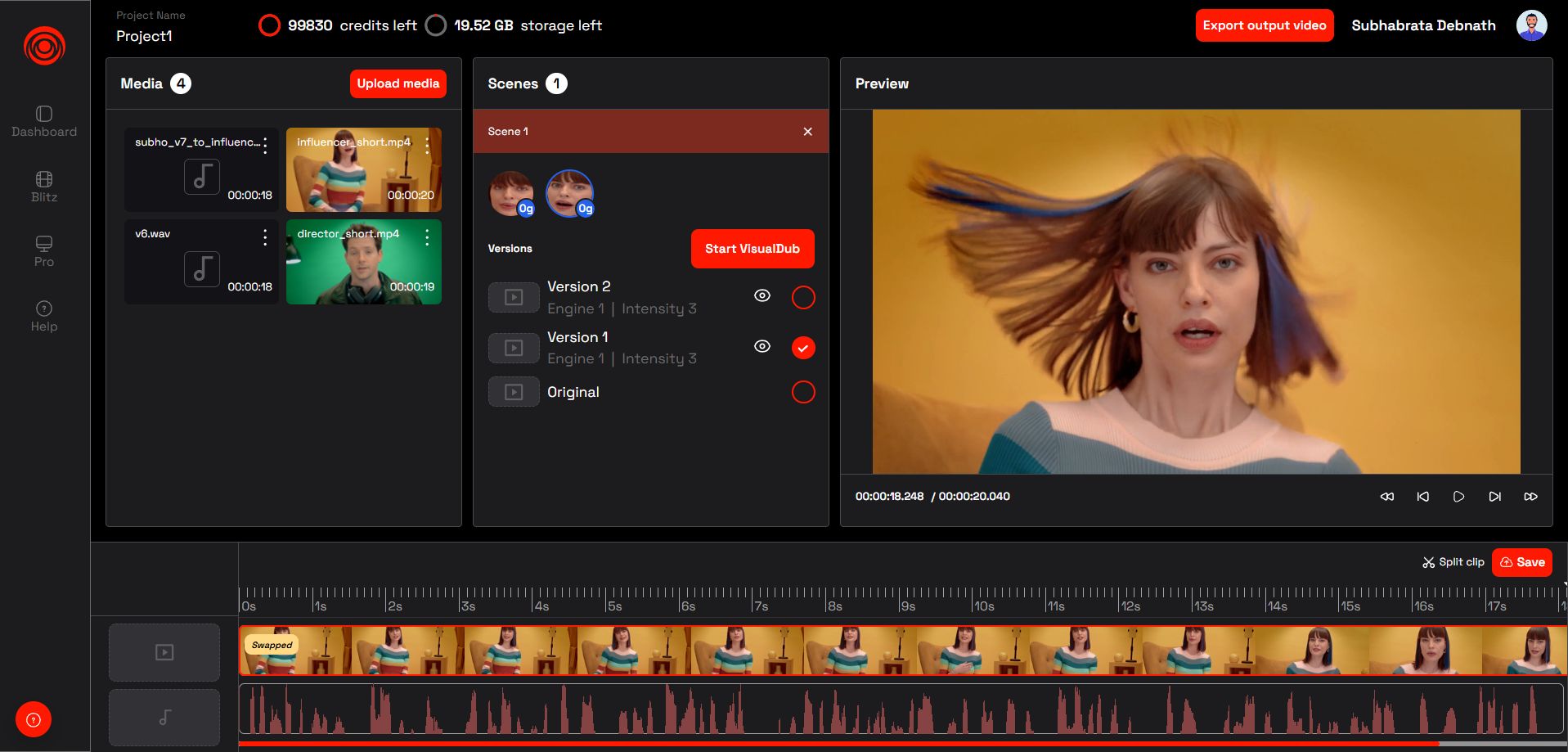
    5. SyncMonster AI

    Recently launched, SyncMonster AI has quickly distinguished itself as an exceptionally user-friendly platform, offering numerous distinctive controls for precise lip-sync. By uniting state-of-the-art AI dubbing and voice cloning with advanced lip-sync technology, it delivers a formidable solution for worldwide content localization. Explore its standout capabilities and advantages for creators and studios everywhere.

    Among SyncMonster AI’s most compelling innovations is SyncBoost, a feature that allows users to fine-tune the amount of lip synchronization on a frame-by-frame basis. Departing from generic translation tools, SyncBoost generates dubbed videos in which mouth movements align flawlessly with the replacement audio, matching each project’s unique demands. The platform also supports scenes containing multiple speakers and accommodates an extensive spectrum of languages and regional dialects, ensuring truly global compatibility for all audiences.

    "This is a revolution that literally transforms the Digital Advertising landscape." – Sukrit Garg, Category Head, Leo Burnett.

    The platform integrates lip-sync capabilities directly into its Pro interface, allowing users to apply lip-syncing to specific sections of a video instead of the entire clip. This flexibility saves time and processing resources. Combined with its broad language compatibility, Syncmonster AI is a go-to solution for digital agencies and content creators and businesses alike.

    Language Support and Multi-lingual Capabilities

    Syncmonster AI supports translation in over 30+ languages. It handles everything from widely spoken languages like English, Spanish, French, and Mandarin to regional dialects, adapting to subtle variations in speech patterns and rhythms.

    "This brought our campaigns closer to each audience with unmatched precision." – Kedar Ravangave, Head of Brand and Category marketing, Amazon IN

    The versatility of Syncmonster also shines in music videos and rap content, where precise timing is crucial. It’s an invaluable tool for businesses aiming to break into international markets.

    Multi-speaker Synchronization

    Syncmonster AI also excels in managing videos featuring multiple speakers or faces. It can automatically sync individual voices to specific faces in group settings . The technology distinguishes between different speakers and applies accurate lip movements to each person. If needed, users can manually adjust face-to-voice matches for even greater accuracy in complex scenarios. Additionally, it preserves fine facial details, ensuring a polished final product.

    Facial Expression and Emotion Preservation

    To cater to varying needs, Syncmonster AI offers two processing modes. Blitz mode delivers quick results, ideal for frontal videos with a single person, while Pro mode focuses on creating highly realistic effects which need high amount of lipsync control. Syncmonster handles challenging conditions like head movements, facial hair, and non-frontal angles, ensuring smooth and accurate lip-syncing. It also maintains natural facial expressions, making the final output look authentic rather than robotic.

    This feature is particularly useful for product demonstrations and advertising campaigns. As Daniel Cherian, a SyncMonster user, explains, "The user interface is very friendly, it delivers impressive results with excellent video output".

    Software Comparison Table

    Here’s a closer look at the standout features of each premium lip-sync tool we’ve discussed. This comparison breaks down their AI performance, language support, integration options, and output quality to help you decide which one fits your needs.

    Generative AI Capabilities

    • VisualDub: Delivers studio-grade results with support for 32-bit EXR files, ensuring top-tier visual fidelity.
    • Vozo AI: Known for its realistic whole-body animations, making it perfect for dynamic video content.
    • HeyGen: Offers precise multilingual lip-syncing, ideal for global content.
    • Sync.so: Geared toward developers but produces lower-quality results with occasional artifacts.
    • SyncMonster AI: Focused on achieving flawless lip synchronization.

    Multilingual Support

    • VisualDub: Supports over 35 languages global using AI-powered visual localization.
    • Vozo AI: Handles any language or dialect, even challenging formats like rap
    • HeyGen: Excels in multilingual dubbing with strong accuracy.
    • Sync.so: Covers major languages but lacks the breadth of others.

    "Beyond translation, the lip-sync feature adds credibility to the videos, making them more relatable to international audiences."

    • Rahul Sharma, E-commerce Entrepreneur

    Integration Options

    • VisualDub: Works seamlessly with workflows in ad agencies, film studios, and OTT platforms.
    • Vozo AI: Currently requires waitlist access and lacks an official API.
    • HeyGen: Integrates via Zapier, enabling project automation.
    • Sync.so: Offers a powerful developer-focused API.

    Feature Comparison Table

    Feature VisualDub Vozo AI HeyGen Sync.so SyncMonster AI
    AI Quality Studio-grade, 32-bit EXR support Realistic movement Accurate multilingual sync Developer-focused, occasional artifacts Natural lip-sync
    Language Support 50+ languages Most languages Strong multilingual support Major languages only 35+ languages
    API Integration No API No API (waitlist access) Zapier integration Developer-friendly API API available
    Best For Film studios, OTT platforms Complex animations, music videos Multilingual content creators Developers, custom builds Natural Lipsync

    Quality and Robustness

    • VisualDub: Tailored for cinematic productions, maintaining high-quality visuals even in demanding scenarios.
    • Vozo AI: Handles animated content, making it a good choice for dynamic animations.
    • HeyGen: Reliable for multilingual dubbing under standard production conditions.
    • Sync.so: Performs well with controlled input but struggles in less predictable environments.
    • SyncMonster: The monster of natural LipSync with advanced controls.

    Each tool shines in its own space, catering to different production needs – from high-end films to developer-driven projects. Whether you’re creating cinematic masterpieces or multilingual content, there’s a solution here for you.

    Conclusion

    As the demand for high-quality content continues to grow, advancements in AI lip-sync tools are reshaping the way videos are produced. Choosing the right software depends on your specific production needs and workflow.

    Each tool brings something distinct to the table:

    • VisualDub: Delivers studio-grade quality and supports over 35 languages.
    • Vozo AI: Known for its lifelike realism, ideal for dynamic content.
    • HeyGen: Excels in multilingual dubbing with impressive accuracy.
    • Sync.so: Offers developer-friendly API integration for seamless workflows.
    • Syncmonster AI: Stands out for its naturalness in lip-syncing.

    When selecting a tool, consider factors like lip-sync accuracy, head pose adaptability, support for multiple faces, API capabilities, and translation effectiveness.

    For personalized video marketing, prioritize software that allows customization and works well with your current marketing tools. Cinema professionals should seek options offering detailed control and hyper-realistic results, while creators aiming for international audiences will benefit from platforms with robust multilingual dubbing features.

    The AI lip-sync software landscape in 2025 provides tailored solutions for everything from blockbuster films to global marketing campaigns. Your decision should reflect your quality standards, technical needs, and target audience. These tools are revolutionizing modern video production, offering new possibilities for creators across industries.

    FAQs

    How does VisualDub preserve the original emotions of actors while syncing lip movements to translated audio?

    VisualDub leverages advanced generative AI to match lip movements and facial expressions with translated audio, ensuring the original performance’s emotional impact remains intact. By fine-tuning visual cues in real-time, it keeps the scene’s authenticity and emotional tone consistent, even across different languages.

    This technology allows creators to produce localized content that feels seamless and natural, making it a perfect fit for film, international marketing campaigns, and multilingual storytelling.

    How does VisualDub help reduce costs for content localization compared to traditional methods?

    VisualDub slashes the costs of content localization by using AI-driven technology to simplify the process. Traditional methods often require expensive studio sessions and hiring voice actors, but VisualDub automates lip-syncing and dubbing with impressive precision, reducing expenses by an estimated 20–30%.

    By removing the need for manual editing and accelerating production timelines, VisualDub doesn’t just save money – it also ensures quicker delivery of polished, multilingual content. It’s a smart choice for creators and businesses looking to localize videos efficiently without breaking the bank.

    How does VisualDub enhance cinematic workflows and benefit professional video production?

    VisualDub seamlessly fits into the world of filmmaking and video production by automating the lip-syncing process, which not only saves time but also boosts efficiency during post-production. Its ability to synchronize lip movements with audio in real time ensures precise alignment, making it a top choice for producing high-quality multilingual content and localized media.

    For professionals in video production, VisualDub brings several standout benefits:

    • Greater accuracy in dubbing and voice alignment
    • More natural and lifelike results for animated characters and videos
    • Simplified workflows that help cut down production timelines

    These features allow creators to craft polished, engaging content for a variety of audiences, meeting the growing demands of global media production while enhancing the overall viewing experience.

    Related Blog Posts

    https://app.seobotai.com/banner/banner.js?id=683fa4e01bd3e22313013d4f

  • 7 Ways to Cut Video Production Costs with AI

    7 Ways to Cut Video Production Costs with AI

    Video production can cost anywhere from $5,000 to $50,000 per project, but AI tools are helping teams slash those costs by up to 80%. From automating lip-syncing to generating voiceovers and optimizing scripts, AI simplifies complex workflows, speeds up timelines, and reduces the need for large teams and expensive resources.

    Here’s a quick overview of the 7 AI-driven ways to save money on video production:

    • AI Lip-Syncing: Automates multilingual video creation without reshoots, saving time and money.
    • Script Analysis: Detects issues early, avoiding costly rewrites or delays.
    • B-Roll Automation: Generates supplementary footage, cutting filming and stock footage costs.
    • Voice Cloning: Creates voiceovers without studios or actors, reducing costs by up to 70%.
    • Frame Rate Conversion: Automates smooth frame adjustments, saving time and effort.
    • Facial Expression Editing: Fixes expressions post-shoot, eliminating reshoot expenses.
    • Smart Localization: Adapts videos for global audiences at a fraction of traditional costs.

    Quick Cost Comparison

    Method Cost Range Time Required Best Use
    Traditional Agency $5,000–$40,000+ 2–6 weeks High-budget, complex projects
    In-House Team $130k–$150k/year 1–3 weeks per project Ongoing, brand-controlled content
    AI Tools $10–$100/month Hours to days Quick, scalable, multilingual videos

    AI tools are affordable, scalable, and perfect for repetitive tasks, letting teams focus on creativity while cutting costs. Whether you’re localizing content, creating training videos, or speeding up post-production, AI is reshaping how videos are made.

    Bring Video Production In-House | Save Time & Costs Using AI

    1. AI Lip-Sync for Multiple Languages

    Creating multilingual videos the traditional way can be a logistical and financial headache. It often involves hiring separate voice actors, booking studios, and manually syncing lip movements – all of which drive up costs and slow down production timelines. AI lip-sync technology flips the script by automating the synchronization of translated audio with on-screen performances. This not only eliminates the need for manual adjustments but also significantly cuts expenses.

    Using AI, the process analyzes the video and generates lip movements that align with the new audio tracks. This allows creators to produce multilingual versions of a video without needing reshoots or additional talent.

    Cutting Costs Like Never Before

    One of the biggest advantages of AI lip-sync is its ability to slash traditional production costs. Instead of spending on voice actors, studio time, and lengthy post-production for each language, AI handles the synchronization automatically, letting you use your budget more effectively. For instance, VisualDub supports over 50 languages, making it easier to reach global audiences with a single video production. And with accuracy rates as high as 95%, these tools minimize the need for tedious manual corrections during post-production.

    A Faster, Smoother Workflow

    Beyond saving money, AI lip-sync dramatically improves production efficiency. Manual synchronization can take ages, but AI generates matching lip movements almost instantly. This can shrink production timelines from weeks to just days. AI tools also simplify video localization by seamlessly syncing audio and visuals across languages. Features like multi-speaker lip-sync ensure that each presenter’s unique style and characteristics are preserved, resulting in dubbed content that feels natural and engaging.

    Scaling Up for Big Projects

    For companies handling large-scale video libraries, AI lip-sync is a game-changer. It scales effortlessly to meet the demands of multilingual productions. Platforms like VisualDub, with integrated APIs, allow for automation and customization, making it possible to process hundreds of videos at the same time. When choosing a tool, look for options that offer API integration and robust translation capabilities to ensure accurate lip-syncing across all languages. To get the best results, make sure the source audio is clean and speakers articulate clearly – this helps the AI map lip movements with precision. The right tools can deliver professional, polished results for audiences worldwide.

    2. AI Script Analysis and Optimization

    Script problems can wreak havoc on budgets and schedules. Traditional manual reviews often miss key issues, leading to expensive rewrites and delays. AI script analysis tools are changing the game by spotting potential problems early in pre-production, saving both time and money.

    These tools do more than just proofreading. They dig into the script’s structure, assess character development, evaluate dialogue flow, and even predict audience reactions. This proactive approach can help productions avoid unnecessary expenses and stay on track.

    Cutting Costs and Saving Time

    AI tools provide fast and precise script breakdowns, significantly reducing costs. For example, Filmustage‘s AI technology has saved filmmakers over 2.3 million hours of manual work and $92 million in production costs. Similarly, Paradigm Talent Agency slashed its script coverage time by more than 95% using Prescene‘s AI tools.

    Traditionally, breaking down a script – cataloging elements like cast, props, locations, and costumes – could take days or weeks. AI tools like Filmustage can automate this process in just two minutes. They also estimate costs for various script elements, allowing for better financial planning. Services like Callaia provide AI-powered script analysis starting at $65 per script.

    Boosting Workflow Efficiency

    AI improves script development workflows, cutting production time and budgets by up to 80%. It tackles everything from structural analysis to refining dialogue.

    "Automating screenplay breakdown saves countless hours and prevents errors." – Michael Williams, Producer, Line Producer, UPM

    AI also simplifies revisions by offering real-time feedback during the writing process. Writers can quickly fix structural flaws, address plot holes, and refine character arcs without waiting for lengthy manual reviews.

    Scaling for Big Productions

    For production companies juggling multiple projects, AI script analysis offers unmatched scalability. More than 50% of producers see AI as a transformative tool for managing production and costs, especially in studios handling dozens of scripts each quarter.

    AI can process entire libraries of scripts, identifying patterns and potential issues across multiple projects. This capability is especially useful for streaming platforms and production houses reviewing hundreds of submissions monthly. For large-scale productions, AI can even generate essential documents like shooting schedules and call sheets automatically.

    3. Automated B-Roll Video Creation

    Creating B-roll footage the old-fashioned way often meant planning separate shoots, buying expensive stock footage, or digging through archives for hours. Now, AI-powered tools are changing the game. These tools analyze your main video or script and generate supplementary visuals that fit perfectly with your content. The result? Enhanced storytelling without the typical costs and time-consuming effort of traditional production methods.

    Cost Savings

    AI-generated B-roll can dramatically cut costs by eliminating the need for extra filming or pricey stock footage licenses. A single B-roll project could easily cost hundreds – or even thousands – of dollars with traditional methods. AI tools slash these expenses by automating much of the process, saving both time and manpower. They also reduce the risk of expensive mistakes or reshoots by streamlining labor-intensive tasks. For content creators and marketing teams who need consistent, high-quality B-roll for various projects, these tools are a game changer, making it easier to stick to tight budgets while maintaining production quality.

    Workflow Efficiency Improvements

    What used to be a tedious, time-consuming process has now become a seamless part of the production workflow, thanks to AI. These tools automate tasks like video editing, captioning, and sound design, cutting down production times significantly. AI can even identify key moments in your footage and generate complementary visuals to match the storyline.

    "Generative AI is helping in the area of video by empowering creators to simplify things that assist production needs like editing and resizing for different social platforms, leveraging their creativity for impactful storytelling." – Lynn Girotto, CMO, Vimeo

    Beyond editing, AI can optimize videos for different platforms – whether it’s social media or television – ensuring the best possible viewing experience. These improvements make video production faster and more efficient, giving creators more time to focus on the creative aspects of their work.

    Ease of Integration with Existing Tools

    One of the best parts? AI B-roll generators work seamlessly with most popular video editing software. Some tools integrate directly into platforms you’re already using, while others come with their own built-in editing features. This flexibility allows production teams to keep their current workflows intact while adding AI capabilities. These tools can automatically insert relevant visuals and even offer customization options to ensure brand consistency. Many platforms also include royalty-free media, making it easier to stay compliant while giving creators more freedom to experiment.

    Scalability for Large Productions

    AI B-roll tools are built to handle projects of any size. With 89% of businesses now using video marketing and the AI-generated video market expected to hit $14.8 billion by 2030 (growing at a 35% annual rate), scalable solutions are becoming essential. For large production teams, these tools provide consistent B-roll across multiple projects, helping them meet tight deadlines without compromising quality.

    And with 80% of users preferring video over text – but many feeling limited by time, skills, or resources – AI is making video creation more accessible than ever. Between 2023 and 2024, AI adoption in video production nearly doubled. This growth allows production companies to handle increasing workloads without the need to expand their teams or budgets. The scalability of AI-based solutions ensures that these cost and efficiency benefits extend across all aspects of video production.

    4. AI Voice Cloning for Audio Replacement

    Building on the automation of visual workflows, AI voice cloning is reshaping how audio is created, making production faster, more flexible, and far less expensive.

    Traditionally, recording voiceovers meant renting studio space, hiring voice actors, and juggling tight schedules. A single script tweak or a mispronounced word could lead to costly re-recordings. AI voice cloning changes all that by enabling the creation of lifelike, high-quality voiceovers without ever stepping into a recording booth.

    Cutting Costs Significantly

    Take BSH, for example – they slashed external video production costs by over 70% by adopting AI voice cloning for training content. This approach not only saved money but also allowed them to create localized materials for a worldwide audience. By eliminating the need for traditional recording setups and reducing reshoots, companies can avoid the hefty price tags that come with starting over due to errors or script changes. Plus, fewer customer service resources are required, adding even more savings.

    Boosting Workflow Efficiency

    AI voice cloning can shrink production timelines from weeks to mere hours. Research by Pindrop found that voice technology can cut call handling times by as much as 40%. Instead of coordinating studio bookings and multiple recording sessions, teams can instantly generate professional-grade audio. This technology also offers creative flexibility, allowing producers to experiment with different vocal styles and tones without sacrificing quality.

    For example, Cadbury India used AI voice cloning during a Diwali campaign to create personalized ads featuring Bollywood star Shah Rukh Khan’s voice. This allowed small retailers to benefit from a celebrity endorsement on a massive scale. Similarly, Nike used the technology to localize global campaigns, ensuring a unified brand voice across languages while speeding up production. These advancements make it easier to align voice cloning with other production tools, streamlining the entire process.

    Seamless Integration with Video Tools

    Modern AI voice cloning tools work effortlessly with popular video editing software like Premiere Pro and After Effects through plugins. This compatibility means teams can add voice cloning into their workflows without disruption. The growing AI voice market, expected to hit $3.5 billion by 2026, promises even smoother integrations and user-friendly interfaces in the near future. A prime example of this is Disney+, which used Respeecher‘s technology to recreate a young Luke Skywalker’s voice for The Mandalorian. This demonstrates how AI voice cloning can seamlessly fit into high-end productions.

    Scaling for Larger Productions

    For businesses looking to scale without ballooning costs, AI voice cloning is a game-changer. Bestseller, for instance, used the technology to create training materials that could be updated and distributed globally, saving both time and money. As AI adoption grows, with 59.5% of artists now using it in music creation, the technology ensures consistent voice quality across hundreds of projects. Whether it’s global training videos or personalized marketing campaigns, AI voice cloning handles large-scale demands with ease, eliminating the need for multiple voice actors and ensuring a uniform tone across all content.

    5. Automated Frame Rate Conversion

    Frame rate conversion has long been one of the more challenging and time-consuming tasks in video production. Thanks to AI, this process is becoming faster, more precise, and far less labor-intensive.

    Switching from one frame rate to another – say, from 30fps to 24fps – often leads to distracting visual issues. Larry Chernoff, CEO of MTI Film, explains:

    "It’s a common task to convert media frame rates, for example from 30fps to 24, but you run into problems with shots that include lateral motion. If you were to simply remove one frame out of each five, you would get a jumping effect."

    Saving Time and Money

    AI-driven frame rate conversion significantly cuts costs by eliminating the need for painstaking manual adjustments. Traditional methods, which can take days or even weeks, require editors to tweak frames individually. With AI, companies report up to an 80% reduction in production time and costs. Using machine vision, AI automates the process while avoiding common artifacts caused by camera movement. For instance, MTI Film developed an AI-powered tool that streamlines frame rate conversion, turning a once-complex task into a routine step in post-production.

    Streamlining Workflows

    AI also boosts efficiency through distributed processing, enabling real-time frame rate conversions. MTI Film showcased this with a workflow that handled over 700 shots:

    "Using an EDL, we parsed and distributed over 700 shots across ten machines and got them back in what resulted in real-time. As part of the tool, we also created an algorithm that accounted for each shot’s time, thereby maintaining sync and producing clean cuts. After that, all that was left to do was QC and replacement of the few frames that needed more attention."

    Deep learning algorithms further simplify the process by detecting object motion and reconstructing frames with precision. This eliminates the need for manual frame-by-frame adjustments while reducing the risk of motion blur and other visual glitches. These tools are designed to integrate seamlessly with existing editing software, making them accessible for professionals.

    Seamless Integration with Editing Tools

    Modern AI tools for frame rate conversion are built to work effortlessly within established workflows. They offer features like one-click frame rate boosts up to 120 FPS and real-time conversion in popular media players such as VLC and mpv. Advanced systems even allow teams to choose algorithms based on their hardware, ensuring optimal performance. This ease of integration supports scalability, which is especially important for handling large-scale projects.

    Scaling for Large Productions

    For big productions, AI excels with batch processing capabilities. Teams can apply consistent settings across multiple clips, drastically cutting down the time needed to process extensive video libraries. This makes it feasible to update older content efficiently. As Chernoff points out:

    "A lot of content exists that started its life as 30fps but now needs to be 24fps. Previously, the work was simply too time-consuming and prone to error, but this tool makes it practical."

    This scalability is a game-changer for streaming platforms, broadcasters, and anyone managing vast content libraries, ensuring consistent quality across thousands of hours of footage.

    6. AI Facial Expression Generation

    Perfecting facial expressions in film often demands expensive reshoots and time-consuming edits. AI facial expression generation offers a game-changing alternative by allowing creators to refine and adjust expressions after filming. This technology removes many of the hurdles associated with traditional production methods, saving both time and money while complementing other AI-powered production tools.

    Cutting Costs

    One of the biggest advantages of AI is its ability to eliminate the need for costly reshoots. Instead of re-filming scenes to fix expressions, AI can adjust them during post-production. These systems are capable of producing highly realistic expressions, with error rates typically ranging between 3% and 10%. This level of accuracy means only minimal human intervention is needed to polish the final product.

    Boosting Workflow Efficiency

    Beyond cost savings, AI significantly improves the efficiency of post-production workflows. Creators can fine-tune expressions to align seamlessly with the story’s emotional tone. Advanced tools even use multimodal emotion synthesis – combining visual, vocal, and gestural data – to ensure the expressions feel natural and consistent throughout the project.

    Easy Integration with Existing Tools

    AI facial expression tools are designed to fit smoothly into current video production workflows. They automate frame-by-frame adjustments, simplifying the editing process while allowing creators to maintain full creative control. This makes them a practical addition to any production setup.

    Scaling for Bigger Productions

    The scalability of AI facial expression generation is another major advantage. For large-scale productions involving numerous characters, this technology ensures consistent expressions across multiple scenes. It can even map live-action performances onto digital characters, capturing subtle movements that traditional methods often miss. This capability is particularly valuable for addressing the challenges of complex, large-scale projects.

    7. Smart Content Localization

    Traditionally, localizing video content involved large teams and a lot of manual effort, making it a time-consuming and expensive process. But with AI-powered smart localization, this process becomes automated, allowing video content to be adapted for multiple languages and audiences without needing costly reshoots or big localization teams.

    Cutting Costs

    AI-driven localization can save businesses a huge amount of money. Coursera, for example, translated nearly 4,000 courses into 17 languages at a cost of just $20 per course, compared to $13,000 using traditional methods. That’s a cost reduction of over 99%.

    "Thanks to AI, translating a course now costs us $20, compared to $13,000 previously." – Jeff Maggioncalda, CEO at Coursera

    Similarly, Life360 reduced their localization costs by 80% and cut production time by more than half. Their Localization Manager, Joaquín Muñoz, highlighted the impact:

    "With AI we cut time in less than half and costs by 80%, so big savings in time and money with the same output at the end."

    Industry data backs up these results, showing that automation can cut localization costs by 40-50% by minimizing reliance on human translators for repetitive tasks. On average, companies using AI report a 15% drop in costs thanks to automation and improved efficiency. Beyond cost savings, these tools also speed up project timelines significantly.

    Faster Workflows

    AI-powered localization doesn’t just save money – it also speeds things up. A 2024 study found that businesses using AI-driven localization delivered content 60% faster than those relying on traditional workflows. This faster turnaround means businesses can enter new markets and start generating revenue more quickly.

    Celonis reduced translation times by 70% and halved their time to market by adopting AI-powered localization tools. This change led to a fivefold increase in localized course completions and boosted global engagement.

    AI tools also improve consistency across projects. Unlike traditional methods, where multiple translators might create inconsistencies, AI ensures uniform use of terminology across large content libraries. For video content, maintaining consistent messaging and brand voice across languages is crucial, and AI makes this easier to achieve.

    Seamless Integration with Existing Workflows

    Modern AI localization tools are built to integrate smoothly with existing video production systems. For instance, platforms like Smartling work directly with tools like CaptionHub, enabling AI-assisted translations and video management within familiar dashboards. This kind of integration reduces workflow friction and simplifies the localization process.

    By connecting directly to existing tools, AI platforms also help avoid version control issues, a common challenge in multi-language video projects.

    Scaling for Big Productions

    AI localization shines when it comes to handling large-scale projects. Companies using AI report a 20% boost in productivity compared to just 10% for those without AI. This increased efficiency is especially valuable when scaling content across multiple languages and markets.

    For instance, Ubisoft’s AI-driven localization efforts in 2024 cut manual translation costs by 60% while maintaining high accuracy. The scalability of AI is particularly useful for entering new markets quickly and efficiently. AI doesn’t just save time – it also ensures high-quality results, even for complex, large-scale productions.

    Localized content isn’t just about translation; it’s about connecting with audiences. Studies show that well-localized content generates six times more engagement than generic translations. By making localization faster, cheaper, and more scalable, AI-powered tools give businesses a powerful way to reach global audiences effectively.

    Cost Comparison: Manual vs AI Methods

    When it comes to expenses, AI is changing the game in video production. While manual methods have long been the industry standard, AI is proving to be a much more economical alternative, reshaping how businesses approach video creation.

    Traditional video production can be pricey. Freelance videographers typically charge between $600 and $1,200 per shooting day, with editing costs adding another $60–$90 per hour. For small projects, video production agencies charge anywhere from $5,000 to $20,000, while larger campaigns can easily exceed $40,000. Companies that opt for in-house production teams face even steeper costs, with annual expenses ranging from $130,000 to $150,000 when factoring in salaries and equipment.

    In contrast, AI platforms are incredibly budget-friendly. Subscriptions for AI tools range from just $10 to $100 per month, offering a massive reduction in production expenses. These tools also save significant time. Studies show that AI can cut production times by up to 62%, with some reports indicating a 34% reduction in total production time for marketing and training videos.

    The cost savings don’t stop there. Stellantis Financial Services reduced their video production costs by 70% by using AI-generated videos for training and communication. Similarly, Sonesta Hotels slashed costs by 80% for certain internal and marketing content. Another example is the "Modern Canada" case study, where AI technologies saved up to $6,000 per video and delivered content 90% faster.

    Production Method Typical Cost Range Time Investment Best Use Cases
    Traditional Agency $5,000–$40,000+ 2–6 weeks High-end commercials, complex storytelling
    In-House Team $130k–$150k/year 1–3 weeks per project Ongoing content needs, brand control
    AI Platforms $10–$100/month Hours to days Training videos, explainers, localization

    While traditional methods still shine in high-end cinematography and intricate storytelling, AI-powered tools offer a far more efficient and cost-effective process. They minimize the need for large teams and extensive resources. AI video generators also allow brands to produce multiple videos at once, quickly adapting content for different platforms or campaigns.

    Many businesses are now adopting a hybrid approach – reserving traditional methods for premium projects while using AI for scalable, quick-turnaround content. This approach balances creative control with cost efficiency.

    As production needs grow, traditional methods become increasingly expensive due to the added demands of larger teams, more equipment, and extended timelines. AI, on the other hand, handles higher volumes with minimal additional cost. This scalability makes AI an excellent option for companies needing consistent, high-volume content across multiple markets or languages. It’s clear that AI is carving out a crucial role in cost-effective, high-volume video production.

    Conclusion

    The seven AI-driven techniques discussed earlier are changing the game for video production teams, offering smarter ways to manage costs without cutting corners on quality. From automated lip-syncing to intelligent content localization, these tools bring a level of efficiency that’s tough to achieve with traditional methods.

    In fact, companies leveraging AI for video production have seen impressive results – some report a 40% drop in production costs, while specific use cases have achieved reductions as high as 80%.

    "Generative AI is not ready to solve conceptual challenges. Tools can speed up your workflow but you have to know what you’re trying to do, and give clear direction. In a lot of ways, it’s still most important to have clarity of vision. Once you have that, AI tools can provide faster routes to the final deliverable." – Matthew Watkins, Creative Director at HubSpot

    Watkins’ advice highlights a key point: AI works best as a tool to enhance a clear creative vision, not replace it. To get started, focus on automating repetitive tasks that eat up time, like subtitle generation, B-roll creation, or voice cloning for simple dialogue edits. These are great entry points for teams to see quick wins and build confidence with AI.

    Once you’ve established these foundational uses, you can explore more advanced applications. Look at your team’s bottlenecks and identify where AI might make the biggest impact. Use AI as a collaborator, not a replacement – refining its output to align with your style and creative standards.

    The affordability of many AI platforms makes experimentation easier than ever. With pay-as-you-go models, teams can try out multiple tools without committing to hefty upfront costs. A pilot project is a smart way to test the waters and measure effectiveness before scaling up.

    Still, quality control should always be top of mind. Combining human creativity with AI’s efficiency ensures the final product meets professional standards. Fact-checking AI-generated content and aligning it with your brand’s guidelines and accessibility requirements are essential steps.

    For teams willing to embrace these AI-powered solutions, the rewards are clear. AI has moved beyond the experimental phase – it’s now a practical, game-changing tool that helps production teams deliver high-quality results at a fraction of the cost of traditional methods.

    FAQs

    How does AI-powered lip-syncing make creating multilingual videos faster and more cost-effective?

    AI-powered lip-syncing takes the hassle out of creating multilingual videos by automatically matching speech to on-screen visuals. This means no more painstakingly dubbing content by hand or spending hours on post-production tweaks – it’s a real time and cost saver.

    By using this technology, content creators can produce polished, language-specific videos more efficiently, speeding up production timelines and simplifying workflows. It’s an effective way to deliver captivating videos to audiences worldwide, minus the challenges that come with traditional dubbing approaches.

    How does using AI for script analysis and optimization save time and reduce costs in video production?

    AI-Powered Script Analysis and Optimization

    AI has become a powerful ally in video production, helping to save both time and money. By automating tasks such as scriptwriting, pacing analysis, and reviewing character development, AI takes on much of the heavy lifting that would otherwise require significant manual effort. This not only speeds up workflows but also reduces errors and simplifies the revision process.

    Take script analysis, for instance. AI tools can spot potential problems in scripts early on, which helps avoid expensive delays once production begins. Some companies have seen impressive results, with reports of up to a 40% reduction in costs and noticeable boosts in productivity. Plus, AI works around the clock, eliminating downtime and delivering faster results. For modern video production teams, these tools are transforming the way projects come together, making the entire process more efficient and effective.

    How does AI voice cloning make voiceover production more flexible and cost-effective for video content?

    AI voice cloning has transformed voiceover production by automating what was once a time-consuming and costly process. Instead of relying on traditional recording sessions and hiring expensive voice talent, this technology allows for the rapid creation of high-quality voiceovers. It also ensures consistency across projects, eliminating the headaches of scheduling conflicts or the need for re-recording.

    Another major advantage is its ability to streamline multilingual content creation. With AI voice cloning, you can produce accurate voiceovers in multiple languages without hiring different voice actors for each one. This not only saves time but also reduces production costs. By cutting down on manual effort and speeding up workflows, AI voice cloning brings a new level of efficiency and flexibility to video production.

    Related Blog Posts

    https://app.seobotai.com/banner/banner.js?id=683e3d3e1bd3e22313ffb443

  • Common Video Dubbing Questions Answered

    Common Video Dubbing Questions Answered

    Video dubbing replaces original audio in videos with translated speech, making content accessible in other languages. It’s not just about translation – dubbing ensures lip-sync accuracy, adapts cultural references, and retains emotional depth. With 66% of non-English viewers preferring dubbed content and demand growing by 120% annually, dubbing is crucial for global media.

    Key Points:

    • Challenges: Lip-sync accuracy, preserving context, and managing multi-language projects.
    • Solutions: Use AI tools like VisualDub for precise lip-sync and efficient multi-language dubbing.
    • Best Practices: Plan ahead, combine AI with human expertise, and test for quality.

    AI is transforming dubbing, offering faster production, better synchronization, and cost savings. Platforms like VisualDub deliver quality dubbing in over 50 languages, helping creators reach global audiences effectively.

    How To Translate & Lip Sync Videos with AI | Dubbing Tutorial

    Main Challenges in Video Dubbing

    Video dubbing comes with its own set of hurdles that can impact both the technical quality and how well the audience connects with the content. Overcoming these challenges requires precision, creativity, and collaboration among various experts.

    Getting Accurate Lip-Sync

    Matching the dialogue to the actors’ lip movements is one of the toughest tasks in dubbing. When the audio doesn’t align with the visuals, viewers notice immediately, which can pull them out of the story.

    The difficulty lies in the fact that languages differ in rhythm and phonetic structure. What fits naturally in one language may not sync well in another. Add to this the challenge of cultural variations – direct translations often fail to match the delivery style of the original dialogue. Technical factors like frame rates and syncing tools can further complicate matters.

    "Lip sync accuracy enhances viewer immersion and engagement, allowing audiences to connect deeply with the storyline without distractions from mismatched movements." – Spain Voice Over Talent

    To tackle this, phonetic matching techniques are often used. Voice actors focus on replicating visible lip movements by emphasizing certain sounds. Advanced software also plays a key role, analyzing audio and visuals to align the two seamlessly. Achieving this level of synchronization requires close collaboration between voice actors, directors, and sound engineers, all working together to create a polished final product.

    Keeping Language and Context Accurate

    Dubbing isn’t just about translating words – it’s about preserving the meaning, emotion, and cultural relevance of the original content. A word-for-word translation often falls flat, losing the humor, idioms, or emotional weight that made the original dialogue impactful.

    For example, idiomatic expressions rarely translate directly. Without careful adaptation, the content can feel awkward or even inappropriate in a different cultural setting. This is where cultural awareness becomes crucial. Ignoring these nuances can lead to insensitivity or a disconnect with the audience, as the emotional and social context of the dialogue gets lost.

    "Linguistic subtleties and colloquialisms carry emotional weight and help define cultural identity."

    The best results come from working with native speakers who understand the cultural and emotional layers of the language. AI tools trained in contextual translation can also help, but human expertise is essential for making the content resonate. Localization techniques – like adapting humor or adding culturally relevant references – ensure the message feels natural and relatable without straying from its original intent.

    Managing Multi-Language Dubbing Projects

    When a project involves multiple languages, the complexity multiplies. From coordinating teams across time zones to ensuring consistent quality, multi-language dubbing requires meticulous planning.

    One major challenge is maintaining uniform sound quality. Studios in different countries often use varying equipment and have unique acoustics, which can lead to inconsistencies. On top of that, adapting scripts for each language while preserving the tone and emotional depth of the original dialogue demands significant effort. Tight deadlines only add to the pressure, sometimes forcing teams to compromise on quality.

    In March 2023, Ekitai Solutions highlighted the importance of involving native-speaking voice actors and localization experts. These professionals refine scripts to incorporate humor, idioms, and cultural nuances in a way that feels authentic to global audiences.

    "AI is gaining traction in more dubbing projects, but it is not yet advanced enough to completely replace human involvement." – Agustina Vet, Head of Operations at Go Global

    To manage these projects successfully, detailed style guides are essential. These guides outline character voices, tone, and pacing to maintain consistency across languages. Getting the dubbing team involved early in the production process can help identify potential translation issues before they become problems. Additionally, testing the dubbed content with local audiences can reveal awkward phrasing or cultural missteps, allowing for corrections before the final release.

    New Technologies Improving Video Dubbing

    The video dubbing industry is experiencing a remarkable shift thanks to the rise of artificial intelligence (AI) and machine learning. These cutting-edge tools are addressing longstanding challenges, from ensuring lip-sync precision to delivering consistent quality across multiple languages.

    Generative AI for Better Lip-Sync

    Generative AI has completely changed the game for lip-sync accuracy in dubbed content. By analyzing the timing of audio tracks, these advanced systems automatically adjust them to align with the speaker’s lip movements, creating seamless synchronization between visuals and sound. Early models based on GAN (Generative Adversarial Networks) have evolved into even more sophisticated generative systems, significantly reducing the need for manual adjustments while producing smooth, natural animations.

    "AI Lip Syncing uses audio activations to drive the speaker’s lip movements for seamless dialogue replacement."
    SyncMonster AI [5]

    Today’s AI tools can manage complex scenarios that once required hours of manual work. They handle side profiles, multi-speaker interactions (like assigning specific voices to individual faces), and even non-frontal or moving faces. Users can choose between quick, AI-generated results or a precision mode for highly realistic effects. For the best outcomes, focusing on specific faces or parts of the video rather than the entire footage enhances accuracy and speeds up processing.

    Building on these innovations, platforms like VisualDub are leveraging similar AI technology to deliver tailored solutions for brands and creators.

    Advanced Lip-Sync Features in VisualDub

    VisualDub

    VisualDub takes generative AI to the next level by synchronizing lip and jaw movements with dubbed audio, offering immersive results across more than 35 languages. Having been trained on over 1 billion data points and processing over 1.5 million seconds of video, VisualDub excels in adapting to diverse audio performances. It can even handle tricky scenarios, such as matching a character’s lip movements when they shout in one language and whisper in another, all while preserving the actor’s original voice identity.

    "Visual Dub is solving a longstanding problem in dubbed content – what we call ‘visual discord.’ We’ve all experienced the disjointedness when watching content like a Korean film dubbed in English – the audio doesn’t match the facial expressions or lip movements. Our solution fixes that. Using AI, we ensure that when you watch a dubbed film, it appears as if it was shot originally in that language, creating a seamless experience."
    – Mandar, Co-Founder of Visual Dub

    The platform’s versatility is evident in real-world projects. For example, Coca-Cola and Harsha Bhogle used VisualDub to create post-match video messages tailored to different audiences, using the same footage but delivering unique messages. Similarly, UltraTech Cement transformed an ad featuring Shah Rukh Khan, originally filmed in Hindi, into English using VisualDub’s advanced tools. Its ability to adapt to varied visual conditions, combined with the speed at which it generates personalized video content, makes it invaluable for both entertainment and marketing.

    Automated Quality Control Tools

    AI’s impact on dubbing extends beyond lip-syncing to include quality control. Automated tools are now streamlining the process with real-time validation and editing capabilities.

    A standout example is OOONA‘s Multilingual QC tool, designed to help media localization professionals validate and edit subtitles across multiple languages simultaneously. This tool simplifies workflows by allowing users to manage and refine subtitle files within a single project, ensuring consistent quality across all languages.

    "With the Multilingual QC tool, we are addressing a core need in the media localization industry – ensuring that subtitles are accurate and properly formatted across different languages in a timely and cost-effective manner. This tool is another step in our ongoing mission to provide best-in-class solutions for subtitling professionals."
    – Alex Yoffe, OOONA tools product manager

    The most effective AI dubbing solutions combine automation with human oversight, striking a balance between efficiency and creativity. Real-time quality control tools now allow for customizable validation of subtitles across multiple languages, enhancing precision and saving time. For instance, CAMB.AI‘s collaboration with Major League Soccer to livestream games in multiple languages demonstrates how AI can handle complex, real-time dubbing scenarios while maintaining broadcast-quality standards.

    sbb-itb-818e448

    Best Practices for Quality Dubbing

    Creating top-notch dubbing involves careful planning and making the most of modern technology. Combining these two elements ensures an efficient production process and high-quality output.

    Planning Before Production Starts

    Every successful dubbing project begins with solid pre-production planning. Start by developing detailed character profiles and summaries to guide voice actors in matching the right tone and style. Include actor-specific notes to ensure consistency.

    Prepare well-timed scripts with precise dialogue lists for accurate lip-syncing. Share the original video with clean audio tracks, and if possible, provide separate dialogue versions to make the process smoother.

    "Being culturally aware is a must in dubbing. A good dub is based on accurate translation, creative and efficient adaptation, a solid team comprising of a good director, sound engineer, mixer and actors. When planning your production, always schedule and reserve enough time for professional quality and unrushed content localization."

    Budgeting and timeline planning are equally important. Collaborating closely with your dubbing partner from the start allows you to build a complete source package step by step, minimizing the risk of costly revisions later. Thoughtful preparation upfront not only saves time but also aligns with the streamlined workflows discussed earlier.

    Adding AI Tools to Your Workflow

    After laying the groundwork, incorporating AI tools can take your dubbing process to the next level. Using AI-powered platforms like VisualDub can significantly boost efficiency, offering up to 70% faster turnaround times and reducing dubbing costs by up to 50%. These tools are particularly effective for handling multiple languages simultaneously, eliminating the challenges of coordinating human voice actors across time zones.

    AI technologies such as natural language processing, speech synthesis, and computer vision can create realistic, perfectly synchronized voice tracks. When selecting an AI dubbing solution, prioritize features like a wide range of language and accent options, high-quality voice output, emotional expression, and compatibility with your existing editing tools. Many leading AI platforms deliver cinematic-quality results across various languages.

    The best results come from blending AI automation with human expertise. While AI handles synchronization and initial translations, human professionals refine the creative direction, adapt content culturally, and conduct final quality checks. This hybrid approach ensures consistency and quality across all localized versions.

    Maintaining Quality Across All Languages

    Consistency across languages requires a systematic approach. Work with professional native translators who can accurately capture cultural nuances, ensuring the dialogue feels authentic and natural. Focus on creative adaptation rather than direct translation to preserve the original intent and emotional resonance.

    Use terminological glossaries to maintain uniformity, particularly for multi-episode projects or series. Incorporate multiple rounds of revisions, drawing on feedback from linguistic experts, cultural consultants, and test audiences. A thorough quality assurance process will help address technical or timing issues before release.

    Additionally, keep translators updated on language trends and gather feedback early to resolve potential issues. This proactive approach ensures that your localized content resonates with audiences worldwide.

    Conclusion: Solving Dubbing Problems with AI

    The world of video dubbing is evolving at a breakneck pace, and AI is at the heart of this transformation. Challenges like achieving precise lip-sync and managing multilingual dubbing are now being tackled efficiently with advanced platforms like VisualDub.

    A staggering 85% of marketers acknowledge that AI has reshaped their approach to video content, from the initial scriptwriting stage to the final dubbing process. The global film dubbing market, valued at $3.27 billion in 2021, is on track to exceed $5 billion by 2027. This growth is largely fueled by AI innovations that can slash production timelines from months to just days or even hours.

    These numbers highlight how AI not only speeds up the creative process but also enables greater flexibility and adaptability.

    AI dubbing addresses both operational and creative challenges by automating translation, voice synthesis, and synchronization. This eliminates the inefficiencies of traditional post-production workflows and empowers creators to focus on storytelling. For businesses aiming to expand their global footprint, AI makes it easier to produce multilingual content, opening doors to broader audiences and untapped markets.

    "AI dubbing revolutionizes entertainment by enabling seamless, multilingual voiceovers with cultural and emotional nuance."

    One of AI’s standout features is its ability to provide a wide array of voices and accents, allowing creators to tailor content for specific audiences. With the global digital media market projected to hit $693.30 billion by 2027, growing at a rate of 8.9% annually, localized content is becoming a key driver of this expansion.

    VisualDub exemplifies AI’s potential by offering studio-quality lip-sync in over 50 languages, enabling dialogue replacement and hyper-personalization while maintaining the integrity of original content.

    For content creators, embracing AI-powered tools like VisualDub isn’t just an option – it’s a necessity. These tools help them connect with global audiences, cut costs, and deliver localized content that resonates across languages and cultures. AI is redefining what’s possible in dubbing, setting a new standard for quality and efficiency in the industry.

    FAQs

    How does VisualDub use AI to enhance lip-sync accuracy in video dubbing?

    VisualDub uses cutting-edge AI algorithms to carefully analyze a video’s audio and visual components, ensuring the dialogue matches perfectly with the speaker’s lip movements. The result? A smooth, natural viewing experience that stays true to the original performance.

    By automating intricate adjustments, the AI captures human emotions and voice subtleties with impressive precision – leaving traditional manual methods far behind. This approach not only speeds up the process but also preserves the emotional depth and authenticity of the content for audiences around the world.

    How can cultural references and emotional depth be adapted effectively in multilingual dubbing?

    Adapting references and emotional depth in multilingual dubbing requires a sharp focus on the unique idioms, expressions, and subtle nuances of the target language. This approach helps ensure the content feels natural and relatable to local audiences. Voice actors play a crucial role here – they need to capture the emotional essence of the original performance while navigating linguistic differences that might affect timing or delivery.

    Equally important is how the script is adapted. Literal translations often fall flat, losing meaning or failing to strike the right chord with viewers. Instead, the goal should be to maintain the original intent, humor, and emotional impact of the content. When cultural sensitivity and thoughtful localization take center stage, the result is dubbed content that resonates deeply with audiences while staying true to its original spirit.

    How can creators maintain consistent dubbing quality across multiple languages when using AI tools?

    To keep dubbing quality consistent across multiple languages with AI tools, start by ensuring the source material is clear and easy to adapt for different audiences. Steer clear of idioms or phrases that don’t translate well, and work with professional translators to tailor scripts for each language. This ensures the content stays accurate and resonates with the intended audience.

    Leverage AI tools that offer customizable voice settings to adjust tone and quality, helping maintain a uniform sound across languages. Adding a human-in-the-loop process, where human reviewers fine-tune the AI’s output, can make the final results sound more natural. It’s also crucial to regularly review and update the dubbing to align with any changes in the visual content, ensuring proper synchronization and accuracy.

    Related Blog Posts

    https://app.seobotai.com/banner/banner.js?id=683da0e80194258b64ad514c

  • Top Video Dubbing Software for Film Studios

    Top Video Dubbing Software for Film Studios

    Want to dub your films faster, cheaper, and in multiple languages? AI-powered dubbing software is transforming how studios localize content for global audiences. Here’s a quick breakdown of the top tools:

    • VisualDub by NeuralGarage: Best for high-end productions needing precise lip-sync, 35+ language support, and seamless workflow integration. Custom pricing.
    • DubMaster AI: Affordable, lightning-fast dubbing in multiple languages, starting at $17. Perfect for studios on tight budgets and deadlines.
    • SyncPerfect Pro: Advanced lip-sync using neural networks, ideal for accurate phoneme matching and cost-effective automation.

    Quick Comparison

    Software Lip-Sync Accuracy Multi-Language Support Workflow Integration Scalability Price Model
    VisualDub by NeuralGarage Studio-grade, precise 35+ languages Seamless for high-end Enterprise-level Custom pricing
    DubMaster AI High speed Multilingual Real-time processing Handles high volumes $17 one-time cost
    SyncPerfect Pro Neural network precision Accurate phoneme matching Frame-by-frame processing Cost-efficient automation Fixed pricing

    Choose the right tool based on your studio’s needs: For premium productions, go with VisualDub. For speed and affordability, DubMaster AI is a great pick. SyncPerfect Pro works well for accurate, automated results. AI dubbing is cutting costs and timelines, making it easier than ever to reach global audiences.

    The Best AI Dubbing Tools to Translate your Video

    1. VisualDub by NeuralGarage

    VisualDub by NeuralGarage

    VisualDub by NeuralGarage is an advanced AI dubbing tool designed specifically for film studios. With over 1.5 million seconds of video processed and training data exceeding 1 billion points, this platform is built to handle professional-grade projects at scale.

    What makes VisualDub stand out is its commitment to preserving the original cinematic essence and the actor’s performance, even when content is translated into other languages. Mandar Natekar explains:

    "VisualDub has been developed with the exacting expectations of actors, film studios, and producers in mind, preserving the original cinematic expression. The advanced generative AI technology we have built ensures that visual integrity is maintained across every frame, allowing audiences to enjoy their favorite films in a language of their choice, free from the visual discord commonly associated with dubbed films."

    Lip-Sync Accuracy

    The platform’s generative AI ensures studio-quality lip-sync by aligning lip and jaw movements precisely with the dubbed audio, maintaining the original performance’s authenticity. For the best results, it works most effectively with clear facial views, steady lighting, and minimal head movement. Close-ups of speakers are prioritized to ensure that key facial features are accurately captured.

    Mandar Natekar emphasizes its capabilities:

    "Our tech can turn a dubbed Tom Cruise movie into what feels like a film originally shot in Japanese."

    Multi-Language Support

    VisualDub supports over 35 languages, making it an excellent tool for studios aiming to localize content for global audiences. Its voice cloning technology retains the original voice’s style and emotional depth, ensuring the actor’s performance feels genuine across languages. This feature, combined with its smooth integration into existing workflows, makes it a powerful localization tool.

    Workflow Integration

    Seamlessly fitting into post-production workflows, VisualDub acts as a plug-and-play solution that requires minimal adjustments. Beyond dubbing, it also offers dialogue replacement capabilities, allowing studios to fix alignment or performance issues without resorting to costly reshoots. The platform is compatible with high-end cinema formats, such as 32-bit EXRs, ensuring it meets the demands of theatrical-quality productions.

    Scalability

    VisualDub has proven its ability to manage large-scale projects, as evidenced by its use by top studios in the country houses like Dharma Productions. Its capacity to handle multiple projects simultaneously is a game-changer for studios looking to localize more content for international markets.

    Subhabrata from NeuralGarage highlights another advantage:

    "We’re separating performance from telegraphy. This unlocks casting opportunities for actors who don’t speak a particular language. Our software helps preserve an actor’s original performance while making corrections or replacements in post-production."

    2. DubMaster AI

    DubMaster AI

    After exploring VisualDub by NeuralGarage, it’s time to dive into DubMaster AI, a platform that stands out for its speed and affordability. DubMaster AI is a video dubbing app designed to deliver human-like, emotion-driven dubbing, making it a go-to solution for film studios. With support for over 80 languages and a quick turnaround time, it offers an accessible way to embrace AI-powered dubbing technology. The highlight? It can process and dub videos in under 60 seconds for a one-time cost of just $17.

    Lip-Sync Accuracy

    One of the biggest challenges in dubbing is ensuring the voice matches the speaker’s lip movements. DubMaster AI tackles this head-on with its automatic lip-sync feature, which adjusts the dubbed voice to align perfectly with the speaker’s mouth. This helps solve common sync issues, ensuring a more natural viewing experience.

    Multi-Language Support

    DubMaster AI supports dubbing in multiple languages, allowing studios to create multilingual content effortlessly. Plus, its built-in video editor means teams can process, edit, and finalize videos without needing additional tools. Studios can even handle multiple languages at the same time, making it easier to expand their global reach.

    This capability is a game-changer for content accessibility. Research shows that dubbed videos attract 57 times more viewers compared to those available only in their original language. By making content resonate with diverse audiences, DubMaster AI helps bridge language gaps.

    Workflow Integration

    DubMaster AI fits smoothly into existing production workflows. It supports various video formats like MP4, MOV, and WebM, and its integrated editor eliminates the hassle of switching between tools. The platform also comes with a commercial license, enabling studios to offer dubbing and translation services to external clients. This opens up new revenue opportunities. For instance, one user reported landing five clients in just three weeks, earning $1,500 by charging $100–$500 per video based on its length and complexity.

    Scalability

    DubMaster AI’s real-time translation and dubbing capabilities make it perfect for large-scale operations. Studios can handle multiple projects simultaneously, processing content across more than 80 languages. Its speed and affordability are ideal for managing high project volumes efficiently.

    The platform has received glowing feedback from users, like this testimonial:

    "DubMaster AI software is a game changer for us, it allowed us to save both time and money. The webapp is very easy to use and intuitive, our team was able to organize the work with very little technical knowledge."

    • Fabiana Perez, IVAD, Spain

    With features like these, DubMaster AI proves to be a powerful tool for studios looking to streamline their dubbing processes while reaching wider audiences.

    3. SyncPerfect Pro

    SyncPerfect Pro is making waves in the world of AI-powered dubbing by ensuring lip-sync automation to the next level. This advanced tool is built specifically for aiming to tackle the technical hurdles of dubbing and localization while cutting down on the manual effort traditionally required.

    Lip-Sync Accuracy

    At the heart of SyncPerfect Pro is its use of neural networks, trained on vast datasets of human speech and facial expressions, to refine lip-sync precision. By breaking audio into phonemes and using deep learning to adjust video frame by frame, it ensures near-perfect synchronization. This approach not only reduces the need for manual tweaks but also speeds up production timelines. The system’s precision extends seamlessly into multi-language capabilities, making it a versatile tool for global productions.

    Multi-Language Support

    One standout feature of SyncPerfect Pro is its ability to adapt to the phonetic intricacies of different languages. Considering that 55% of global consumers prefer content in their native language, this capability is invaluable. The tool adjusts lip movements to match the exact phonemes of each language, preserving the authenticity of the original performance.

    Workflow Integration

    SyncPerfect Pro is designed with real-time processing in mind, making it a reliable choice for studios under tight deadlines. To achieve the best results, studios need to provide high-quality video and audio inputs, ensuring the final output meets professional standards.

    Scalability

    By automating complex lip-sync tasks, SyncPerfect Pro significantly reduces the need for manual labor, leading to better cost management. This automation allows studios to allocate their resources more effectively, streamlining the entire localization process.

    Software Comparison: Pros and Cons

    Choosing the right video dubbing software for film studios involves weighing the strengths and weaknesses of each platform. Here’s a closer look at how some of the top tools tackle the challenges of dubbing and localization in the industry.

    VisualDub by NeuralGarage delivers studio-quality results with exceptional video fidelity, supporting up to 32-bit EXRs – ideal for high-end cinema productions. It excels in maintaining the original video quality while offering lip-sync capabilities across more than 50 languages. However, its custom pricing model requires direct consultation, which can delay cost clarity for studios needing immediate estimates.

    DubMaster AI is designed for speed, offering real-time processing that shortens production timelines. This makes it a strong contender for large-scale projects with tight deadlines. Its automated workflows simplify operations, but achieving the best results depends heavily on the quality of the input materials.

    SyncPerfect Pro uses advanced neural networks trained on vast datasets of human speech patterns to deliver precise phoneme matching across multiple languages. Its frame-by-frame adjustment feature ensures accurate synchronization, but like DubMaster AI, its performance hinges on the quality of the source materials.

    Here’s a quick breakdown of their features:

    Software Lip-Sync Accuracy Multi-Language Support Workflow Integration Scalability Key Limitation
    VisualDub by NeuralGarage Studio-grade, 32-bit EXR support 50+ languages Custom integration Enterprise-level Custom pricing
    DubMaster AI High precision Multiple languages Real-time processing Handles high volumes Input quality dependent
    SyncPerfect Pro Neural network precision Precise phoneme matching Frame-by-frame processing Cost-efficient automation Input quality dependent

    When it comes to pricing, VisualDub opts for a custom model tailored to individual studio needs, while DubMaster AI and SyncPerfect Pro offer fixed pricing structures. Integration capabilities also differ: VisualDub is ideal for embedding into high-end production setups, DubMaster AI thrives in fast-paced environments, and SyncPerfect Pro offers automation that minimizes the need for technical expertise.

    The best choice ultimately depends on a studio’s specific priorities. If premium quality and tailored integration are top priorities, VisualDub is a strong option. For high-volume projects with tight deadlines, DubMaster AI stands out. Meanwhile, SyncPerfect Pro is a good fit for productions seeking professional results with cost-effective automation.

    Final Recommendations

    When it comes to choosing the right video dubbing software, it all boils down to your studio’s unique needs, budget, and production scale. For film studios aiming for top-tier performance, the right tool can significantly enhance production efficiency and expand global reach.

    For High-End Film Productions and Large Studios

    If you’re working on premium productions, VisualDub by NeuralGarage is a standout option. It supports 32-bit EXR files and offers multilingual dubbing in over 50 languages. Plus, its custom integration capabilities make it a perfect fit for managing complex international workflows. For studios where maintaining visual precision is a top priority, this software is hard to beat.

    Why It Matters: Industry Context and ROI

    Localizing video content has a direct impact on revenue. Studies show it can increase earnings by 50% and influence more than 70% of consumers to prefer products presented in their native language. On top of that, AI-powered dubbing slashes production costs, with rates as low as $0.10 per minute – compared to the $50–$300 per minute typically required for human dubbing. These savings make a compelling case for adopting a premium, AI-driven solution.

    Wrapping It Up

    Considering these advantages, VisualDub by NeuralGarage emerges as a top choice for studios seeking to meet the high standards of international markets. Its robust features and focus on visual fidelity make it an invaluable tool for achieving both creative and financial goals.

    FAQs

    How does VisualDub by NeuralGarage achieve accurate lip-syncing in different languages?

    VisualDub by NeuralGarage leverages cutting-edge generative AI to provide precise lip-syncing across various languages. This technology fine-tunes the movements of actors’ lips and jaws to match the audio perfectly, creating a smooth and natural viewing experience.

    What makes this process stand out is its flexibility – it works seamlessly with any language and adapts to different facial features. The outcome? A high-quality, professional dubbing experience that caters to audiences worldwide.

    How does VisualDub by NeuralGarage integrate with existing post-production workflows?

    VisualDub by NeuralGarage is built to seamlessly fit into professional post-production workflows. Thanks to its plug-and-play technology, setup is quick and hassle-free, helping teams save time and focus on what matters most. The platform ensures precise synchronization of audio and video, eliminating those frustrating mismatches and delivering high-quality dubbing results.

    What sets VisualDub apart is its strong support for multi-language phonetic adaptation, making it a go-to solution for global content localization. Leading studios have put it through rigorous testing, confirming its reliability and smooth compatibility with existing production setups. For film studios looking to refine their dubbing processes, VisualDub stands out as a dependable choice.

    How does VisualDub by NeuralGarage ensure dubbed videos feel natural and authentic?

    VisualDub by NeuralGarage uses advanced AI to match lip movements and facial expressions with dubbed audio, making the video feel like it was originally created in the target language. The result? A performance that looks smooth and natural.

    What’s more, VisualDub keeps the original video’s resolution, color quality, and emotional depth intact. Its sophisticated algorithms work to eliminate any visual mismatches, ensuring the adaptation stays true to the original while reaching viewers worldwide.

    Related Blog Posts

    https://app.seobotai.com/banner/banner.js?id=683bad900194258b64ab4cad

  • 5 Best AI Tools for Video Lip Sync in 2025

    5 Best AI Tools for Video Lip Sync in 2025

    Looking for the best AI tools to sync audio with video seamlessly? Here’s a quick guide to the top options in 2025.

    These tools save time and improve video quality by aligning speech with visuals. Whether you’re dubbing movies, creating multilingual content, or producing marketing videos, these AI tools can handle it all.

    Top 5 AI Lip Sync Tools:

    1. VisualDub by NeuralGarage: Supports 35+ languages delivering studio quality output that preserves original facial features and speaking style.
    2. Syncmonster.ai: Offers voice cloning, supports multiple languages, and excels at syncing multiple speakers in one video.
    3. Sync.so: API-driven tool for developers; does fast lipsync in multiple languages.
    4. HeyGen: Multilingual support for many languages with customizable AI avatars and real-time lip-syncing.
    5. Hyra: Focused on fast, real-time synchronization for streamlined workflows.

    Quick Comparison Table

    Feature VisualDub Syncmonster.ai Sync.so HeyGen Hyra
    Language Support 35+ Major langs Major langs Major langs Limited
    Real-Time Processing No No Yes No No
    Multi-Speaker Sync Yes Yes No No No
    Emotion Preservation Yes No No Yes No
    Best For Film/Ads Digital advertisers/Creators Developers Creators Quick Edits

    These tools are reshaping video production, cutting costs by up to 40% and saving time by 50%. Choose based on your needs – whether it’s multilingual dubbing, real-time processing, or emotion preservation.

    AI Lip Sync Battle – 6 Tools Put To The Test!

    1. VisualDub by NeuralGarage

    VisualDub

    VisualDub, created by NeuralGarage, uses generative AI to deliver studio quality lip sync that aligns seamlessly with audio input. Developed entirely in-house, this platform has already processed over 1.5 million seconds of video and trained on more than 1 billion data points.

    The tool specializes in perfectly matching existing video with new audio, creating a natural, polished dubbed effect. Big names like Coca-Cola, Amazon, Loreal, Nestle, HP, etc. have already started using VisualDub to make their creatives look seamless across languages.

    What makes VisualDub stand out is its ability to replace dialogue without requiring expensive reshoots. It also scales personalized video messaging while maintaining high visual quality and storytelling integrity. These core features set the stage for its impressive multi-lingual capabilities.

    Language Support and Multi-lingual Capabilities

    VisualDub supports over 35 languages, including German, Spanish, and Mandarin, and works without being tied to specific faces or languages. Its real strength lies in phoneme-level adaptation – analyzing the smallest sound units to ensure lip and facial movements align perfectly for each language.

    "VisualDub will allow you to shoot in one language and recreate it authentically in every language on earth without making it look like dubbed content."
    – Mandar Natekar, Co-founder & CEO, NeuralGarage

    This feature is a game-changer for brands expanding globally. NeuralGarage’s collaboration with Amazon India is a prime example of how VisualDub is helping companies bridge language barriers.

    Facial Expression and Emotion Preservation

    Using its VisualDub technology, NeuralGarage ensures that authentic facial expressions remain intact during the lip sync process. It carefully preserves details like teeth placement, facial hair, skin tone, and texture – even in challenging scenarios involving side profiles or multiple speakers.

    "Our technology delivers precise lip sync with top-tier visual fidelity and timing."
    – Subhabrata Debnath, Co-Founder and CTO, NeuralGarage

    Guided by Subhabrata Debnath, an expert in computer vision and generative models, VisualDub is designed to handle diverse conditions, such as varied angles, lighting, and head movements, all while maintaining a visually accurate and lifelike appearance.

    2. Syncmonster.ai

    Recently launched, SyncMonster AI has quickly distinguished itself as an exceptionally user-friendly platform, offering numerous distinctive controls for precise lip-sync. By uniting state-of-the-art AI dubbing and voice cloning with advanced lip-sync technology, it delivers a formidable solution for worldwide content localization. Explore its standout capabilities and advantages for creators and studios everywhere.

    Among SyncMonster AI’s most compelling innovations is SyncBoost, a feature that allows users to fine-tune the amount of lip synchronization on a frame-by-frame basis. Departing from generic translation tools, SyncBoost generates dubbed videos in which mouth movements align flawlessly with the replacement audio, matching each project’s unique demands. The platform also supports scenes containing multiple speakers and accommodates an extensive spectrum of languages and regional dialects, ensuring truly global compatibility for all audiences.

    "This is a revolution that literally transforms the Digital Advertising landscape." – Sukrit Garg, Category Head, Leo Burnett.

    The platform integrates lip-sync capabilities directly into its Pro interface, allowing users to apply lip-syncing to specific sections of a video instead of the entire clip. This flexibility saves time and processing resources. Combined with its broad language compatibility, Syncmonster AI is a go-to solution for digital agencies and content creators and businesses alike.

    Language Support and Multi-lingual Capabilities

    Syncmonster AI supports translation in over 30+ languages. It handles everything from widely spoken languages like English, Spanish, French, and Mandarin to regional dialects, adapting to subtle variations in speech patterns and rhythms.

    "This brought our campaigns closer to each audience with unmatched precision." – Kedar Ravangave, Head of Brand and Category marketing, Amazon IN

    The versatility of Syncmonster also shines in music videos and rap content, where precise timing is crucial. It’s an invaluable tool for businesses aiming to break into international markets.

    Multi-speaker Synchronization

    Syncmonster AI also excels in managing videos featuring multiple speakers or faces. It can automatically sync individual voices to specific faces in group settings . The technology distinguishes between different speakers and applies accurate lip movements to each person. If needed, users can manually adjust face-to-voice matches for even greater accuracy in complex scenarios. Additionally, it preserves fine facial details, ensuring a polished final product.

    Facial Expression and Emotion Preservation

    To cater to varying needs, Syncmonster AI offers two processing modes. Blitz Mode delivers quick results, ideal for frontal videos with a single person, while Pro Mode focuses on creating highly realistic effects which need high amount of lipsync control. Syncmonster handles challenging conditions like head movements, facial hair, and non-frontal angles, ensuring smooth and accurate lip-syncing. It also maintains natural facial expressions, making the final output look authentic rather than robotic.

    This feature is particularly useful for product demonstrations and advertising campaigns. As Daniel Cherian, a syncmonster user, explains, "The user interface is very friendly, it delivers impressive results with excellent video output".

    3. Sync.so (Formerly Synclabs)

    Sync.so is a tool tailored for developers, offering an API-driven solution for scalable lip-syncing. At the heart of its technology is the Lipsync-2 AI model, which does fast lipsync for creator videos. As Sync.so explains:

    "The lipsync model can do real time processing without needing to train on speakers."

    That said, some users have noticed occasional visual artifacts in the videos, which might be a trade-off for the model’s distinctive capabilities.

    Language Support and Multi-Lingual Features

    Sync.so supports a variety of languages for dubbing, ensuring that the visual and audio elements stay in sync. This feature is particularly helpful for creators looking to connect with audiences worldwide while maintaining professional-quality content.

    Real-Time Processing and Latency

    Sync.so prioritizes precise lip synchronization, aligning audio and visuals seamlessly. While higher-quality outputs may require more processing time, its powerful API integrates smoothly with industry-standard editing tools. According to NVIDIA research, using GPU servers can cut rendering time by 40% compared to traditional CPU servers, making the process faster and more efficient.

    These strategies also allow Sync.so to maintain natural facial expressions, adding to its appeal for creators aiming for authenticity.

    4. HeyGen

    HeyGen

    HeyGen is an AI-powered video platform trusted by several users. Combining cutting-edge AI with an easy-to-use interface, HeyGen delivers professional-grade lip-sync results for avatars. As Shivali G., a satisfied user on Product Hunt, shared:

    "HeyGen powers our human-like avatars with perfect lip-sync. It’s less complex and more intuitive than other AI tools we tried."

    Language Support and Multi-Lingual Capabilities

    HeyGen supports translations in multiple languages and dialects. It can automatically detect the language in your video or let you manually select it. From there, it translates both audio and on-screen text into your desired language. What’s more, users can choose regional accents – like Mexican or Argentinian Spanish – making translations feel authentic. Enterprise users can even upload custom voice files or select a brand-specific voice.

    For best results, HeyGen recommends facing the camera directly and keeping background noise to a minimum. Videos can be uploaded directly or via links from platforms like YouTube and Google Drive.

    Real-Time Processing and Latency

    HeyGen simplifies the lip-sync process with its AI technology, which automatically generates precise lip movements. To achieve the best synchronization, it’s helpful to use clear audio and a quality microphone. The platform also allows users to fine-tune lip movements, giving creators control over synchronization accuracy to meet their specific needs.

    Facial Expression and Emotion Preservation

    One of HeyGen’s standout features is its ability to maintain the natural appearance of original videos during lip-syncing. Its AI avatars come with customizable facial expressions, offering a new level of personalization. Joseph S., a user on G2, praised this quality, saying:

    "HeyGen’s avatars are incredibly lifelike, with natural movements and expressions. I was blown away by the seamless lip-sync. I can input my script and generate a polished video in no time."

    This attention to detail extends to preserving emotional authenticity, which is especially useful in contexts like educational content. By maintaining visual continuity, HeyGen ensures viewers stay engaged without being distracted by mismatched audio. Many users have reported that their clients couldn’t distinguish HeyGen’s AI avatars from real presenters – a testament to its ability to replicate natural expressions and emotional nuances. The platform also lets creators fine-tune movements and expressions, ensuring the final output aligns perfectly with the intended tone of the original content.

    Next, we’ll explore the final tool that continues to push the boundaries of AI-driven lip-sync technology.

    5. Hyra

    Hyra

    Hyra’s AI engine is designed to deliver fast, synchronized outputs, cutting down on delays in video production workflows. By leveraging its strength in quick AI responses, Hyra brings these advantages to video lip sync tasks, ensuring smoother synchronization with minimal lag.

    Real-Time Processing and Latency

    With real-time processing, Hyra elevates video lip sync by significantly reducing delays during dubbing. Its streamlined system ensures instant, precise synchronization, improving accuracy and making it a reliable solution for seamless lip sync across various video production projects.

    Tool Comparison Chart

    Here’s a quick overview of the key features that set these AI lip sync tools apart. Use this chart to find the one that fits your needs for multilingual, real-time, and multi-speaker projects.

    Feature VisualDub by NeuralGarage Syncmonster AI Sync.so Heygen Hyra
    Language Support 35+ languages with AI-driven visual localization Advanced multilingual dubbing, preserves context Covers major languages Multilingual dubbing with limited translation support
    Real-Time Processing Seamless integration with existing workflows Blitz mode and pro mode
    Multi-Speaker Support Advanced dialogue replacement without reshoots Frame by frame control Customizable voices, tones, and languages
    Emotion Preservation Studio-quality authenticity with visual localization
    Best For Film studios, OTT platforms, ad agencies Content creators and digital marketing agencies needing flexible processing modes API based workflows Multilingual video creation with speaker variety

    Key Takeaways from the Chart

    Language Support is one of the most important features for these tools. VisualDub leads the pack with support for over 35 languages and AI-powered visual localization. Syncmonster AI also excels here, offering advanced multilingual dubbing that keeps the original context intact. Heygen, while multilingual, has more limited translation capabilities.

    For real-time processing, Syncmonster AI stands out with its dual modes: a fast mode for quick results and a precision mode for detailed work. This flexibility can be a game-changer for creators working on tight deadlines.

    When it comes to multi-speaker support, VisualDub, Syncmonster AI and Heygen offer unique advantages. Syncmonster AI allows manual voice assignments, simplifying work on multi-character projects. Meanwhile, Heygen provides options to customize voices, tones, and languages for different speakers in the same video [21].

    Emotion preservation is where only VisualDub shines. It delivers studio-quality results by maintaining the authenticity of the original speaker’s delivery. This is especially important for branded content or projects that rely heavily on emotional impact.

    Lastly, seamless integration with existing workflows can save time and resources. Tools like VisualDub and Syncmonster AI offer features that align well with professional video production pipelines, reducing the need for extensive training or setup.

    Each tool has its strengths, so choosing the right one depends on your specific production needs, whether it’s language breadth, real-time capabilities, or emotional depth.

    Conclusion

    To wrap it all up, selecting the right AI lip sync tool boils down to your production needs and budget.

    VisualDub by NeuralGarage stands out for delivering studio-quality results with emotional depth in over 35 languages. It’s a top pick for advertising agencies and professional film studios along with OTT platforms where preserving the original speaker’s delivery is a priority.

    For projects involving multiple characters, both VisualDub and Syncmonster AI shines with its ability to handle multiple faces at once. On the other hand, Sync.so is perfect for developers, thanks to its robust API integration and scalability.

    If multilingual accuracy and seamless lip sync are your goals, HeyGen is a strong contender. Meanwhile, Hyra is tailored for more specialized production requirements.

    Traditional video production costs can range anywhere from $800–$1,000 per minute for simpler videos to over $10,000 per minute for more complex ones. By cutting production costs by up to 40% and saving up to 50% in time, these AI tools are reshaping the economics of video creation.

    For film dubbing, prioritize tools with advanced voice cloning and precise lip sync to maintain authenticity. Live streaming creatives will benefit from real-time translation and API solutions, while multilingual content creators should look for tools offering broad language support with emotional accuracy.

    Consider your usage patterns – whether a subscription plan is better for regular projects or a pay-per-use model suits occasional needs. Testing with short clips before committing to larger projects can help ensure the tool aligns with your expectations. Combining AI tools with human oversight often leads to the best results.

    As AI lip sync technology continues to advance, each tool brings unique strengths to the table. The key is to match the tool to your production scale, quality requirements, and integration preferences.

    FAQs

    How does VisualDub use AI to enhance video production quality and save time?

    VisualDub uses AI-driven lip-sync technology to revolutionize video production by automating the alignment of audio with on-screen lip movements. Its advanced algorithms ensure that voiceovers match the speaker’s lips perfectly, delivering a smooth and natural viewing experience. This eliminates the clunky, mismatched look that often comes with traditional dubbing, making content more engaging and easier to follow.

    By streamlining this process, VisualDub not only improves the quality of multilingual videos but also cuts down on production time and expenses. This allows filmmakers, content creators, and marketers to dedicate more energy to creativity while producing polished, professional videos faster.

    What should I look for in an AI tool for multilingual video projects?

    When choosing an AI tool for multilingual video projects, there are a few important factors to keep in mind. First and foremost, accuracy is essential. You want translations that are not only correct but also preserve the original meaning, including subtle cultural details.

    Make sure the tool supports all the languages required for your project. It’s also worth paying attention to the quality of the voiceovers – they should sound natural and align smoothly with the visuals for a professional finish.

    Lastly, think about the tool’s efficiency. It should integrate easily with your workflow, save you time, and cater to regional preferences – all while staying within your budget.

    How do AI tools maintain natural facial expressions and emotions during lip-syncing?

    AI tools leverage sophisticated machine learning algorithms to study the original video, capturing natural facial expressions and emotions to perfect the lip-sync process. By analyzing the speaker’s distinct facial movements, subtle micro-expressions, and emotional nuances, these tools ensure that the synchronized lip movements align with the performance’s tone and context.

    Many systems also incorporate input from animators or undergo fine-tuning to refine the expressions further. This approach helps produce a final output that not only appears accurate but also feels natural, staying true to the original intent of the video.

    Related Blog Posts

    https://app.seobotai.com/banner/banner.js?id=68369b5cd3b966198185e147

  • Video Localization Checklist for Global Brands

    Video Localization Checklist for Global Brands

    Want your videos to succeed globally? Here’s the secret: localization.

    Video localization isn’t just about translation – it’s about adapting your content to fit different languages, cultures, and preferences. With 83% of the world not speaking English and 65% of consumers preferring content in their native language, tailoring your videos can boost engagement, trust, and sales.

    Key Takeaways:

    • Why it matters: Localized content can increase website visits by 70% and boost conversion rates by 20%.
    • Planning essentials: Research your audience, review your content for cultural fit, and create multilingual style guides.
    • AI tools like VisualDub: Automate translation, voiceovers, and lip-syncing to save time and cut costs by up to 40%.
    • Final steps: Test for language accuracy, cultural relevance, and platform compatibility to ensure your videos resonate worldwide.

    Localization makes your brand relatable, helping you connect with audiences and drive results. Ready to make your videos global? Let’s dive in.

    Creating a style guide that AI translation tools understand #translation #localization

    Planning and Strategy Before Localization

    Jumping into video localization without a plan can lead to expensive mistakes. Here’s a compelling fact: companies that use localization services see more than double the average marketing ROI (53% vs. 21%). To make localization work, it all starts with understanding your target markets and building a solid strategy through research, content review, and style guide development.

    Research Your Audience and Market

    Reaching a global audience requires more than just translation – it demands a deep dive into the cultural landscape of your target markets. Start by analyzing internal data and social media metrics to identify where your content engages the most. This helps ensure your messaging aligns with local norms and expectations.

    Cultural nuances are the backbone of effective localization. Humor, gestures, and even colors can mean one thing in one culture and something entirely different – or even offensive – in another. For example, phrases or symbols that seem harmless in one region might carry unintended meanings elsewhere. That’s why working with local experts is crucial. Linguists with knowledge of regional dialects and cultural consultants can provide invaluable insights into local customs and preferences.

    Collaborate with colleagues in your target regions to uncover unique challenges and opportunities that external research might miss. Want to go even deeper? Partner with local focus groups or run surveys with your potential audience. Their feedback can shed light on preferences for tone, pacing, visuals, and cultural references that truly resonate.

    Review Source Content for Localization Requirements

    Before diving into translation, take a close look at your source videos. Checking for cultural appropriateness early can save you from costly revisions down the line.

    Review your content from both a linguistic and cultural perspective. Look for elements that might not translate well – idioms, humor tied to local knowledge, or visuals with region-specific meanings. Pay attention to details like colors, symbols, gestures, and even clothing, as these can carry unintended connotations in different markets. For example, a logo design that works well in one region could spark offense in another, emphasizing the importance of this step.

    Document everything during this review. Create a checklist of elements needing adaptation, replacement, or removal. This list will be a key tool for your localization team, ensuring nothing gets overlooked.

    "If you spot any red flags, consider sidelining the content in question. Alternatively, you’ll need to heavily retool it to ensure it’s not breaching any cultural sensitivities with your new audience. When in doubt, turn to native speakers to help you determine what’s acceptable and what isn’t." – getblend.com

    Don’t stop at the obvious. Think about region-specific references like local celebrities, historical events, or landmarks that might not resonate internationally. Also, review on-screen text, graphics, or overlays that will need translation or adaptation.

    Create Multilingual Style Guides

    Once you’ve identified potential challenges, it’s time to create a multilingual style guide. This guide is your blueprint for ensuring consistent localization across all markets. Companies that localize on-brand content see 46% higher customer retention rates, and style guides play a big role in achieving that consistency.

    Your style guide should outline detailed instructions for each target market. This includes language preferences, tone of voice, and cultural nuances tailored to regional expectations. For instance, specify whether you’re aiming for European Spanish or Latin American Spanish, as these audiences have distinct preferences and terminology.

    "A multilingual style guide provides a roadmap to create and localize content needed as you conduct business across markets worldwide." – Interpro Translation Solutions

    Building a style guide is a team effort. Marketing teams bring expertise in brand voice, global market specialists understand regional preferences, and translation professionals offer linguistic accuracy. Together, they can create a guide that covers all the bases.

    Here are the key components to include:

    • Language and Grammar: Set rules for grammar, punctuation, and formality for each language.
    • Cultural Considerations: Highlight cultural nuances, taboos, and topics to avoid in each market.
    • Terminology: Develop a glossary of approved translations and industry-specific terms.
    • Formatting Standards: Standardize formats for dates (MM/DD/YYYY), numbers (1,000), currencies ($USD), and measurements (feet/inches for U.S. audiences).
    • Visual Identity: Provide guidelines for adapting visuals, colors, and layouts to suit local preferences.

    Keep in mind that 15% of all translation project costs come from rework, often due to inconsistent terminology. A well-thought-out style guide can help you avoid these issues, ensuring your localized videos stay polished and professional across all markets.

    Using AI-Powered Lip-Sync Technology

    Once your strategy is mapped out, it’s time to put AI-powered lip-sync technology to work for localizing your videos. This cutting-edge approach builds on your earlier planning and audience insights, ensuring that your content resonates across languages. AI lip-sync uses machine learning models trained on vast audio-visual datasets to replicate mouth movements with precision. By analyzing facial landmarks, phonemes, and expressions, these systems produce results that reflect tone and emotion naturally – eliminating the need for costly reshoots. The next step is to configure and deploy your chosen AI solution for the best possible output.

    Set Up AI-Driven Lip-Sync Solutions

    Start by choosing a tool that offers precision, multi-language capabilities, and easy integration. Look for features such as high accuracy, a user-friendly interface, customization options, and compatibility with your existing workflows. One option, VisualDub, supports high-resolution videos and a variety of advanced file formats.

    Upload a well-lit, high-quality video and select your target language from VisualDub’s library of over 35 options. Adjust the voice settings to either match the original tone or use voice cloning for consistency. Before finalizing, take advantage of the preview feature to evaluate translation accuracy and lip-sync quality. Fine-tune the parameters as needed to ensure the best alignment. Once you’re satisfied, export the video in your preferred format, making sure the lip movements and audio remain perfectly in sync.

    Configure AI for Complex Language Needs

    For more intricate language requirements, tweak the AI settings to handle specific linguistic nuances. Modern AI systems are designed to manage the challenges posed by complex languages and dialects. These solutions use deep learning, natural language processing, and generative adversarial networks to create seamless and natural-looking results across multiple languages.

    For tonal languages like Mandarin or Vietnamese, the AI must account for pitch variations that can change a word’s meaning. Advanced systems analyze not just phonemes but also tonal patterns to maintain the authenticity that native speakers expect. Dialects and regional variations often require additional model adjustments. To address these challenges, select from a library of over 300 AI voices in 175+ languages for lifelike speech delivery. Ensure the audio input is clear and free of noise by uploading a clean recording or using text-to-speech features. Poor audio quality or background noise can significantly impact the AI’s ability to map lip movements accurately to speech.

    A real-world example of this comes from a U.S.-based SaaS company that localized its product tutorial videos for European audiences. Using AI-driven dubbing, they adapted their content into German, French, Italian, and Spanish while retaining the original tone and emotion. This effort resulted in higher user engagement and increased sales.

    Check Output with AI Gap Analysis

    To ensure the final product meets quality standards, conduct thorough checks for any inconsistencies in lip-syncing. Even the most advanced AI systems can occasionally produce errors that need manual adjustments. Frame-by-frame analysis and overall motion reviews are essential to ensure perfect alignment.

    Pay close attention to mouth contours and synchronization. Errors in mouth shape, color, or the visibility of teeth and tongue can signal processing issues. Audio-visual mismatches, where lip movements fail to align with spoken words, are critical to catch and correct. These discrepancies can disrupt the viewer’s experience and lead to misunderstandings.

    Accuracy is critical – errors in lip-syncing can distort the intended message. Recent benchmarks highlight the impressive synchronization accuracy of modern models. This is especially vital given that 55% of global consumers prefer to engage with content in their native language. For global brands, getting this right is not just a technical detail – it’s a key factor in building trust and driving sales.

    "Organizations that embrace these advancements will not only meet the needs of today’s multilingual world but also lead the charge in shaping a more interconnected future." – KUDO

    Language and Culture Adjustments

    When you deploy AI-powered lip-sync, it’s crucial to adjust your content for regional communication styles and visual nuances. This isn’t just about translating words – it’s about truly understanding how different cultures express emotions, interpret visuals, and communicate. Think of it as building connections rather than avoiding missteps.

    Adjust Content for Regional Differences

    Language varies widely across regions, influencing vocabulary, humor, and even cultural references. For example, British English and American English have distinct differences, much like European Spanish and Latin American Spanish.

    Cultural references also need to be tailored. Take sports, for instance: an American baseball metaphor might be swapped for cricket when targeting an Indian audience to preserve its meaning.

    A great example of effective cultural adaptation comes from TED’s 2023 collaboration with Panjaya. They localized TED Talks into Spanish, French, German, Portuguese, and Italian while keeping the speakers’ vocal qualities and emotional tones intact. This thoughtful approach led to a 115% increase in views, doubled video completions, and a 30% rise in social shares.

    Partnering with native speakers and cultural advisors is key. Tiffany & Co. achieved seamless localization for their employee training video, "Welcome to the World of Tiffany", by dubbing instead of replacing the on-screen presenter. This ensured global consistency while respecting local norms.

    Once cultural nuances are addressed, it’s time to fine-tune technical formats.

    Match Regional Measurements and Formats

    Technical details like formats and measurements also need to align with local standards. For example, American audiences expect dates in MM/DD/YYYY format, while Europeans use DD/MM/YYYY. Currency symbols, number separators, and measurement units should be tailored to the target market.

    Consider Disney and Pixar’s "Inside Out" as an example. For Japanese audiences, they replaced broccoli (a food Riley dislikes in the original) with green bell pepper, reflecting local food preferences and making the scene more relatable.

    Currency localization is more than swapping dollar signs for euros. It’s also about adjusting prices to match local purchasing power and expectations.

    Localize Visual and Text Elements

    Once language and measurements are adapted, focus on refining visual and text elements to fit the local audience. Subtitles, for instance, should be carefully positioned to avoid overlapping with on-screen text, and font choices must support local character sets while staying clear and legible. Subtitles typically work best when limited to 35-40 characters in contrasting fonts.

    Canva’s Dutch localization is a standout example. They not only translated narration and on-screen text but also adjusted messaging to align with local preferences, ensuring the content felt natural and relatable rather than foreign.

    Text expansion can be tricky – German translations, for example, often require 30% more space than their English counterparts. To address this, a large 3D printing company collaborated with Braahmam to creatively shorten German subtitles and used Helvetica with soft drop shadows. This approach ensured readability in marketing videos for audiences in Germany, Japan, Korea, and China.

    Graphics and symbols also need careful consideration. Hand gestures, color meanings, and religious symbols can vary significantly across cultures. A gesture perfectly acceptable in one country might be offensive in another.

    Even on-screen graphics should be reimagined for local relevance. Replace culturally specific imagery, update currency symbols in infographics, and adapt visuals like traffic signs or food imagery to match the target audience’s context. These small but meaningful changes can make all the difference in creating content that feels truly localized.

    sbb-itb-818e448

    Technical Requirements for Smooth Localization

    After addressing cultural and visual elements, ensuring a strong technical setup is just as important. A solid foundation helps avoid costly fixes and ensures everything runs smoothly. Here are the key steps to get it right.

    Optimize Video Encoding for Target Languages

    Video encoding plays a central role in localization. Use codecs and file formats like MP4 or MOV for video, and MP3 or WAV for audio, depending on the preferences of your target regions.

    For text elements, proper character encoding is essential to support multilingual displays. Standardizing with UTF-8 prevents errors and ensures all characters appear correctly across different languages.

    Sync Subtitles and Closed Captions

    Subtitles need to align perfectly with the audio. Matching the video and subtitle frame rates is critical to avoid timing issues.

    For efficient synchronization, advanced tools with speech recognition can automatically align subtitle text with audio timestamps. If you’re syncing manually, subtitle editing software lets you adjust timestamps section by section or apply time offsets to entire tracks. Always preview the final subtitles with the video to confirm accuracy before publishing.

    For live streaming or real-time events, ensure subtitles are readable, styled consistently, and positioned correctly. Address challenges like dialogue overlap to maintain clarity and flow.

    Set Up Backup Protocols for Compatibility

    Protect your work with reliable backup systems. Follow the 3-2-1 rule: maintain three copies of your data, store them on two different media types, and keep one copy off-site. Use strict access controls and run monthly integrity checks to ensure your backups are functional. Cloud-based solutions are particularly useful for large-scale projects, offering flexibility and access from anywhere.

    Quality Control and Final Checks

    After crafting your strategy, configuring your AI, and making cultural adjustments, the final step is quality control. This step ensures your content is polished and ready for launch, catching any issues that could undermine your brand. These checks tie into the earlier planning stages, completing your localization process.

    Check Language and Cultural Accuracy

    Native speakers and professional linguists are key players in spotting language issues and cultural missteps. They ensure that your messaging resonates with the target audience without unintended errors.

    One effective method is back-translation – translating localized content back into the original language. While this can be time-intensive, it helps uncover subtle changes in meaning that might stray from your brand’s voice or intent.

    Visual elements like gestures, symbols, and colors also need careful review to avoid cultural missteps. As Sandra Felice, a Community Contributor, emphasizes:

    "Localization testing is essential when entering international markets, as taking into account cultural nuances can lead to costly and embarrassing mistakes."

    For added precision, consider hiring cultural consultants who specialize in your target markets. They can identify potential pitfalls – like religious sensitivities, political undertones, or social norms – that even native speakers might miss.

    Test Across Platforms and Devices

    Ensuring your localized videos perform well across platforms and devices is crucial, especially with mobile device usage projected to hit 18.22 billion by 2025. Cross-device testing is not just important – it’s a necessity.

    Focus on devices that dominate your target regions. Globally, Android holds 70.1% of the mobile operating system market, while Apple iOS accounts for 29.2%. However, specific preferences can vary by region, so researching local trends is vital.

    Brand Market Share
    Apple 29.88%
    Samsung 25.41%
    Xiaomi 11.27%
    Oppo 5.92%
    Vivo 4.98%

    Test your videos under different network conditions – 5G, 4G, 3G, and Wi-Fi – to ensure smooth playback. Additionally, verify how your content adjusts to various screen sizes, orientations, and resolutions. Pay special attention to subtitle readability and how interactive elements function across platforms.

    Cloud-based testing platforms can simplify this process, offering access to real devices without the expense of maintaining physical hardware. Real devices are particularly important for testing features like cameras, sensors, GPS, and facial recognition – capabilities that emulators often can’t fully replicate.

    Document any compatibility issues, rendering errors, or touch interaction glitches. This feedback helps your development team resolve problems before launch and refine future localization efforts.

    Complete Final Compliance Reviews

    Once your content is technically and culturally aligned, it’s time to ensure it complies with regional regulations. Overlooking these requirements can result in fines, content bans, or legal challenges. For example, financial institutions expanding to Germany must ensure all video content – such as product explainers or training materials – meets local financial regulations.

    Check age rating systems for each target market, as they vary widely. Content deemed appropriate in one region may require additional restrictions elsewhere. Similarly, healthcare and educational videos often face specific regulatory demands that necessitate localized versions.

    Data protection laws are another critical area, especially for videos that collect user information or include interactive features. For instance, Europe’s GDPR rules may dictate how user data is handled in localized content.

    To navigate these complexities, consult legal experts familiar with the regulations of your target regions. Training your team on compliance tools and the latest regulatory updates can also help. While automated systems can monitor metadata accuracy and assist with ongoing compliance, human oversight is essential for addressing nuanced cultural and legal challenges that technology might miss.

    Conclusion: Improve Global Reach with AI-Powered Localization

    Localizing video content becomes much simpler when you follow a step-by-step process like the one outlined earlier. From understanding your audience to performing quality checks, every stage contributes to crafting content that connects with viewers worldwide. Localization isn’t just about translating words – it’s about making your brand feel at home in every market.

    VisualDub takes this to the next level with its generative AI, seamlessly aligning audio and video to make dubbed content virtually indistinguishable from original productions. Supporting over 35 languages, trained on more than 1 billion data points, and having processed over 1.5 million seconds of video, this technology is a game-changer.

    Take UltraTech Cement, for instance. Using VisualDub, they transformed an ad featuring Shah Rukh Khan – originally in Hindi – into English. As Neural Garage aptly put it, "It becomes a Japanese film".

    Beyond creative flexibility, AI dubbing also delivers practical benefits. It can cut production costs by 30%–40% for high-end projects and speed up timelines by five times. A structured, methodical approach is the foundation for such successes.

    Consider VR World’s experience. By leveraging AI localization tools to enter the Japanese market, they saw a 22% boost in website visits and a 40% increase in returning users. This success stemmed from a detailed strategy that addressed technical needs, cultural specifics, and quality assurance.

    VisualDub is ready for production and integrates smoothly with current post-production workflows. It doesn’t interfere with creativity but enhances it by adding a layer of authentic visual localization after dubbing.

    Combining VisualDub’s advanced technology with a well-organized process can lower costs, speed up production, and create content that feels natural to diverse audiences. Start with a pilot project and see how these tools can revolutionize your approach to global video strategies.

    FAQs

    What is the difference between cultural adaptation and translation in video localization, and why does it matter for global brands?

    Cultural adaptation in video localization takes things a step further than just translating words. It’s about shaping content to fit the cultural norms, values, and preferences of the target audience. While translation focuses on swapping one language for another, cultural adaptation makes sure the content feels authentic – by weaving in local customs, humor, and expressions that resonate.

    Why does this matter? For global brands, it’s a game-changer. Cultural adaptation helps forge a stronger emotional bond with audiences and steers clear of cultural blunders. A joke or phrase that lands well in one country might fall flat – or even offend – in another. By putting cultural adaptation front and center, brands can create content that’s not only engaging and respectful but also far more effective in connecting with international audiences. This thoughtful approach can lead to stronger global relationships and higher engagement.

    What are the benefits of using AI-powered lip-sync technology for video localization, and how does it streamline the process?

    AI-powered lip-sync technology makes it easier to localize videos by generating lifelike lip movements that match translated audio perfectly. This creates a more immersive experience for viewers, making the content feel natural in any language.

    By automating the synchronization process, this technology eliminates the need for tedious manual adjustments, saving both time and effort. It maintains linguistic and tonal accuracy, ensuring the original message stays intact. With AI-driven lip-sync, businesses can quickly adapt their videos for different languages, helping them engage with audiences worldwide and broaden their reach efficiently.

    What technical challenges do brands face when localizing videos, and how can they ensure compatibility across platforms and regions?

    When brands localize video content, they often run into challenges like translation quality issues, timing mismatches, and cultural misunderstandings. For instance, variations in language length can throw off subtitle synchronization, making it harder for viewers to follow along. Similarly, translations that aren’t well-adapted might confuse or even alienate the audience. And let’s not forget the importance of cultural sensitivity – missteps here can lead to unintended offense or miscommunication.

    To make sure videos work smoothly across platforms and regions, brands need to follow each platform’s specific requirements, like resolution, format, and aspect ratio. Testing the content on different devices and platforms is a smart way to catch playback issues early. For a more efficient process, AI-powered tools can be a game changer. They can help with tasks like lip-syncing and creating multilingual versions, making it easier to deliver a polished, seamless experience for viewers worldwide.

    Related Blog Posts

    https://app.seobotai.com/banner/banner.js?id=683aaa5a0194258b64aa92fe

  • How to Sync Audio and Video for Professional Dubbing

    How to Sync Audio and Video for Professional Dubbing

    Perfectly syncing audio with video is crucial for professional dubbing. It ensures the dialogue matches lip movements, emotions, and timing, making the content feel natural and engaging. Poor synchronization can distract viewers, reduce emotional impact, and hurt the credibility of your content.

    Key Takeaways:

    • Why Sync Matters: Proper sync keeps viewers engaged and enhances storytelling. Poor sync breaks immersion and reduces trust.
    • Challenges: Lip-sync errors, audio delays, and timing differences across languages are common issues.
    • Solutions:

      • Manual Methods: Use clapperboards, waveform matching, and timecodes for precise alignment.
      • AI Tools: AI-driven lip-sync tools like VisualDub save time and improve accuracy, handling multi-speaker scenes and live events.
    • Workflow Tips: Maintain consistent technical specs (e.g., 48kHz audio, same frame rates) and adapt scripts to match language and visuals.
    • Quality Control: Test for lip-sync accuracy, natural dialogue flow, and cultural relevance to ensure high standards.

    By combining manual techniques with AI-powered tools, you can achieve professional-quality dubbing that resonates with global audiences.

    AI-Powered Dubbing & Lip Syncing Tools For Video Localization

    Core Tools and Methods for Sync

    Achieving professional dubbing quality is all about mastering the balance between manual techniques and AI-powered tools. A seamless audio-video sync often relies on combining the precision of manual methods with the efficiency of advanced technology.

    Manual Sync Methods

    Manual synchronization forms the backbone of any dubbing process. It gives editors hands-on control, ensuring frame-perfect alignment and setting a strong foundation for automation.

    • Clapperboard alignment: This classic tool provides a clear visual and audio marker, helping editors sync footage from multiple cameras or recording sessions. Even in today’s digital workflows, it eliminates guesswork and establishes a reliable starting point.
    • Waveform matching: By visually analyzing audio waveforms, editors can identify sync points. This method is particularly effective for matching dialogue peaks to visual cues, especially when the speech has distinct rhythm patterns.
    • Timecode-based synchronization: When recording devices are synced with the same timecode, editors can align footage with frame-level precision. This method is invaluable for multi-camera shoots or when combining footage from different sources.

    Brandon Copple, Head of Content at Descript, explains, "when advanced editing software handles the heavy lifting, you’re free to spend more time perfecting creative storytelling elements rather than fighting with off-sync clips".

    For longer productions, establishing multiple sync reference points throughout the timeline can help counteract potential drift. Once this manual groundwork is laid, AI tools can step in to refine the process further.

    AI-Powered Sync Tools

    AI tools have revolutionized synchronization by automating tasks that once required hours of manual work. These tools not only save time but also tackle complex scenarios with remarkable accuracy.

    • Phoneme-level lip-sync: AI systems break speech into individual sounds (phonemes) and map them to corresponding mouth movements. This ensures natural synchronization, even in close-up shots.

    Platforms like VisualDub by NeuralGarage showcase this advanced capability, delivering studio-quality lip-sync in over 35 languages. It excels in handling intricate scenarios, such as multi-speaker scenes, profile shots, or even partially obscured faces, while maintaining visual realism.

    A real-world example highlights the impact of this technology: In 2025, Washington Square Films used AI to create localized ads from a live sporting event. The system matched dubbed audio to the original footage, eliminating the need for costly reshoots and significantly reducing production time.

    AI-powered tools can synchronize projects in minutes, aligning speech segments with lip movements while preserving emotional nuances. However, not all tools are created equal. When choosing an AI sync solution, look for capabilities like support for multiple languages and accents, effective handling of multi-speaker scenarios, and the ability to maintain emotional depth.

    Combining manual precision with AI enhancements creates a hybrid workflow that delivers both accuracy and efficiency. That said, human oversight remains essential – always perform a final visual and auditory check to ensure flawless synchronization.

    These methods form part of a broader workflow designed to achieve top-tier dubbing results, which will be explored further in the upcoming sections.

    Setting Up Your Dubbing Workflow

    Managing a well-structured workflow is key to avoiding unnecessary delays. It ensures your assets are ready and your scripts are fine-tuned for the dubbing process.

    Preparing Audio and Video Files

    The quality of your dubbing project hinges on the source material. Keeping your technical specifications consistent across all files is crucial to avoid issues like sync drift or compatibility problems.

    For smooth editing, make sure all devices operate with the same frame rates and codecs. Any mismatch can lead to sync issues, especially during longer recordings. Similarly, audio sample rates require attention. Stick with the industry standard of 48kHz for video production to prevent timing problems.

    During recording, establish clear sync markers to simplify the editing process. The recording environment also plays a significant role. Use high-quality audio equipment and record in a quiet, controlled space to ensure clean sound. Test your microphone levels beforehand to maintain consistency throughout the session.

    Digital Audio Workstations (DAWs) are essential tools for managing your workflow. Opt for a DAW that supports timecode markers and sync locks to keep everything aligned during the editing phase.

    Once your technical setup is solid, the next step is refining your script to align with both the language and the visuals.

    Script Adaptation for Different Languages

    Adapting scripts for dubbing is more than just translating words – it’s about capturing the original tone and syncing it seamlessly with the visuals. Timing and rhythm often take priority over literal translations. The goal is to match the dubbed language with the original pacing and emotional intent.

    Cultural nuances also play a big role. References, idioms, and expressions should be adjusted to make sense to the target audience while staying true to the characters’ personalities. Adjusting line lengths and rhythms is another critical step to ensure the dialogue aligns naturally with the visible mouth movements.

    Character consistency is key to maintaining the audience’s connection to the story. Each character’s voice and personality should remain distinct and believable throughout the project. For example, Crunchyroll’s anime localization process is a great example of effective script adaptation. Their teams collaborate closely with voice actors to ensure the English dialogue fits the limited lip movements often seen in Japanese animation.

    sbb-itb-818e448

    Advanced Sync Techniques

    When it comes to complex dubbing scenarios like multi-speaker scenes or live events, basic synchronization methods often fall short. That’s where advanced techniques step in, leveraging more precise tools and AI-driven solutions to handle these challenges effectively.

    Syncing Multi-Speaker Scenes

    Group scenes with overlapping dialogue can be a nightmare for traditional syncing methods. But AI tools now make it possible to isolate individual faces and assign audio clips to each speaker seamlessly.

    The process involves separating each speaker’s audio track and aligning it with their facial movements. Editing software like Adobe Premiere Pro, Final Cut Pro X, and DaVinci Resolve can detect overlapping audio spikes across tracks and synchronize them automatically. This not only saves time but ensures accuracy.

    Voice cloning adds another layer of precision, replicating the original vocal traits while ensuring the dubbed audio matches the speaker’s movements.

    A great example of this in action is JFrog, whose CEO, Shlomi Ben Haim, shared how AI-powered dubbing improved their global engagement by 150%. He noted, “their international community feels more connected than ever, driving brand recognition and growth”.

    Real-Time Lip-Sync Processing

    For live events, streaming, or projects with tight deadlines, real-time synchronization is crucial. Advanced AI models now make it possible to produce high-quality audio and text translations on the fly, integrating smoothly into live streaming workflows.

    This approach is particularly useful for news broadcasts, corporate events, and sports coverage, where timing and clarity are everything. Features like adjustable speaking rates, regional accent options, and ASR dictionaries allow for fine-tuning, ensuring content resonates with diverse audiences and accurately conveys key terms.

    The benefits are clear. In 2025, one of Europe’s largest news broadcasters managed to release stories in 13 languages across websites, social media, and live broadcasts – all within 15 minutes of breaking news.

    "Real Time Dubbing ensures your message is clear and accessible, driving engagement and revenue growth." – Dubme

    The backbone of this real-time processing is cutting-edge technology like VisualDub’s generative AI. It delivers studio-quality lip-sync for video content in over 35 languages while maintaining perfect audio alignment. This ensures an immersive experience that keeps viewers engaged and connected to your message.

    Quality Control for Dubbing Projects

    After mastering advanced synchronization techniques, rigorous quality control steps in to ensure every dubbing project meets professional standards. Even the most sophisticated workflows can falter without thorough testing and evaluation.

    Measuring Lip-Sync Accuracy

    The foundation of quality dubbing lies in precise lip-sync measurements. Traditional metrics like Mouth Landmark Distance (LMD) and LSE-C establish benchmarks by tracking how closely dubbed audio matches the original video’s lip movements. Meanwhile, newer methods, such as those using AV-HuBERT features, provide a more detailed analysis.

    Three key metrics – AVSu, AVSm, and AVSv – are often used to evaluate synchronization:

    • AVSu (Unsupervised Audio-Visual Synchronization): Assesses the relationship between the provided audio and the generated video content.
    • AVSm (Multimodal Audio-Visual Synchronization): Compares generated videos to ground truth footage, ensuring alignment with the original.
    • AVSv (Visual-only Lip Synchronization): Focuses solely on lip movements, independent of audio considerations.

    These tools prioritize accuracy and efficiency, enabling production teams to meet tight deadlines while maintaining high standards.

    Performance testing highlights the differences between traditional and advanced AI-driven approaches. For example, multilingual advertising campaigns show that AI tools consistently deliver more accurate translations with realistic lip-syncing, while traditional methods often struggle with precise facial synchronization. Similarly, in animated productions, AI solutions excel in producing high-quality results across a variety of languages and character types.

    However, multilingual dubbing projects bring additional challenges that require even more detailed testing.

    Testing Multilingual Dubbing

    Multilingual dubbing demands testing protocols that go beyond synchronization. Quality control in these projects focuses on ensuring accuracy, emotional impact, and relevance for all target audiences. This involves multiple revision cycles and input from linguistic experts, regional consultants, and test audiences.

    Key testing elements include:

    • Dialogue Naturalness: Ensuring the dubbed script flows naturally in the target language.
    • Cultural Accuracy: Aligning content with local customs and expectations.
    • Viewer Engagement: Monitoring audience feedback and comparing the dubbed content to local productions.

    Additional attention to voice characteristics and subtitle integration ensures that tone, pacing, and delivery feel authentic to regional viewers.

    Netflix’s research highlights the importance of high-quality dubbing, revealing that dubbed versions often outperform subtitled content in viewer engagement. Kelly Luegenbiehl, Netflix’s VP of International Originals for Europe, Turkey, and Africa, explained:

    "People say they prefer the original, but our figures show they watch the dubbed version."

    Quality control is the final safeguard in a process built on precise manual and AI-assisted synchronization tools. Advanced AI solutions play a critical role in maintaining consistent standards across diverse global markets.

    Key Points for Professional Dubbing

    Professional dubbing hinges on three main techniques: AI-driven lip-sync, voice cloning, and precise timing. These elements are the backbone of professional dubbing, enabling faster project completion and expanding content reach to broader audiences.

    AI-powered dubbing has revolutionized the process, delivering results about five times faster than traditional methods. Automated workflows can process a single minute of video in just 5–10 minutes. This efficiency not only speeds up production but also cuts costs by reducing the need for extended studio time and voice actor sessions, while ensuring consistency across multiple languages.

    The benefits extend beyond production efficiency – localized audio significantly enhances viewer engagement. Studies show that localized dubbing increases average view duration by 40–70% compared to subtitles alone. On the flip side, poorly aligned lip movements can reduce retention by 45% and impair comprehension by 30%. These figures highlight why achieving precise synchronization is critical for content success.

    Advancements in AI tools continue to raise the bar for dubbing quality. For example, VisualDub uses generative AI to create realistic, language-agnostic lip-syncing. One standout case is NeuralGarage’s collaboration with Amazon India, where they used generative AI to transform ad campaigns, marking a global milestone in AI-driven content creation.

    "The aim behind VisualDub has been to minimize visual dissonance in content and media. We are committed to continuous innovation, pushing the boundaries of generative AI and extending its reach into various industries", says Subhabrata Debnath, Co-founder and CTO at NeuralGarage.

    For optimal results, look for AI dubbing tools that allow manual adjustments for pitch, style, and speed. Additionally, solutions offering extensive language and accent support are crucial when targeting global audiences. Combining AI automation with human oversight ensures a balance of efficiency, quality, and data security throughout the dubbing process.

    The growing demand for automated dubbing services is reflected in market projections, which estimate the industry will reach $189.80 million by 2030. This growth underscores how AI-powered dubbing is reshaping the landscape, offering scalability, faster delivery, and improved accuracy compared to traditional methods.

    FAQs

    How can I adapt scripts for dubbing to maintain cultural relevance and emotional impact?

    To create dubbing that truly resonates with audiences, it’s essential to move beyond simple word-for-word translation. The script should be adapted to reflect references, idioms, and humor that align with the target culture, all while preserving the original tone and intent. This approach helps the message feel natural and relatable to viewers.

    Choosing the right voice talent is just as crucial. Voice actors need to convey the emotional nuances, timing, and rhythm of the original performance to ensure the dubbed version feels genuine and engaging. When you combine a well-adapted script with skilled voice acting, the result is a smooth and captivating experience for audiences across different languages.

    What should I consider when selecting an AI-powered tool for professional lip-syncing?

    When selecting an AI-powered tool for professional lip-syncing, focus on precision – the audio and visuals need to align perfectly to achieve natural, lifelike lip movements. This ensures your final product looks polished and believable.

    Ease of use is another key factor. A tool with a straightforward, intuitive interface makes it simpler to tweak settings and maintain control over the process. Also, consider compatibility – the tool should work smoothly with your current video editing software and support the file formats you use regularly, helping you avoid unnecessary headaches during production.

    Look for tools that offer customization features, like options to modify accents or adjust emotional expressions. These can significantly improve the quality of localized content. Lastly, don’t overlook processing speed and overall performance. A tool that can keep up with your production demands without lagging will save you time and keep your workflow running smoothly.

    How does AI make syncing audio and video faster and more accurate than manual methods?

    AI has transformed the way audio and video are synced, taking over tasks that used to demand hours of meticulous manual work. With advanced algorithms, it processes both audio and video in real-time, pinpointing exact synchronization points with extraordinary precision. This not only speeds up the process but also cuts down on the likelihood of human error.

    Beyond just saving time, AI elevates the quality of dubbing by aligning vocal traits, emotional nuances, and timing with the original performance. It adjusts speech to suit the context of each scene, delivering a smooth and natural result that’s hard to replicate through manual effort. The outcome? A faster production process and a polished final product that meets industry standards.

    Related posts

    https://app.seobotai.com/banner/banner.js?id=6837ae0cd3b9661981875b9f

  • Complete Guide to Multi-Language Video Content

    Complete Guide to Multi-Language Video Content

    Want to reach a global audience with your videos? Multi-language video content is the key. Here’s why it matters and how you can get started:

    • 76% of online shoppers prefer content in their native language. Localized videos build trust, increase engagement, and drive sales.
    • Traditional methods like dubbing and subtitling are slow and expensive, costing up to $2,000 for a 15-minute video.
    • AI tools now cut costs by over 90%, offering faster, more accurate translations with features like lip-sync technology and voice cloning.

    Key Takeaways:

    • AI-powered localization saves time and money while improving quality.
    • Tools like VisualDub ensure precise lip-syncing and natural dubbing in over 35 languages.
    • Localized subtitles and culturally relevant content enhance viewer engagement and accessibility.

    Ready to connect with global audiences? Start by leveraging AI for fast, affordable, and accurate video localization.

    How to Translate Videos in Minutes with AI Lip Sync

    Key Components of Multi-Language Video Localization

    Creating effective multi-language videos hinges on a few crucial elements. Mastering these aspects is essential to fully utilize AI tools in delivering high-quality localized content that resonates with diverse audiences.

    Audio and Visual Timing

    Getting the timing right between dubbed audio and on-screen visuals is critical. If the audio doesn’t align perfectly with the visuals, it can disrupt the viewer’s experience and reduce engagement.

    Lip-sync accuracy plays a big role here. It’s not just about translating words; it’s about matching the rhythm, pace, and natural pauses of the original speech to the actors’ mouth movements. This attention to detail is what makes the dialogue feel authentic.

    "You want the spoken audio to sound natural and sync smoothly with the lips of the actors on screen." – Smartcat.com

    To achieve this, scripts often need careful adaptation. Translated dialogue must fit within the original audio’s timing while staying true to the meaning. This process may involve rephrasing sentences or choosing different words to align with visual cues.

    Take Tiffany & Co., for example. When localizing their employee training video "Welcome to the World of Tiffany" for international audiences, they ensured voice talent matched the brand’s tone in each language. They also adjusted translations to fit time constraints without losing the essence of their message, maintaining the brand’s identity across global markets.

    Practical tools, like adding timestamps to audio scripts, help voiceover artists pace their delivery. Advanced software can refine synchronization frame by frame, ensuring the dubbed audio aligns seamlessly with the visuals.

    Adapting Content for Different Markets

    While timing ensures technical accuracy, adapting content to cultural contexts ensures emotional connection. Localization isn’t just about translating words – it’s about understanding and respecting local customs, humor, and societal norms. Research shows localized content is six times more likely to hold audience attention compared to non-localized versions.

    Visual elements are especially important. Colors, symbols, gestures, and even clothing can carry different meanings across cultures. Something appealing in one region might seem out of place or even offensive in another.

    Electronic Arts (EA) provides a great example of this. In 2019, 33% of their total net revenue came from international markets, thanks to their investment in localization. By tailoring games for Japanese, Korean, and Simplified Chinese audiences, they adapted not just the language but also cultural references, character designs, and gameplay elements. This approach significantly boosted sales in those regions.

    Marketing strategies also need to be rethought for different audiences. Local slang, humor, and even taboos can determine how content is received. Collaborating with native speakers and cultural experts helps capture subtle nuances that automated tools might miss.

    Managing Subtitles and On-Screen Text

    Subtitles play a vital role in video localization, especially since 92% of viewers watch videos with the sound off. Effective subtitle management requires balancing accuracy, readability, and cultural relevance – all while maintaining a consistent visual style.

    For readability, use clear sans-serif fonts and limit each line to 32–40 characters. High-contrast text, like light-colored subtitles on dark backgrounds, improves visibility. Timing is equally important; subtitles should appear and disappear in sync with the dialogue to avoid confusion.

    Well-executed captions can significantly boost engagement. For instance, videos with properly formatted captions see a 15% increase in viewer interaction.

    Real-world examples highlight the impact of good subtitle management. An e-learning platform increased course completion rates by 30% after introducing clear, consistent captions. This not only improved comprehension in noisy settings but also made the content accessible to viewers with hearing impairments. Similarly, a media company achieved 98% caption accuracy by combining AI tools with human editors, leading to higher audience satisfaction.

    Just like spoken dialogue, subtitles need cultural adaptation. References, idioms, and humor must be adjusted to fit the target audience. Additionally, all on-screen text – such as graphics, titles, and overlays – should maintain a consistent style and align with the cultural and aesthetic preferences of each market. This ensures a smooth and cohesive viewing experience across languages.

    How AI Powers Video Localization

    Artificial intelligence has revolutionized video localization, turning processes that once took weeks into tasks completed in minutes. By leveraging advanced algorithms, AI can analyze speech patterns, facial movements, and cultural subtleties to create authentic multilingual content. Let’s break down the key AI advancements driving this transformation.

    AI Lip-Sync Technology

    AI lip-sync technology uses neural networks to synchronize audio with lip movements, creating realistic results without the need for reshooting. These systems identify speakers, study how they form specific sounds, and generate corresponding lip movements for new audio tracks.

    Machine learning models, trained on extensive datasets of audio and video, map phonemes (the smallest units of sound) to precise lip shapes. This ensures that the timing and visual alignment look natural.

    "In the end, multilingual shoots aren’t just about speaking many languages – they’re about speaking each audience’s language with respect and precision." – Elokami Production

    Here’s how it works: computer vision tracks facial features, while speech recognition converts audio into text to align speech with visual cues. Generative models, like Generative Adversarial Networks (GANs), then produce lifelike facial animations based on this data.

    For the best results, use high-quality audio and well-lit, high-definition videos to improve facial feature detection. Many e-commerce brands have embraced AI lip-sync technology to translate product demo videos, adding relatability and professionalism to their content.

    Voice Cloning for Natural Dubbing

    After syncing lips, AI takes localization further with voice cloning, which replicates a speaker’s tone, rhythm, and pronunciation in another language. This ensures a consistent voice for the brand across multiple languages, while also preserving emotional nuance.

    The market for AI dubbing tools is projected to grow significantly, from $0.98 billion in 2024 to $2.23 billion by 2029. Additionally, content creators report that over 15% of their audience watch time comes from dubbed audio tracks in non-primary languages.

    Voice cloning simplifies the dubbing process by automating much of the work, reducing costs while maintaining quality. It captures the original speaker’s unique delivery style, creating a more natural and engaging result.

    "AI-powered synthetic voices is an emerging market with a lot of potential for video localization, but they’re not a replacement for human expertise. Linguists and localization specialists play a crucial role in ensuring that the translated content is accurate, culturally relevant, and emotionally impactful." – Andrea Ballista, Voiseed CEO

    To make the most of this technology, fine-tune the cloned voice by adjusting pacing, tone, and emotion to fit the content. AI can even adapt voices to different accents and dialects, helping create content that feels authentic to specific regions. However, always prioritize ethical use by obtaining proper permissions and implementing security to prevent misuse.

    While AI provides the tools, ensuring the message resonates across different cultures remains just as important.

    Smart Language Adaptation

    Smart language adaptation goes beyond translation, using AI to retain emotional tone and context when adapting dialogue for various languages. This ensures that content connects with audiences on a deeper level, reflecting local values and communication styles.

    Research shows that 80% of consumers are less likely to buy from brands that don’t support their local language. AI-powered localization enables fast, precise adaptation, ensuring consistent messaging across markets.

    "AI-driven localization is not just about translating words; it’s about connecting with audiences on a deeper, cultural level." – Paul Petrick, Forbes Councils Member

    Examples of this include multilingual TED Talks and AI-dubbed event highlights, which have widened global reach. Companies have also used AI-generated training videos to upskill employees worldwide, saving up to $10,000 per video in production costs.

    For effective adaptation, scripts should be tailored to reflect local expressions, humor, and cultural sensitivities. Visuals should also align with regional norms to avoid misunderstandings or offense. For content that relies heavily on humor or storytelling, transcreation – adapting content creatively for cultural relevance – may be necessary.

    Ultimately, integrating human oversight into AI workflows ensures translations are reviewed for cultural and creative accuracy. This combination of technology and human expertise maintains the quality and authenticity that global audiences expect.

    sbb-itb-818e448

    Steps to Create Multi-Language Video Content

    Creating multi-language videos can be streamlined into three stages: pre-production, production, and post-production. The process requires thoughtful planning and attention to detail to ensure your content resonates with diverse audiences.

    Pre-Production: Script and Market Analysis

    The foundation of any successful multi-language video lies in the script. Craft concise, straightforward sentences that are easy to translate. This approach minimizes confusion during localization and keeps revision costs low.

    When designing visuals, plan for text expansion and contraction. For example, German text often takes up 20–30% more space than English, while languages like Chinese require much less room. Flexible design is key to accommodating these variations.

    Understanding cultural differences is equally important. Research symbolic meanings of colors and gestures in your target regions to avoid missteps. For instance, white signifies purity in Western cultures but mourning in some Asian countries. Even simple hand gestures can carry drastically different meanings depending on the audience.

    Develop a terminology glossary early on. This document should include brand-specific terms, technical jargon, and preferred translations, ensuring consistency across all languages.

    Additionally, create a cultural adaptation guide that details acceptable visuals, symbols, and messaging for each market. This guide will serve as a critical reference throughout the production process, helping your team maintain cultural sensitivity.

    "In the end, multilingual shoots aren’t just about speaking many languages – they’re about speaking each audience’s language with respect and precision." – Elokami Production

    Once this groundwork is complete, you’re ready to move into the production phase.

    Production: AI Voice and Visual Processing

    The production stage builds on pre-production efforts, using AI tools to streamline voice and visual processing.

    Start by finalizing high-quality source videos with accurate transcripts. Using high-definition footage ensures better results when processed through AI tools. Double-check that your video format is compatible with the platform you’re using.

    Choose AI tools that support both your source and target languages. For instance, studies show that 90% of EU internet users prefer content in their native language, making comprehensive language support essential, especially in European markets.

    Next, upload and configure your content according to the AI platform’s requirements. Many tools allow you to tweak voice characteristics, pacing, and tone. Adjust these settings to align with your brand’s personality and the intended mood of the video.

    Leverage the platform’s features to generate initial translations. AI can handle tasks like subtitle creation, voice synthesis, and basic lip-sync adjustments, providing a solid starting point for your localized content.

    These AI-driven processes not only save time but also improve precision, setting the stage for the final phase.

    Post-Production: Quality Control and Testing

    Post-production focuses on refining your content to ensure it meets the highest standards of quality and cultural relevance.

    Combine AI-powered checks with native-speaker reviews to catch synchronization errors, awkward phrasing, or cultural mismatches. While AI tools are efficient, human oversight is crucial for preserving emotional nuance and ensuring translations resonate with your audience.

    Carefully review visual elements to confirm they align with local cultural norms. This step ensures that your video doesn’t unintentionally offend or confuse viewers in different regions.

    Tailor your content for specific platforms. For example, optimize for YouTube with subtitles, while focus on professional voiceovers for LinkedIn audiences. Each platform has unique technical requirements and viewer preferences.

    The impact of these efforts is clear. For example, TED’s collaboration with Panjaya to create AI-dubbed versions of its talks in multiple languages led to a 115% increase in views, a doubling of video completions, and a 30% rise in social sharing.

    Lastly, improve your video’s discoverability by adding multilingual metadata. Translate video descriptions, include relevant keywords in each target language, and use appropriate tags to help audiences find your content through local search terms. Offering multiple subtitle tracks also enhances accessibility for viewers worldwide.

    Using VisualDub for Multi-Language Content

    VisualDub

    As mentioned earlier, achieving precise lip-sync and localization is key to global content success – and VisualDub is leading the charge in this space. Developed by NeuralGarage, VisualDub takes video localization to the next level by ensuring that dubbed audio perfectly matches actors’ lip movements. With over 1.5 million seconds of footage processed and training on more than 1 billion data points, this AI-powered platform delivers studio-quality lip-sync results. Its cutting-edge technology has paved the way for a smoother, more efficient workflow for content creators.

    Main Features of VisualDub

    At its heart, VisualDub uses generative AI to align actors’ lip and jaw movements seamlessly with dubbed audio. Supporting over 35 languages, this tool is a game-changer for global content distribution. It enhances existing footage with 2K resolution, all without relying on 3D models or avatars, preserving the original cinematic quality and artistic vision.

    One standout feature is its ability to replace or add dialogue after filming, allowing for flexible edits while maintaining the actor’s original vocal identity.

    VisualDub also shines when it comes to personalized video messaging. Brands can create tailored messages for specific audiences or scenarios, all from the same footage, making it a powerful tool for contextual and customized content creation.

    "VisualDub is solving a longstanding problem in dubbed content – what we call ‘visual discord.’"
    – Mandar, Co-Founder of VisualDub

    Benefits for Media and Business Users

    Beyond its impressive features, VisualDub delivers clear cost and time savings. It reduces dubbing costs by 30–50% and slashes delivery times by 50–70%. For advertising projects, NeuralGarage charges between $2,400 and $3,000 per minute, offering a budget-friendly alternative to traditional reshoots.

    Major brands have already tapped into VisualDub’s capabilities. For instance, Coca-Cola collaborated with cricket commentator Harsha Bhogle to create post-match video messages tailored to different audiences using the same footage. Similarly, UltraTech Cement recreated a Hindi advertisement in English with the approval of Shah Rukh Khan.

    Industry professionals are also singing its praises. Niraj Ruparel, Emerging Tech Lead at WPP, said:

    "VisualDub has been an incredible tool for our campaigns enabling seamless multilingual lip-syncing."

    Kedar Ravangave, former Head of Brand & Category Marketing at Amazon India, highlighted its precision:

    "This brought our campaigns closer to each audience with unmatched precision."

    Streaming platforms and film studios benefit from VisualDub’s ability to integrate seamlessly into post-production workflows, bridging the gap between dubbing and distribution.

    "By aligning speech and visual expressions, we let creators go global with a click."
    – Subhabrata Debnath, Co-Founder of VisualDub

    Getting Started with VisualDub

    VisualDub is designed to fit effortlessly into existing post-production workflows. Users simply upload their video and audio files, and the platform generates a synced output that looks natural in the target language.

    The platform’s ease of use hasn’t gone unnoticed. Daniel Cherian, a public user, shared his experience:

    "The interface is very user-friendly. It delivers impressive results with excellent video output."

    NeuralGarage primarily targets ad agencies, film studios, OTT platforms, and businesses looking for personalized messaging solutions. To expand its reach, the company plans to launch a downloadable desktop version within the next year, licensed similarly to tools like Adobe Premiere or DaVinci Resolve.

    Flexible pricing options ensure accessibility for both small agencies and large studios. VisualDub’s language-agnostic approach supports 29 languages for video-to-video translation, achieving up to 95% accuracy in AI-driven translation and lip-sync processes. This makes it a comprehensive solution for simplifying international video production in diverse markets.

    Conclusion: The Future of Multi-Language Video

    From achieving precise lip-syncing to adapting content smartly for different languages, advancements in AI are reshaping global storytelling. The world of video content creation is evolving rapidly, with AI tools paving the way. As we’ve highlighted throughout this guide, traditional localization methods are struggling to meet the demands of today’s global audience. The future belongs to platforms that can deliver culturally resonant content at scale, fostering deeper global engagement.

    Recent studies underline the strong connection between native language content and increased engagement. This presents a tremendous opportunity for businesses to bridge the gap between video-first strategies and multilingual audiences. AI isn’t just speeding up localization – it’s transforming it. For instance, AI tools now achieve near-perfect subtitle accuracy, and language-specific content can lead to a 50-200 point boost in viewer retention and satisfaction. These aren’t small gains; they’re game-changing advantages for early adopters.

    As Darren Suffolk, Creative Director of Video Services at Superside, puts it:

    "AI isn’t a trend anymore, it isn’t going back in the box. We need to start thinking about AI like any other tool. What new possibilities does it offer to us? How can it make the creative journey easier/better? Is this what will allow production to hit new levels of responsiveness or individualisation?"

    AI technology is also becoming more accessible. Superside, for example, has saved its clients $3.5 million in creative costs by integrating AI into workflows. Synthego reported a 39% reduction in design hours, saving over $5,000. Today, high-quality AI lip-sync solutions are available for as little as $15 per month, making advanced tools affordable for businesses of all sizes.

    The trends are clear: Large Language Models are delivering more nuanced translations, and as video continues to dominate digital platforms, multimedia localization is becoming essential. Real-time AI lip sync for live streaming is on the rise, and seamless multilingual dubbing is gaining traction. Audiences now expect content that feels personal and culturally relevant, pushing businesses to prioritize both personalization and sensitivity.

    For companies looking to stay ahead, now is the time to experiment with AI-driven localization. Start small – pilot projects, pay-as-you-go models, and solutions with human oversight can help ease the transition. Organizations that take action within the next 12-24 months will be well-positioned as AI localization becomes the industry norm.

    Reflecting on these shifts, Darren Suffolk adds:

    "AI-powered search engines will increasingly be able to determine the value or worth of a video through its content. That makes the quality of the writing and creativity behind a video more valuable than ever."

    The future of multi-language video isn’t just about translating words – it’s about forging meaningful connections across cultures and languages. With the generative AI market projected to grow at a CAGR of over 24.4% from 2023 to 2030, the possibilities will only expand. Businesses that embrace AI-driven localization now will secure a lasting edge, ensuring their content resonates authentically with diverse audiences worldwide.

    FAQs

    How does AI-powered lip-sync technology make multi-language video content more authentic?

    AI-powered lip-sync technology takes multi-language video content to the next level by syncing the speaker’s lip movements with translated audio. Through advanced machine learning, it studies speech patterns and facial expressions to align dubbed audio seamlessly, keeping the original tone and emotional nuances intact.

    The result? A smoother, more natural viewing experience. When visuals and audio align perfectly, distractions fade, and viewers stay immersed in the content. This not only boosts viewer retention but also enhances satisfaction. Plus, well-adapted videos often thrive on a global scale, making this technology a game-changer for connecting with diverse audiences.

    What should I consider when adapting video content for different cultures?

    When crafting video content for audiences from various backgrounds, it’s essential to take into account local customs, values, and preferences. Even seemingly small details – like gestures, humor, or cultural references – can hold very different meanings depending on the region. Doing your homework and researching thoroughly can help you avoid missteps that might lead to misunderstandings or unintended offense.

    Pay close attention to inclusive language and visuals that align with cultural norms. This involves tailoring not just the dialogue but also the tone, imagery, and overall style to suit local expectations. Whether you’re using dubbing or subtitles, these elements should be adjusted thoughtfully to preserve the message’s authenticity and keep viewers engaged. By making cultural relevance a priority, your content can form a stronger, more genuine connection with a global audience.

    How can businesses use AI for video localization while ensuring cultural and emotional accuracy?

    To create successful localized videos, businesses should leverage a mix of AI tools and human expertise. While AI can handle translations and localization tasks efficiently – saving time and scaling operations – human involvement is key to ensuring the content resonates with the target audience’s cultural norms, emotional subtleties, and expectations.

    This combination addresses areas where AI might fall short, such as interpreting regional humor, understanding idiomatic phrases, or capturing the right emotional tone. By having human professionals regularly review and refine AI-generated content, businesses can deliver videos that are not only accurate but also engaging and culturally relevant for diverse audiences – without sacrificing quality.

    Related Blog Posts

    https://app.seobotai.com/banner/banner.js?id=6839076f0194258b64a87ad2